
The in-service date of a vehicle serves as a crucial reference point for car owners, buyers, and fleet managers alike. This date indicates when a vehicle was first put into operation, affecting various aspects of vehicle management, resale value, and eligibility for regulatory incentives. As we explore the concept of in-service date through five key chapters, readers will gain a comprehensive understanding of its definition, regulatory implications, relationship with other important dates, impact on vehicle value, and specific considerations for fleet management. This knowledge is vital for making informed decisions whether you are a private car owner, considering a used vehicle purchase, or operating a small business fleet.
From Delivery to Daily Use: In-Service Date Essentials

The in-service date marks the moment a vehicle begins active use. In consumer ownership, it often aligns with delivery and first registration, and it commonly triggers warranty coverage. In fleet and regulatory contexts, it can define eligibility windows, maintenance schedules, and reporting deadlines. The concept is twofold: the original in-service date for ownership and the operational start date for daily use. Documentation such as delivery receipts, registration certificates, and warranty manuals helps establish the official start. For owners, understanding this date clarifies when warranty protection starts and how long it lasts. For fleets, it guides maintenance cycles, recalls, and regulatory reporting. Clear records help prevent disputes at service time, during warranty claims, or when incentives depend on start-of-use timing.
In-Service Date as the Moment of Truth: How the Start of Use Shapes Incentives, Warranties, and Regulation

The in-service date is more than a calendar marker. It is the moment a vehicle moves from potential to actual use, the instant when ownership shifts from a paper record to real-world operation. In conversations about how a car, truck, or van fits into programs, policies, and protections, this date often sits in the background, quietly determining what applies and when. Understanding it helps demystify a tangle of rules that otherwise can feel arbitrary or opaque. The simplest way to think about it is to separate two dates that frequently get conflated: the acquisition date—the day the buyer or lessee takes possession or signs a contract—and the in-service date, the day the vehicle is first made available for use. That distinction matters because the two dates can trigger different consequences in law, finance, and responsibility. The in-service date is the touchstone policymakers and manufacturers rely on when they measure deployment, quantify benefits, and confirm compliance.
When incentives and credits are on the line, the in-service date becomes the linchpin that aligns policy intent with real-world deployment. In the realm of federal clean-vehicle incentives, for example, there is a clear sequencing: a vehicle must be placed in service after a specified date to be eligible for a new program, yet the purchaser must have acquired the vehicle by that same date. This distinction ensures the support is directed toward vehicles that are actually operational within the policy’s intended window, not those that merely exist in inventory or on a showroom floor. The mechanics are designed to prevent a loophole where a car is bought but not used, or used only after a policy’s sunset. The in-service date, in other words, anchors the incentive to the moment the vehicle begins to perform its intended function, rather than to the moment of payment or delivery paperwork.
Beyond incentives, the in-service date carries weight in warranty and consumer protection timelines. In many cases, the warranty clock starts ticking on the moment the vehicle is first put into service by a retail customer or by the entity that will use it in the field. This typically aligns with the date the delivery documents are signed by the first purchaser, but the exact start can vary by program and contract. The practical effect is straightforward: if the in-service date is January 10, a claim that falls during the warranty period will be evaluated from that date forward, not from the date of purchase or delivery in some earlier transaction. This synchrony helps prevent gaps in coverage and creates a predictable framework for both buyers and manufacturers to manage maintenance, replacements, and repairs. It is a simple standard, yet it channels the consumer experience through a coherent time horizon that both sides can reference when questions arise about what is covered and when.
Regulatory oversight mirrors that logic. Emissions standards, safety mandates, and environmental compliance programs rely on an objective epoch—the moment a vehicle enters active service—to verify adherence. Regulators need a concrete starting point to assess whether a given vehicle met the applicable standards during its initial years of operation. The in-service date serves as the baseline for compliance checks, ensuring that the vehicle’s performance, emissions profile, and required certifications align with the regulatory expectations from the outset of its use. This prevents a scenario where a car could be flagged as compliant only in theory or during a window that does not correspond with real-world operation. In practice, that means the clock for regulatory compliance is reset by the very instant the vehicle moves from a showroom or fleet warehouse into daily use. The continuity between the date of first use and ongoing compliance creates a transparent, auditable record that supports both market integrity and environmental goals.
For fleet managers and organizations that deploy large numbers of vehicles, the in-service date carries even more practical significance. It marks the start of service schedules, maintenance plans, and accountability for performance. In a fleet setting, the date becomes a common reference point that correlates with maintenance windows, parts supply planning, and risk management. The moment the vehicle enters service, it enters a defined lifecycle that includes regular checks, calibrated service intervals, and warranty considerations. This lifecycle is not merely administrative; it directly influences total cost of ownership, resale value, and operational reliability. When a vehicle is placed in service earlier or later than anticipated, the entire maintenance cadence can shift, affecting downtime, productivity, and the reliability that a fleet depends on for daily operations. The in-service date thus operates as a practical control mechanism—one that aligns policy, protection, and performance across the vehicle’s life.
From a consumer perspective, recognizing the difference between acquisition and in-service dates can inform smarter decision-making. If a buyer is eyeing a particular incentive window or a warranty term, the timing of delivery, signing, and activation matters. Purchasers who coordinate with dealers, fleets, or leasing companies to ensure the vehicle enters service within a favorable window may secure better terms, smoother claim processes, and more predictable maintenance needs. Conversely, delays in putting a vehicle into service can challenge warranty eligibility or eligibility for time-bound incentives, even when the purchase itself occurred within the intended period. In this way, the in-service date becomes a practical instrument of planning rather than a mere technical footnote.
For readers curious about how this plays out in everyday maintenance decisions, consider how service timing interacts with upkeep plans. The moment a vehicle starts operation, it begins accruing wear and tear that should inform when certain maintenance tasks should occur. The question of how often to change oil, replace filters, or inspect critical systems is often debated in terms of time or mileage, but the in-service date provides the anchor that helps resolve those debates. When maintenance scheduling is tied to the vehicle’s operational life rather than its purchase date, owners can optimize performance and minimize unplanned downtime. A balanced approach recognizes that the duty to maintain a vehicle starts when it is first used and continues through its entire lifespan. For readers who want to explore how maintenance timing interacts with vehicle use, a related resource delves into the nuances of oil-change intervals and timing considerations: oil-change intervals: time vs. mileage.
In sum, the in-service date is not a single datum amid a pile of paperwork. It is the action that confirms the vehicle’s status as a functioning part of the economy and the environment. It marks the point at which policy, warranty, and regulation begin to apply in earnest and provides a clear framework for planners, buyers, and regulators to track a vehicle’s journey from showroom floor to highway. This date harmonizes the expectations of the market with the safeguards of law, ensuring that incentives reach the intended models, warranties cover the appropriate periods, and compliance remains verifiable from the moment the vehicle begins to serve. For researchers, policymakers, and practitioners alike, recognizing the in-service date as the moment of truth clarifies why certain dates matter and how they cascade through the entire lifecycle of a vehicle. It is the simple, robust anchor that keeps a complex system coherent and navigable for everyone involved.
External resource for further context on incentives and eligibility can be found here: https://www.irs.gov/newsroom/2023-vehicle-tax-credit-eligibility
From First Move to Ongoing Service: How the In-Service Date Shapes a Vehicle’s Lifespan
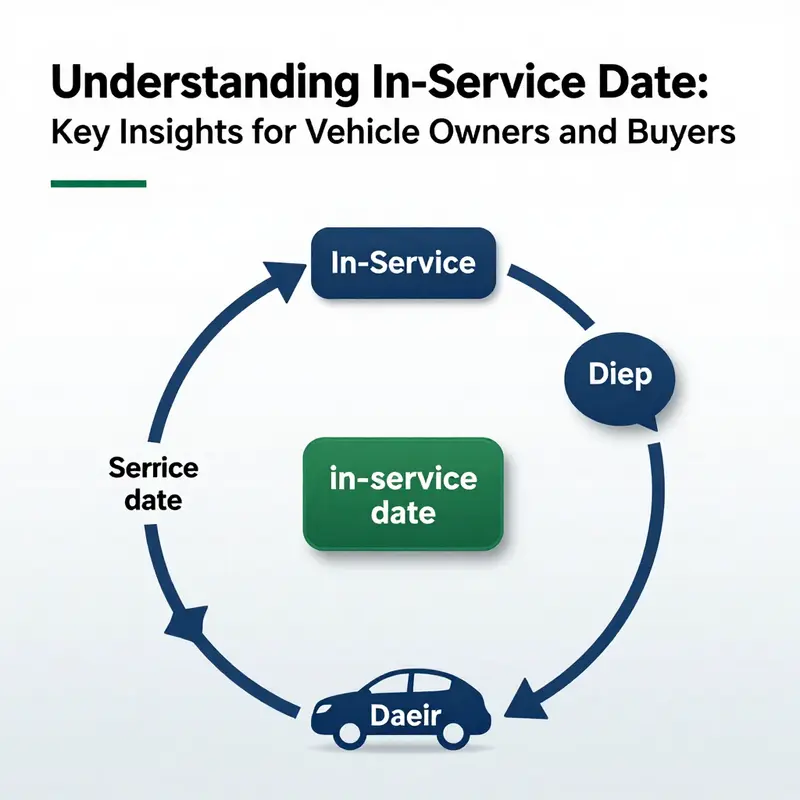
Across the industry, the phrase in-service date is more than a date on a form. It marks the moment a vehicle leaves the showroom and enters the world of use. It is the anchor point for warranties, regulatory compliance, and the flow of service tasks that keep a vehicle productive over time. In-service date is not a single act but a cross-cutting signal that informs decisions made by manufacturers, dealers, fleet operators, insurers, and regulators.
For passenger vehicles, the in-service date usually corresponds to the day the owner takes delivery and the vehicle is registered. In practice this means the clock starts when the vehicle is licensed for the road. For fleets or commercial operations, the in-service date may be the day a vehicle is put into active duty—deployed on a route, assigned to a driver, or added to a service schedule. The common thread is clear: it is the formal moment when the asset shifts from a static object to a running asset that will accumulate miles, wear, and data.
That shift matters in tangible ways. Warranty windows are built around the in-service date. A typical warranty horizon runs from that moment, not from the date of manufacture. This means the initial months of ownership or operation can determine whether a problem is covered. It also shapes consumer expectations and the planning of maintenance resources. A defect detected early can trigger a proactive repair campaign, reduce downtime, and protect a brand’s reputation. Because the in-service date kick-starts the warranty, it also frames the economics of ownership and the risk management choices made by drivers and operators.
Regulatory and environmental regimes increasingly tether compliance to this date. Emissions monitoring, safety checks, and software integrity assessments often reference the time elapsed since in-service. The move toward continuous, connected validation—enabled by telematics and cloud-backed analytics—transforms the once-infrequent inspection into an ongoing process. When a vehicle starts its service life, it becomes part of a broader data ecosystem that tracks not just failures, but performance, software health, and usage patterns. The in-service date thus anchors a cycle of monitoring, reporting, and remediation that travels with the asset across its life.
Software adds a further layer of significance. Modern vehicles are not just mechanical assemblies; they are networked computing devices. The in-service date triggers the activation of remote diagnostics, over-the-air updates, and feature activations. It marks when the vehicle is expected to participate in digital maintenance strategies, where a patch can be pushed out, tested, and verified without a service visit. This is why careful management of the in-service date matters for both safety and performance. The digital thread linking physical vehicles to their virtual counterparts begins at that moment and grows with every message the vehicle sends, every software revision it receives, and every calibration it undergoes.
To see why this matters in practice, consider the relationship between the in-service date and other timestamps in the lifecycle. The production completion date records the moment assembly is finished. It is essential for manufacturing quality control and supply chain visibility, but it does not signal ready-for-use status. The first registration date often lines up with in-service, establishing the legal activation of road use. Yet there are circumstances—such as storage after delivery or staggered deployment in a multi-site fleet—where registration trails the in-service date. In such cases, the in-service date remains the operational anchor for warranties, service agreements, and inspection cycles. It becomes the reference point for scheduling maintenance windows, calibrations, and software validation tasks.
The in-service date also governs risk management in a real-time, data-driven environment. Fleet operators demand high availability and predictable uptime. They rely on real-time health dashboards that answer: is this vehicle up to date on software? When did the last patch install occur? Is a recall patch required, and has it been applied? These questions hinge on a precise, auditable in-service timestamp. As vehicles become increasingly connected, the process moves from reactive repairs to proactive, networked management. The industry is evolving toward standardized, service-oriented computing frameworks that support cross-vehicle visibility, cross-system diagnostics, and cross-brand data exchange. In this vision, the in-service date is not simply a date but a beacon that signals the start of a continuous service lifecycle.
The practical implications extend beyond the technical realm. Individuals and organizations measure the asset’s value by how well the in-service lifecycle is managed. A vehicle with a well-defined in-service timeline tends to experience cleaner maintenance histories, smoother OTA campaigns, and clearer ownership records. The result is less ambiguity when it comes to resale, insurance, and compliance audits. For the technician in the shop or the analyst in the corner office, this date crystallizes expectations about service intervals, software versions, and regulatory obligations. It provides a single, coherent narrative that ties together the physical asset with its digital footprint.
For those navigating mixed fleets, the in-service date offers a unifying reference point. It helps synchronize maintenance planning across vehicles with different vintages, software stacks, and usage patterns. It also clarifies decision rights about when to trigger a recall remedy, schedule a software update, or reconfigure a vehicle’s performance profile. As vehicle networks grow more complex, operators increasingly rely on cross-domain data, digital twins, and integrated dashboards. In this setting, the in-service date is the common coordinate that aligns hardware state, software state, and operational state across time.
Within the literature on vehicle lifecycle management, the in-service date is highlighted as the central anchor that enables lifecycle governance in a digital age. It is the instant at which ownership and responsibility shift toward continuous care and improvement. The date formalizes a contract of ongoing service between the asset and its stewards, inviting a disciplined approach to maintenance, risk, and software stewardship. For practitioners, this means treating the in-service date as a strategic instrument: a point from which planning, investment, and policy choices radiate outward to shape reliability, safety, and value.
To bring this to a practical close, keep the in-service date at the center of your stewardship approach. Use it to align maintenance calendars, to coordinate software management strategies, and to define compliance workflows. The more you treat this timestamp as a living element of the asset’s story, the better you can anticipate needs, reduce disruption, and maximize return on investment across the vehicle’s entire life. For readers seeking a practical reference, the KMZ Vehicle Center blog offers accessible guidance on vehicle care and maintenance. It is worth noting how such resources can complement the formal technical literature by translating complex standards into day-to-day practice. KMZ Vehicle Center blog
For deeper technical context, the study on Service-Oriented HPC Communication Standard for Vehicle Lifecycle Management provides a rigorous framework for how lifecycle data can flow through service-oriented architectures. This resource frames the kind of digital backbone that makes the in-service date a live pivot in a connected vehicle ecosystem. External resource
From First Start to Final Sale: How the In-Service Date Shapes Vehicle Value in the Resale Market
The moment a vehicle crosses the line from showroom to street, the clock starts ticking on its in-service date. This date marks when the vehicle first enters operation, whether it’s sold to a retail buyer, leased to a driver, or deployed by a fleet. In-service date, sometimes called the original in-service date, becomes a quiet but consequential reference point that buyers, sellers, and regulators lean on when evaluating value, eligibility for incentives, and expected performance. In practice, the year a vehicle enters service can set the baseline for depreciation, dictate which incentives might apply, and influence future demand in the resale market. While the line between purchase year and in-service year can blur in some leasing or fleet arrangements, the concept remains a guiding principle for how a vehicle is valued as an asset years down the road. A clear example helps ground the idea: if a car is sold to a consumer on January 15, 2023, that date is typically treated as its original in-service date for many programs that track when a vehicle becomes eligible for credits or rebates. The implications extend beyond eligibility. They ripple through buyer perception, financing options, and the practical calculus of resale or trade-in timing. In this sense, the in-service date is not merely a historical footnote; it is a hinge point around which market expectations turn.
Depreciation is the most immediate and well-documented effect of the in-service date. Automakers and lenders often track depreciation curves that show how far a vehicle loses value in its early years. The first three years are typically when depreciation is steepest, with a common range of roughly 30–40 percent of original value eroding, depending on the model, trim, and overall condition. This accelerated drop is linked to a bundle of factors: the arrival of newer technology, improved safety features, and evolving fuel efficiency standards that make younger models more appealing. The in-service date serves as a proxy for “how old is this in the real world?” in a landscape where a few model years can mean noticeable advances in performance, connectivity, and even ownership costs.
Yet depreciation is not a simple countdown. The in-service date interacts with a constellation of variables that shape resale outcomes. Demand for models from recent years tends to be higher, especially when those iterations introduce meaningful upgrades in safety, infotainment, or driver-assistance technologies. Buyers are not only buying a car; they are buying assurance that the vehicle will remain compatible with current software updates, safety standards, and digital ecosystems. In this sense, an in-service date aligned with a newer platform or a refreshed generation may buoy resale value beyond what a bare-year comparison would suggest. Conversely, a vehicle with an older in-service date can still command value if it arrives with exceptionally low mileage, pristine condition, and a meticulous maintenance history. The market weighs these signals together, and the in-service date is a critical, but not sole, determinant.
The calculus becomes even more nuanced when mileage and condition enter the scene. A low-mileage example in a slightly older in-service cohort can outperform a newer-model vehicle with high wear and tear. Buyers anticipate ongoing maintenance costs, potential repairs, and the likelihood of extended warranties or coverage limits. A vehicle’s condition—interior wear, exterior cosmetic consistency, and the reliability of major systems—can either counterbalance or amplify the drift caused by the in-service date. It’s a reminder that the in-service date is a starting line, not a verdict. A well-cared-for car that continues to demonstrate reliability can retain value more effectively than a newer model that has endured rough use or poor upkeep. This dynamic underscores why savvy buyers and sellers perform careful diligence, evaluating not just age but service history, maintenance records, and evidence of proper care.
Market taste also steers how the in-service date translates into value shifts over time. In recent years, consumer preferences have shown a rising appetite for models offering modern safety suites, robust connectivity, and efficient powertrains. When a vehicle’s in-service date places it at or near a threshold where those features are standard or widely available, demand strengthens and depreciation can slow relative to older peers. In contrast, the rising interest in electric vehicles (EVs) and plug-in hybrids nudges traditional internal combustion engine (ICE) models toward more rapid value erosion once their in-service year feels stale compared with new EV offerings. The interplay between in-service date and market trends means that the same year can carry different implications across model lines and technology generations. Buyers contemplating a purchase in a given window should weigh the in-service date alongside anticipated shifts in technology, regulatory incentives, and consumer sentiment.
For policy and incentive programs, the original in-service date often remains an essential reference. Regulatory frameworks and tax credits are frequently anchored to when a vehicle first entered service, not merely to the calendar year when it was manufactured or delivered. This distinction matters because a vehicle could be built in one year but delivered and placed into service later, potentially altering its eligibility window for certain programs. The nuance matters to fleets and individuals who navigate incentives, as the timing can influence the total cost of ownership and the practical calculus of when to purchase or lease. In practice, buyers who understand where their vehicle sits on that in-service clock can better anticipate the resale horizon and the value proposition tied to ownership timelines. They can plan maintenance, preserve condition, and align trading or selling with periods when depreciation curves are more favorable.
To the buyer’s eye, the in-service date becomes part of a broader narrative about value. It interacts with model year, trim level, optional equipment, and even regional demand. A late-in-service date with fewer miles can translate into a favorable blend of modern features and lower wear, a combination that’s prized in the market. But the same date can work against a model that has lagged behind in technology or efficiency, making it easier for newer competitors to outpace value retention. In practice, the chapter of a vehicle’s life written by its in-service date is read not in isolation but as a chapter of the larger story of ownership, usage, and market dynamics. Those who read this chapter well learn to balance the immediacy of today’s price with the longer arc of how age, mileage, and maintenance history shape perceived value in the years ahead.
For readers seeking to connect theory with ongoing practice, consider the resources that track how age and service history influence valuation and resale. The insight many researchers emphasize is that age is a foundational factor, but valuation is effectively a function of multiple variables that must be evaluated together. A vehicle’s in-service date, when considered with mileage, condition, and contemporary market trends, offers a richer, more actionable picture of future resale value than any single metric alone. This holistic view helps sellers set realistic asking prices and helps buyers calibrate their offers with awareness of how a vehicle’s age will affect cost of ownership and potential appreciation or depreciation over time. As the market shifts, especially with the growing presence of EVs and innovative safety tech, the in-service date remains a stable reference point, even as its weight in valuation evolves.
For ongoing discussions on how age, mileage, and service history influence value and maintenance strategies, you can explore practical perspectives in the KMZ Vehicle Center blog. KMZ Vehicle Center blog.
External perspective also emphasizes the role of vehicle age in shaping resale outcomes. For readers seeking a broader, industry-wide view, the analysis of how vehicle age affects resale value provides a useful benchmark. See How Vehicle Age Affects Resale Value – Edmunds for a comprehensive discussion of age-related depreciation and market demand. https://www.edmunds.com/cars/resale-value/
null

null
Final thoughts
Understanding the in-service date is essential for various stakeholders in the automotive realm. For private car owners and used car buyers, it can influence resale value, regulatory incentives, and overall ownership experience. For small business fleet operators, the in-service date carries implications for vehicle management and operational efficiency. Each chapter of this article has illuminated the multifaceted nature of the in-service date, emphasizing its importance in making informed vehicle-related decisions. By grasping this critical aspect of automotive understanding, stakeholders can better navigate ownership, buying, and management of vehicles in today’s market.