
In service industries, the essence of aggregate planning revolves around effectively managing labor resources to adapt to the ever-changing demand landscape. Unlike manufacturing sectors where physical products and inventory management take precedence, service businesses—such as those involving local private car operations, used car transactions, and fleet services—primarily depend on human resources. This article delves into five key aspects that anchor labor as the main aggregate planning vehicle, demonstrating how demand forecasting, labor flexibility, cost management, and the challenges faced in implementing these strategies integrate into a coherent approach. By understanding these elements, stakeholders from local car owners to small fleet operators can better optimize their operations to maintain service quality while managing costs and adapting to demand fluctuations.
People at the Core: Mastering Service Capacity Through Labor-Driven Aggregate Planning
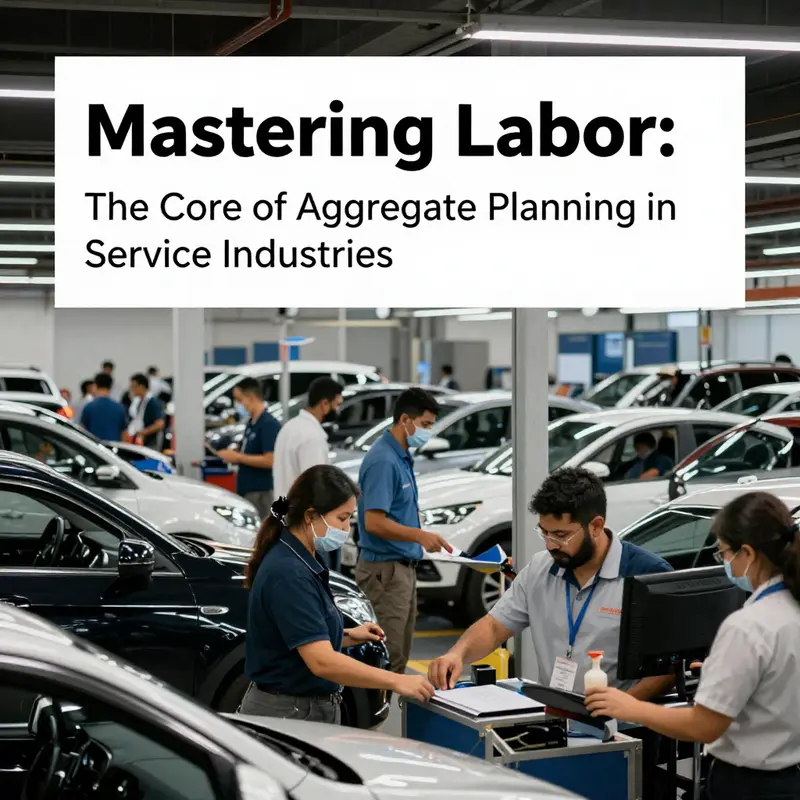
The central idea that animates this chapter is deceptively simple: in service industries, the primary lever for shaping capacity is the workforce. Unlike manufacturing, where a factory can stockpile inventory or tune machine output to smooth demand, services rely on people who provide a usefully perishable and non-storageable product—the moment of service. When demand spikes, the ability to meet it depends on having the right number of people with the right skills available at the right times. When demand falls, carrying excess labor imposes costs and can erode morale if staff feel idle. This is why labor—not capital equipment or inventory, not the scale of fixed facilities—emerges as the core aggregate planning vehicle in service operations. The practical implication is clear and enduring: accurate demand forecasting must be paired with flexible workforce management to keep service levels high without sacrificing financial health.
From a high-level perspective, services face two defining constraints that set labor squarely at the center of planning. First is perishability. A customer who seeks a haircut, a seat at a restaurant, a bed for the night, or a consultative call shows up at a specific moment in time. If that moment passes, the opportunity to serve is gone, and there is no stockout that can be tapped from a warehouse shelf. Second is intangibility. Unlike a manufactured good that can be inspected, stored, and swapped, a service is experiential. The experience depends on the presence, attitude, and performance of the people delivering it. Together, perishability and intangibility funnel all capacity management decisions toward how many workers are scheduled, how they are trained, and how their shifts are arranged to align with anticipated demand.
This logic is echoed across sectors. In health care, for instance, patient outcomes are closely tied to nurse and clinician availability. Staffing must anticipate patient inflows, seasonal disease patterns, and the complexity of care required. In aviation, flight schedules, crew rest requirements, and regulatory constraints demand meticulous crew planning that matches flight activity with trained personnel. In hospitality and food service, front-line teams and back-of-house staff must scale up during peak hours, holidays, or special events to preserve wait times and service quality. In each case, the capacity that can be delivered to customers is bounded by the rhythms of the human workforce, making labor the most flexible and visible tool for aligning supply with demand over the planning horizon.
Forecasts drive the long arc of labor planning, but the day-to-day reality is about execution. Managers translate forecasts into staffing plans that specify headcount targets, shift structures, overtime policies, and the use of temporary or cross-trained staff. The intuitive and often overlooked point is that the best forecast is only as good as the schedule that implements it. A precise forecast of demand, if paired with rigid staffing, can still produce service gaps or excessive labor costs. Conversely, a flexible, well-coordinated scheduling approach can absorb forecast errors with minimal impact on service levels. This dynamic tension between forecast accuracy and scheduling flexibility is the heartbeat of labor-driven aggregate planning in services.
To operationalize this approach, leaders typically consider a trio of playing fields: headcount stability, shift design, and staffing mix. Headcount stability refers to the balance between keeping a stable team and adjusting numbers through hiring, layoffs, or temporary hires. In service settings, constant churn is costly and disruptive, so many organizations prefer a level strategy that maintains a core base of full-time staff while using flexible tactics to cover peak demand. Shift design is about arranging work hours to match demand patterns without overtaxing teams. A well-crafted shift plan may feature overlapping coverage during busy periods, shorter shifts during lulls, and targeted overtime only when anticipated demand justifies the expense. Staffing mix concerns whether to lean on full-time employees, part-timers, or temporary staff, and how cross-training enables workers to perform multiple roles. The overarching objective is to maximize service capacity when needed while guarding against fatigue, morale strain, and quality degradation.
In practice, the choice among level, chase, or mixed strategies reflects a service organization’s tolerance for risk and its cost structure. A level strategy emphasizes maintaining a constant workforce and using utilization adjustments, overtime, or temporary hires to absorb demand fluctuations. This approach preserves staff stability and training investments, but it can incur higher wage costs during periods of weak demand and potential service gaps when demand surges unexpectedly. A chase strategy, by contrast, aligns workforce levels with demand changes—hiring more during busy periods and cutting back during slower times. While this minimizes idle labor costs, it can strain morale and disrupt continuity if it involves frequent hiring and layoffs. A mixed strategy aims to blend the virtues of both: a stable core with flexible, skill-based layers that can be scaled up or down with demand. The advantage is a more resilient operating rhythm, though it requires careful cost trade-offs and robust scheduling systems. In all cases, the decisions revolve around the same core question: how can people be organized and deployed to deliver reliable service at acceptable cost?
The mandate to hire, train, and deploy people in response to demand does not occur in a vacuum. It is supported by data, analytics, and technology that turn qualitative judgments into quantitative plans. Forecasting in service settings often blends historical demand with context signals—seasonality, events, weather patterns, and macro conditions—to form a probabilistic view of near-term needs. Once the forecast is in hand, scheduling engines, demand-capacity dashboards, and real-time monitoring guide how many people should be on duty at any given hour. These tools help prevent the twin sins of under-staffing, which jeopardizes service quality and customer satisfaction, and over-staffing, which erodes margins and lowers productivity. The goal is not to eliminate variability but to dampen its impact through better-aligned labor deployment and cross-functional coordination across team members, shift leaders, and human resources partners.
A critical element in this labor-centric picture is cross-training. When workers can fluidly move between related tasks, a service organization gains the elasticity needed to respond to fluctuating demand without a proportional rise in headcount. Cross-trained teams can cover sudden absences, peak moments, or spillover demand with minimal lag. They also create a culture of shared responsibility and continuous learning, which helps maintain quality during transition periods. However, cross-training comes with its own costs—time invested in training, potential dilution of specialized expertise, and the need for clear role boundaries to avoid confusion on the floor. The design of cross-training programs, therefore, becomes a strategic decision that shapes both capability and cost over time.
In this logic, a service operation’s capital investments—its facilities, equipment, and technology—play an important but supportive role. Facilities determine the maximum practical staffing envelope, while equipment and technology determine how efficiently labor can be leveraged. For instance, the availability of a flexible scheduling platform, payroll automation, and real-time demand signals can substantially reduce the friction in adjusting labor inputs. Yet these enablers do not replace the core truth: without people, the service cannot be delivered. This is the reason labor remains the central force in aggregate planning for services; it is the most direct, controllable, and cost-effective lever to balance capacity and demand when inventory is not a viable hedge.
An explicit articulation of this principle appears in the professional canon on operations and supply chain management. The authoritative voice in this space notes that labor is the primary aggregate planning variable in service sectors precisely because services are non-storable and because human resources are so tightly linked to performance outcomes. When demand shifts, the speed and quality with which an operation can respond hinge on the workforce. This perspective is not merely theoretical. It shapes real-world decisions about staffing models, training investments, labor contracts, and the design of incentive systems that align staff behavior with service goals. The emphasis on labor also underscores a practical implication for managers: the accuracy of demand forecasts must be matched with the fidelity of scheduling and the flexibility of the workforce. A forecast is powerful only when it translates into workable staffing plans that employees can execute with clarity and reliability.
For readers seeking a concise cross-check on this framing, consider how management in any service domain can draw a useful parallel to everyday maintenance planning outside the service sector. The idea is that the most adaptable resource—people—functions as a dynamic buffer that absorbs variability and sustains performance. If you want a quick, real-world touchstone on how teams organize to meet demand with limited inventory buffers, you can explore the KMZ Vehicle Center blog, which offers accessible reflections on maintenance planning and capacity considerations in the context of rolling operations. KMZ Vehicle Center blog.
As this chapter has outlined, the path to effective aggregate planning in service industries runs through people. Forecasts set the stage, but it is the scheduling discipline, the staffing mix, the willingness to train across roles, and the choice of staffing strategy that deliver the actual service capacity. The non-storage nature of services makes labor the most sensitive and controllable variable, the one that determines whether a hospital ward can admit a patient when needed, whether a restaurant can seat guests with minimal wait time, or whether a call center can respond promptly to customer inquiries. The aim is not to minimize labor costs in isolation but to optimize the trade-offs between service quality, customer satisfaction, and operating efficiency. When labor is understood as the primary lever, managers can design aggregate plans that honor the demand curve while preserving the dignity and effectiveness of the workforce that makes service possible.
External reference for foundational concepts in this area can be found in standard references that codify the primacy of labor in service aggregate planning. For a foundational reference, see APICS Dictionary: https://www.apics.org/apics-dictionary/.
Labor as the Pulse of Service Demand: Forecasting, Scheduling, and the People-Driven Core of Aggregate Planning
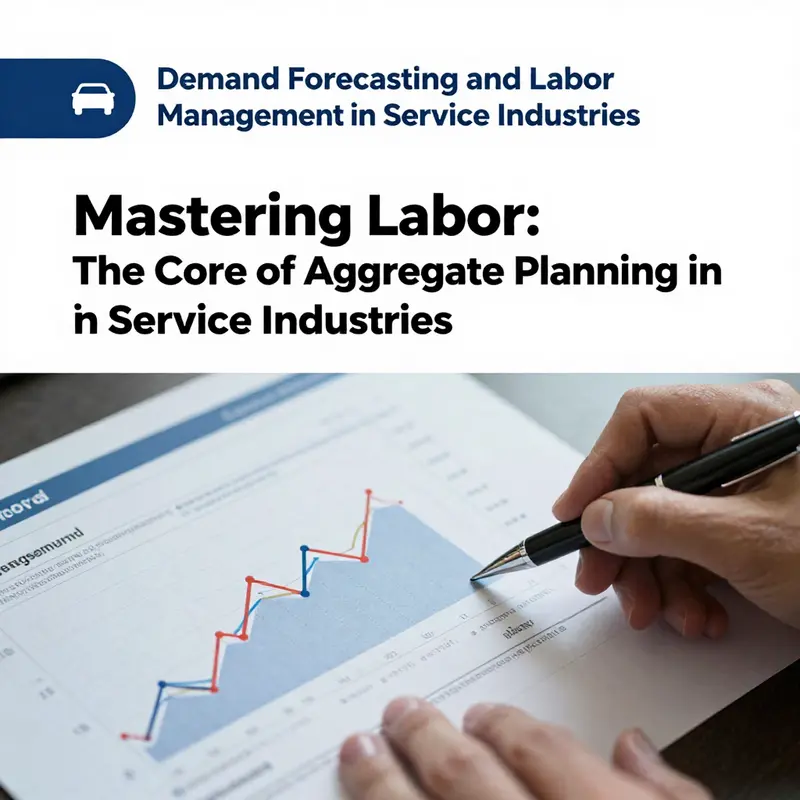
In service industries, the primary aggregate planning vehicle is labor, not inventories or machining lines. The capacity to respond to customer demand hinges on the workforce available to greet, assist, advise, treat, serve, and resolve. This chapter follows the logic that labor is the most flexible, most costly, and most impactful resource in service operations. When demand rises, the first lever often pulled is the size and composition of the staff; when demand wanes, the organization adapts through hiring freezes, temporary adjustments, or reallocation of roles. The goal is not to squeeze every last ounce of efficiency from a fixed asset but to orchestrate the timing and mix of people in ways that preserve service quality while containing costs. The fusion of demand forecasting with thoughtful labor management creates a responsive system where the right people are in the right place at the right time, ready to convert potential demand into satisfied customers and repeat business. In this context, forecasting and staffing are not separate tasks but two sides of the same coin, each strengthening the other as they move through data, prognosis, and action in a continuous loop of improvement.
Forecasting in services centers the organization’s attention on people. Unlike manufacturing, where buffers of inventory can smooth over demand shocks, services rely on real-time human interaction. A hotel’s front desk and housekeeping teams, a restaurant’s servers and cooks, a call center’s agents, or a hospital ward’s clinicians all embody the capacity to fulfill promises. Anticipating demand is therefore about anticipating people: their availability, their skills, their fatigue thresholds, and their willingness to adapt to changing shifts. When demand spikes during holidays, weekends, or promotional periods, the organization does not simply crank up a production line. It recalibrates schedules, elevates or curtails overtime, deploys part-time workers, and sometimes redefines roles to ensure coverage where it matters most. The reliability of service hinges not only on the number of bodies but on the alignment of those bodies with customer flow and service standards.
At the heart of this alignment lies demand forecasting, a discipline that draws from history, pattern recognition, and increasingly sophisticated analytics. By analyzing past demand, seasonality, and external signals—such as weather, local events, or demographic trends—service providers construct probabilistic pictures of future workload. The more precise those pictures, the more tightly labor can be scheduled to match incoming demand. But forecasting in services is inherently more complex than in production environments. Demand can be highly irregular, influenced by promotions, sudden events, or shifts in customer preferences. Even small forecasting errors can cascade into either excessive labor costs or degraded service levels, which in turn erode customer trust and reduce repeat business. The practical upshot is clear: good forecasting is not a luxury but a prerequisite for high-quality service and cost control.
Methodologies have evolved far beyond simple rule-of-thumb estimates. Organizations now leverage a blend of historical data, real-time signals, and advanced analytics to produce dynamic forecasts. Time-series analyses may handle predictable, routine demand with reasonable accuracy, while scenario-based or machine-learning–driven models help capture irregular or complex patterns, such as a sudden surge in demand from an event in the local area or a cascade effect from a product launch elsewhere in the ecosystem. Importantly, the best forecasts are not static documents but feeds that continuously update and inform scheduling decisions. When peak demand is forecast, managers can trigger a cascade of actions: adjust shift patterns, authorize flexible overtime, reassign cross-trained staff, and deploy part-time personnel who can be scaled up or down with minimal disruption. In this sense, forecasting and scheduling operate as a single, integrated system rather than as separate silos.
The link between forecast accuracy and labor planning is direct and consequential. In research on complex service environments, accuracy of demand projections translates into more effective resource deployment and higher service reliability. A key insight in this literature is the value of tailoring forecasting approaches to the service type. Routine, high-volume tasks benefit from traditional time-series forecasting, whereas more variable, bespoke service work benefits from scenario planning and adaptive simulations. Segmentation of forecasting approaches by service type enables more precise staffing decisions, minimizing both idle time and the risk of under-service. For managers, this means investing in the right mix of forecasting techniques and aligning them with the organization’s service portfolio and demand patterns. The payoff is a workforce whose productivity is matched to customer needs, resulting in better utilization of labor hours, more consistent service levels, and stronger customer satisfaction.
Beyond forecasting, labor management systems translate projections into action. Real-time workforce optimization, enabled by integrated scheduling, time and attendance tracking, and flexible shift management, allows managers to convert forecast signals into concrete staffing changes. Dynamic staffing may involve front-loading or back-loading shifts around predicted peaks, instituting optional overtime with clear fatigue-management boundaries, and implementing cross-training so a single employee can perform multiple tasks during variable demand. Flexible shift assignments and automated alerts help supervisors respond quickly when forecasts shift, when a forecast error widens, or when an unplanned event requires rapid staffing adjustments. The most effective service organizations link forecast data directly to labor management systems, creating a feedback loop in which actual demand outcomes refine future forecasts and payroll decisions in near real time. The integration of data and scheduling accelerates decision-making and makes the workforce more resilient to volatility, which in turn upholds service quality during pressure periods.
As demand forecasting becomes more sophisticated, so too must the planning horizon and the strategic options available to managers. Short-term, tactical decisions—who works when, for how long, and in what roles—are guided by near-term forecast signals and constraints such as labor laws, union agreements, and internal policies about overtime and休息 breaks. Medium-term planning may explore alternatives like hiring temporary staff, cross-training programs, or hiring freezes with staged ramp-ups aligned to forecast trajectories. Long-term considerations include workforce composition, skill development, and capacity planning that aligns with expected demand growth or contraction. Across these horizons, the common thread is the emphasis on people as the central variable. Inventory can be thought of as a metaphor in services—customers waiting for attention—but the real asset that converts demand into value is the human capability to deliver, advise, listen, and respond. Therefore, the chain from forecast to staffing must be designed with a mindful eye on employee well-being, engagement, and sustainable productivity, because a workforce that is fatigued or misaligned with demand inevitably compromises service quality.
Operationally, that means designing forecasting and staffing processes that are transparent to frontline teams and that respect their constraints and aspirations. It also means investing in data literacy so front-line supervisors understand how forecasts are built and how their day-to-day decisions influence overall performance. When teams see a direct connection between forecast accuracy, staffing decisions, and service outcomes, ownership and accountability rise. This cultural alignment matters just as much as the analytical rigor. In practice, service providers increasingly embrace a feedback-driven approach: forecasts are updated with the latest data, staffing plans are recalibrated accordingly, and frontline feedback informs model adjustments. This ongoing cycle reduces the time between signal and action, enabling service organizations to maintain service levels even as demand fluctuates. It also supports continuous improvement, turning forecasting and labor management into a learnable capability rather than a fixed procedure.
For practitioners seeking practical illustration, imagine a hospitality setting where demand peaks during a holiday weekend. A forecasting model predicts a surge in arrivals, inquiries, and room service requests. The scheduling system, informed by the forecast, ensures that front desk agents are increased by a modest but sufficient margin, housekeeping staff are scaled to meet anticipated turnover, and food-and-beverage teams are staffed to handle elevated dining volumes without creating bottlenecks. Overtime is offered selectively to experienced staff to preserve service reliability, while cross-trained personnel float between roles to cover unforeseen gaps. The outcome is a smoother service flow, shorter wait times, and higher overall guest satisfaction, achieved not by heroic effort but by disciplined alignment of forecast, staffing, and performance expectations. In such examples, the emphasis remains squarely on people as the primary vehicle for meeting demand and maintaining quality.
The literature and evolving practice also stress the value of technologically enabled intelligence when it comes to labor planning. What matters most is not a single model but an ensemble that blends historical insight with real-time signals, allowing managers to respond to edge cases and sudden demand shifts with composure. Data platforms that pull from multiple sources—occupancy projections, promotional calendars, weather data, and local event schedules—generate richer forecasts. In parallel, labor systems that support dynamic scheduling, temporary staffing marketplaces, and fatigue-aware shift design empower managers to act quickly while safeguarding worker well-being. The end-to-end integration of forecasting and labor management thus becomes a strategic capability that underpins both operational efficiency and customer experience. When forecasting is accurate and staffing is agile, service providers can meet demand with lower wait times, higher service consistency, and a stronger reputation for reliability in the eyes of customers who value predictable, quality service.
For readers who want to explore practical, theory-to-application resources beyond the core material, a broader perspective on demand forecasting can be found in established analytic literatures. And for those who want to connect this topic to a broader knowledge ecosystem, a practical entry point is the KMZ vehicle center blog, which offers accessible discussions on scheduling and maintenance planning that can illuminate parallel thinking about resource alignment in other service contexts. See: kmzvehiclecenter blog. As the field advances, the core insight remains stable: service organizations succeed when their people are prepared, protected, and empowered to meet real-time demand with skill, flexibility, and care. The pathway from forecast to frontline action must be a seamless, humane, and data-informed process that treats labor not as a cost to be managed but as a critical, value-creating asset. The stronger the link between what is forecast and what is scheduled and executed, the more resilient the service operation becomes in the face of unpredictable demand fluctuations—and the more consistently excellent service experiences become for customers who count on them every day.
External resource: IBM’s overview of demand forecasting provides a rigorous framework for understanding forecasting methodologies, their role in service operations, and how data-driven decision-making supports labor and resource planning. https://www.ibm.com/topics/demand-forecasting
Labor as the Primary Vehicle: Harnessing Workforce Flexibility for Service Capacity Planning
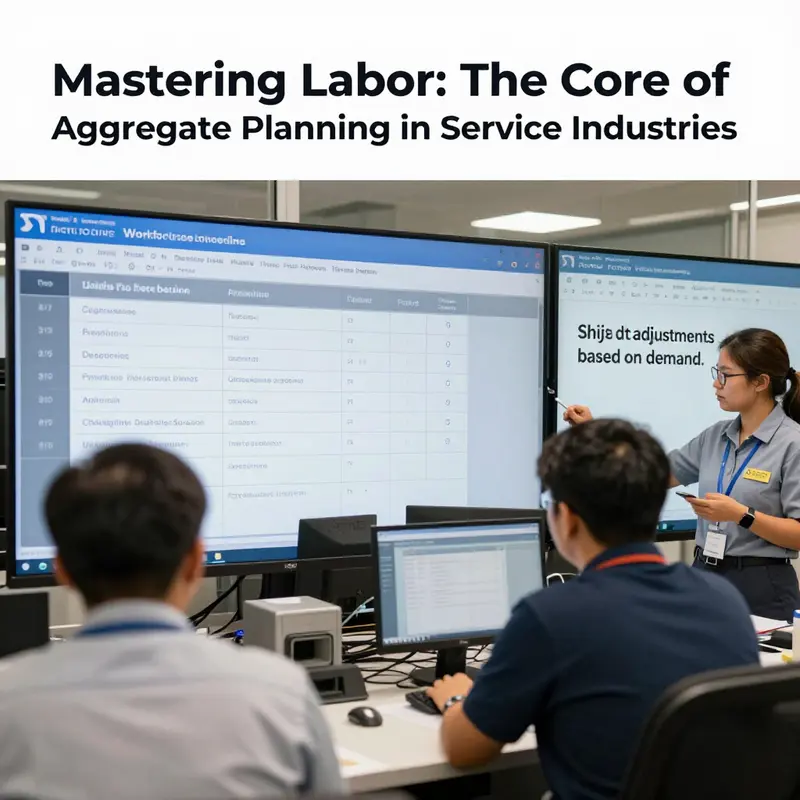
In service industries, the core engine of aggregate planning is not the level of inventory or the capacity of a machine but the availability and readiness of people. Where manufacturing can buffer demand with buffers of stock and built-in capacities, service operations must choreograph the timing, skill mix, and presence of human capital. The central question becomes not how much output can be produced on a given line but how quickly and reliably the right people can be in the right place to meet forecasted demand. This central insight—that labor is the primary aggregate planning vehicle in services—frames the entire discipline of capacity planning in a way that reflects the reality of service delivery. When demand fluctuates, the metric that moves the needle is staffing level, not idle inventory or machine downtime. The logic is counterintuitive to those who begin planning from a production mindset, yet it is supported by a growing body of research that treats workforce flexibility as the indispensable mechanism for aligning supply with demand in real time.
The service context elevates the importance of timing and availability. In contrast to manufacturing, where outputs can be buffered and queued, services are produced and consumed simultaneously. Customers encounter the point of contact, and the experience hinges on the cadence of service delivery. The implication for aggregate planning is profound: firms must anticipate demand patterns and translate those forecasts into concrete, actionable changes in labor—adjusting headcount, shifting schedules, expanding or contracting shifts, and leveraging temporary or part-time workers. The objective is not simply to minimize labor costs but to balance costs with service quality, wait times, and customer satisfaction. When demand spikes, a well-timed increase in staffing can shorten wait times and improve first-contact resolution; when demand ebbs, leaner staffing can maintain quality while reducing idle hours. The critical lever is the speed and precision with which a workforce can be scaled up or down in response to market signals.
A practical lens on this reality shows through several everyday service contexts. Hotels swell staffing during holiday periods to handle larger guest volumes and the accompanying needs for front desk coverage, housekeeping, and guest services. Restaurants manage the rhythm of cuisines and service pace by aligning table turnover, kitchen throughput, and server coverage with anticipated busy periods. Call centers, faced with fluctuating call volumes, rely on shift flexibility, on-call pools, and dynamic routing to ensure customers reach an available agent within acceptable wait times. In each case, the task of planning becomes a question of when and how much labor to deploy, not simply how many units to produce. This perspective clarifies why workforce management is not a peripheral HR concern but a strategic planning concern that shapes capacity, service levels, and financial performance.
The literature emphasizes that flexibility is not a one-dimensional concept. It encompasses the timing of labor input, the mix of skills within the workforce, and the breadth of arrangements that enable rapid adjustment. Close scheduling of labor-hours ensures a predictable cadence that aligns with anticipated demand. On-call labor resources, when designed with guardrails and fair usage policies, provide a rapid response option for unexpected surges without the permanent commitment of full-time staff. Flexible working hours and cross-training expand the set of available capabilities, enabling staff to switch between service frontlines and back-office tasks as needed. Taken together, these tools create a responsive labor system that minimizes idle time during low-demand periods and prevents overstaffing during peak times.
This approach carries both operational and organizational implications. Operationally, the planner’s toolkit includes forecasting accuracy, lead times for hiring and training, and the speed with which schedules can be adjusted. It also entails managing the capacity and capabilities of the workforce, ensuring that the right people with the right skills are available at the right moments. The literature notes that flexible production and working hours enable service entities to adapt to changing volumes—restaurants, for instance, can scale staffing up during rushes and down during lulls without compromising service quality. The broader message is clear: the more nimble the workforce, the more accurately a service organization can match the ebb and flow of demand, creating a virtuous cycle where improved alignment reduces costs and enhances the customer experience.
A critical tension in this domain is the trade-off between labor costs and service quality. Overtime, temporary hires, and on-call arrangements incur overheads and can affect employee morale if not managed with transparency and fairness. Yet the alternative—missed capacity during peak periods or excessive wait times—carries even greater costs in customer dissatisfaction, churn, and lost revenue. The challenge, then, is to design an operating model that optimizes the timing and mix of labor while preserving a sustainable work environment. This requires an integrated approach where demand forecasting, workforce planning, and scheduling decisions are tightly coupled. Human resource practices must align with operational goals: hiring plans, training pipelines, and career paths should reflect the seasonal and stochastic nature of service demand.
The role of technology in enabling workforce flexibility cannot be overstated. Forecasting tools that translate historical patterns into probabilistic demand scenarios help managers plan coverage with higher confidence. Scheduling software can automate shift assignments while honoring labor laws, break rules, and employees’ preferences. Data on occupancy, call volumes, or service line utilization feeds into a dynamic planning loop where schedules are adjusted in near real time as signals change. Cross-training emerges as a particularly valuable capability, expanding the pool of tasks that a given employee can handle, reducing bottlenecks, and enabling smoother reallocation of labor across service moments. In short, technology complements human flexibility by providing the visibility and rules that keep a responsive labor system aligned with strategic objectives.
Importantly, the literature argues that flexibility in the service context is ultimately about agility—people who can be deployed where they are most needed without sacrificing quality. This requires a cultural stance as much as a procedural one: a workforce that views adaptability as a core competency, managers who see staffing as a strategic asset, and a governance framework that supports rapid decision-making. When these elements cohere, service organizations create capacity that is not merely sufficient but resilient in the face of uncertainty. The result is an operating model in which staffing levels ebb and flow with demand, while customers repeatedly experience consistent service standards and timely outcomes.
For readers seeking grounded guidance that ties theory to practice, a useful primer emphasizes that flexible labor arrangements can unlock a more responsive service system. The emphasis is on the timing and availability of labor, the breadth of skills within the workforce, and the capacity to adjust both quantities and capabilities quickly. Close scheduling of hours, on-call resources, and flexible work arrangements form a triad of strategies that collectively improve the alignment between demand and service delivery. These strategies also play a role in workforce development, as they often require training and development programs that prepare employees to handle a wider array of service tasks. A more adaptable labor force is not simply a cost management tool; it is a core asset that shapes service experiences, capacity utilization, and financial performance over the long run.
From a practical standpoint, managers should view labor as both a constraint and a lever. On the constraint side, labor has associated costs, fatigue considerations, and potential quality risks if misapplied. On the lever side, strategically deployed labor can shorten wait times, raise service levels, and enable rapid entry into new demand regimes. The balance is delicate and context-dependent, varying with service type, customer expectations, and local labor markets. Yet the strategic consensus remains: the primary aggregate planning vehicle in service industries is labor, and the most effective planning architectures treat workforce flexibility as a design feature of the operating model rather than a tactical afterthought. To translate this into practice, organizations should embed flexibility into their core planning processes, from forecasting and capacity planning to scheduling and performance measurement.
For professionals looking to connect theory with concrete practice, consider a blended approach that links external knowledge, internal processes, and frontline insights. Managers can pair predictive analytics with scenario planning to map out several demand trajectories and map labor responses to each. They can design on-call pools with transparent criteria for activation, ensuring fairness and minimizing burnout. They can implement cross-training programs that build a common skill language across service lines, enabling faster redeployment of staff as customer needs shift. And they can publish clear service-level targets that align customer expectations with staffing realities, so that the workforce operates with a shared sense of purpose and accountability. These actions, taken together, create a service-capacity framework that is both responsive and sustainable, capable of absorbing shocks without compromising the quality of customer interactions.
In this chapter, the emphasis remains on the central idea: labor is the primary and most flexible instrument available to service organizations for aggregate planning. The rest of the book will further illuminate how this lever interacts with other planning dimensions, including demand shaping, capacity buffering, and service design. Yet the core insight endures: by treating workforce flexibility as a strategic resource—carefully designed, fairly administered, and technologically enabled—service firms can align their capacity with customer demand in ways that produce reliable experiences, efficient operations, and robust financial performance. If readers take away one idea, it should be this: the success of service aggregate planning rests on making people ready to act at the right moment, with the right skills, and under conditions that support both performance and well-being. In the end, that readiness is the most valuable resource a service organization possesses.
For those seeking a concise practical reference as they read, you can explore more insights on the operational side of this topic at the KMZ Vehicle Center blog, which offers accessible perspectives on responsive operations and scheduling considerations: KMZ Vehicle Center blog. Additionally, for a deeper scholarly exploration of the challenges and opportunities in service aggregate planning, see the external resource: Aggregate Planning for Services: Challenges and Opportunities.
Labor as the Core Lever: Cost-Aware Aggregate Planning in Service Industries
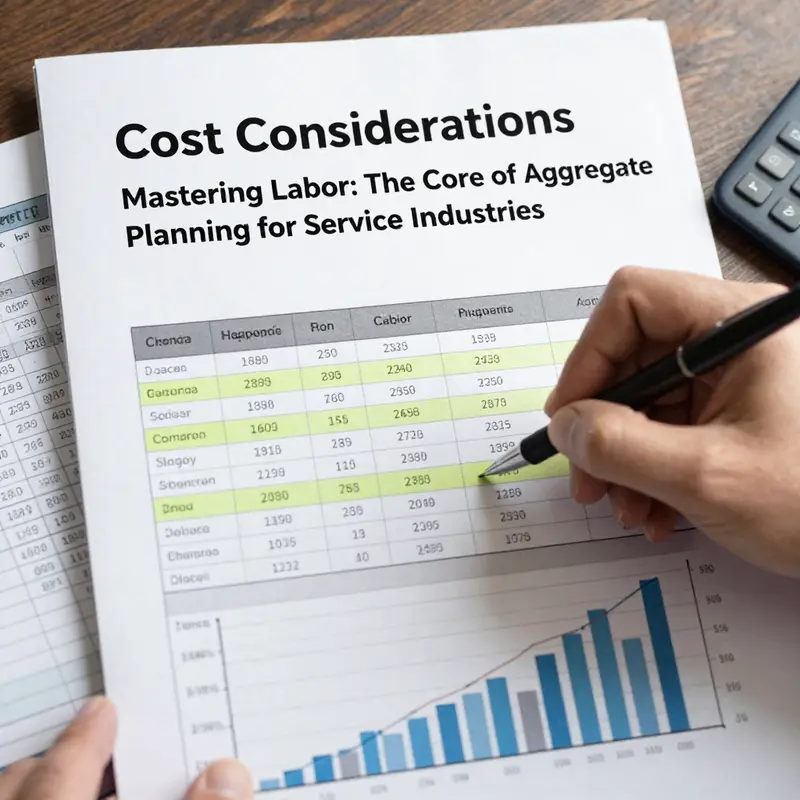
Across service industries, the challenge of aggregate planning is not producing a fixed quantity of goods but aligning a workforce with demand while maintaining service quality and cost discipline. In manufacturing, capacity is visible in machines, inventories, and assembly lines; in services, the decisive resource is people who translate demand into experience. Labor becomes the primary aggregate planning vehicle because humans perform the tasks, respond to customers, and adapt to changing circumstances in real time. This is true whether you manage a hotel, a hospital, a restaurant, or a call center. The central task is to adjust staffing levels across planning horizons, not merely to push outputs through a fixed process. The implication is that service planning is a discipline of workforce management—an instrument for shaping pace, capacity, and the quality of the customer experience that follows every interaction.
Cost considerations sit at the heart of labor-based planning, since labor often represents the largest and most flexible portion of the cost structure. The aim is to balance staffing with demand waves while keeping total labor costs as low as possible. Wages matter, but the picture is broader: overtime premiums, recruiting expenses, training, and turnover create a cascade of expenses that ripple through budgets. Managers forecast demand across multiple periods and compare it to available labor capacity. The goal is to smooth variations in headcount to avoid sharp hiring spurts or abrupt layoffs that erode morale and service continuity. In practice, managers must consider the productivity of the workforce in relation to wage costs, recognizing that the same wage can yield different value depending on how efficiently people perform and how well they are deployed.
A central construct in this approach is the productivity-to-wage ratio, the p/w metric. It captures more than the price of labor; it expresses how effectively wage costs translate into delivered service value. When productivity increases, higher wages can be absorbed because each hour of work yields more outcomes. When productivity is high on certain days or in certain roles, managers can trade wage flexibility for shorter shifts or cross-training, preserving service levels without proportionally increasing costs. Conversely, if productivity is fixed or volatile, wage increases risk raising unit labor costs unless accompanied by improvements in output or process efficiency. The p/w lens explains why cutting wages without boosting productivity can undermine performance and why the best plan aligns compensation with the value created by each hour of labor.
To respond to unpredictable demand without locking the operation into rigid fixed costs, many service firms lean on flexible labor strategies. On-call staff and temporary workers help bridge gaps during spikes in demand, seasonal peaks, or unforeseen surges. This flexibility improves responsiveness and prevents overstaffing during slow periods. But it also creates training challenges, consistency concerns, and potential variation in customer experience. Effective use of flexible labor depends on careful design: cross-training staff so they can perform multiple roles, clear standard operating procedures, and reliable onboarding processes. When these elements exist, the organization can scale up or down with minimal disruption while maintaining service standards. The result is a workforce that can respond rapidly to demand signals without paying a fixed premium for idle capacity, while still preserving knowledge, culture, and quality across shifts.
Forecasting demand and understanding capacity constraints are the backbone of service planning. Forecasts project expected demand across the planning horizon, while capacity plans translate those projections into staffing requirements by skill, shift, and location. Managers also factor in client backlogs and sales targets as forward-looking indicators of demand pressure. The objective is to minimize changes in staffing levels over time, not to chase demand perfectly. A rolling planning approach often works best: update the plan as new data arrive, adjust staffing plans accordingly, and maintain a stable core team that provides reliability. This approach helps balance the need for agility with the costs of hiring, training, and ramping up new workers, all while keeping service levels within acceptable bounds.
Quality and profitability sit at the heart of labor-centric decisions. The aim is to provide enough people to meet demand promptly and accurately, without generating waste through excessive staffing. Achieving this balance depends on how well demand, capacity, and productivity integrate. A well-tuned plan may include investments in cross-training and development to expand what a single worker can perform, allowing a leaner core team to cover peak periods. Scheduling can be designed to align with demand curves, smoothing peaks and reducing wait times. Technology plays a supportive role here: decision-support tools sharpen forecasts, scheduling algorithms optimize shift coverage, and performance dashboards reveal where productivity gaps limit service levels. This combination keeps service quality high while sustaining employee engagement, a critical driver of productivity and customer satisfaction.
Concrete sector examples illustrate how labor-centric planning manifests in practice. A hotel experiences holiday-season demand by adding front-desk and guest-services coverage for the peak period, then retracting as demand normalizes. A restaurant might augment servers on weekends and during events, while keeping a dependable core staff on weekdays. A call center relies on flexible shift patterns and on-call agents to absorb variable call volumes through the day. In each case, planners seek a staffing ladder that mirrors the expected demand profile, with contingency plans for late surges and backlogs. The thread is consistent: treat labor as a strategic asset, not merely a cost, and maintain a balance that preserves rapid response, reliable service, and customer satisfaction over time.
From a practical standpoint, translating forecast data into a workable staffing plan requires a disciplined yet adaptive workflow. Start with a multi-period forecast and translate it into the required number of people by skill and shift. Then analyze the cost implications of different staffing mixes, including full-time, part-time, overtime, and turnover. Assess the potential improvements in productivity from better scheduling, training, and team coordination, and weigh these gains against the incremental costs of flexible labor options. Finally, implement a monitoring loop that tracks service levels, wait times, and customer feedback, so the plan can be adjusted before service quality deteriorates. In other words, labor-based aggregate planning becomes a dynamic capability rather than a static budget, capable of evolving as conditions change.
To anchor the discussion in both practice and research, many sources emphasize labor cost management as a strategic lever in service contexts. A careful reading of the research on aggregate planning for services highlights how the interaction between productivity and wages shapes efficiency, investment in training, and scheduling policies. The framework around p/w helps managers test assumptions and explore trade-offs between wages, training intensity, and staffing flexibility. For practical grounding, some readers consult the KMZ Vehicle Center blog, which discusses scheduling and workforce readiness in a way that resonates with service-sector priorities: KMZ Vehicle Center blog. External reading: https://www.researchgate.net/publication/387291056AggregatePlanningforServicesChallengesand_Opportunities
Labor as the Dynamic Core: Navigating Aggregate Planning in Service Industries
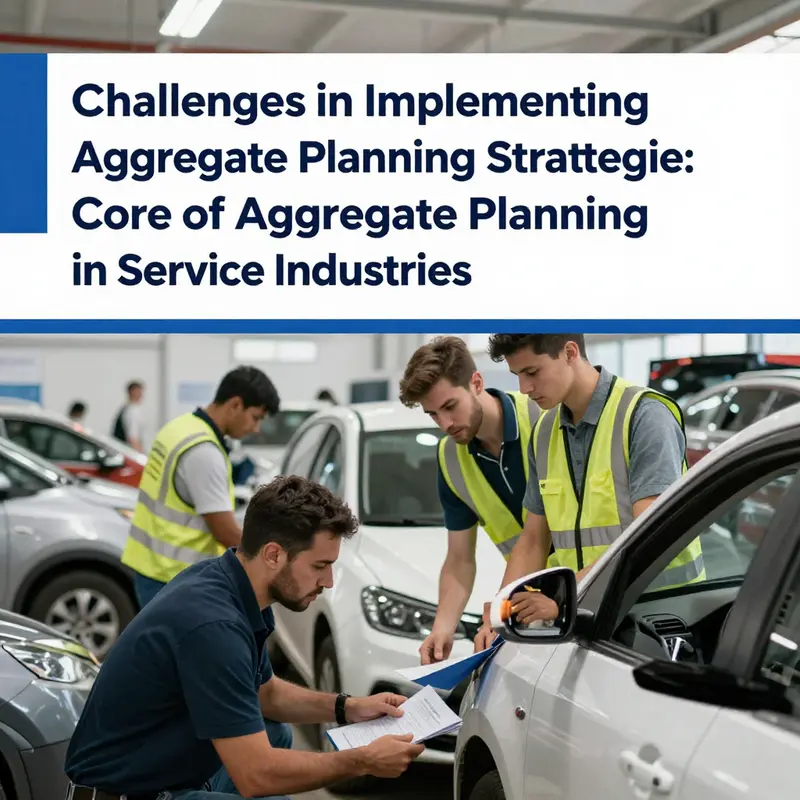
External resource note: See the MDPI Sustainability article for a comprehensive analysis of challenges and opportunities in service aggregate planning: https://www.mdpi.com/2071-1350/16/1/148.
Final thoughts
Labor stands as the linchpin of aggregate planning within service industries. For stakeholders such as local private car owners, used car buyers and sellers, and small business fleet operators, recognizing the impact of labor management can enhance operational efficiency. The ability to accurately forecast demand, maintain workforce flexibility, manage costs, and address implementation challenges sets successful service operations apart. By refining these strategies, organizations can not only respond agilely to demand fluctuations but also uphold the quality and efficiency expected by customers.