
In an era where environmental consciousness is at the forefront of consumer preferences, understanding the date a clean vehicle is placed in service has become increasingly important. This seemingly small detail has significant implications for local private car owners, used car buyers and sellers, and small business fleet operators. For car owners, it can directly impact vehicle resale value and eligibility for local incentives. Used car buyers must be vigilant about this date, as it affects compliance with emissions regulations and could influence warranty coverage. Meanwhile, small business fleet operators face the complexities of fleet compliance and potential savings from environmentally friendly vehicles. With the date clean vehicle placed in service playing a critical role in determining a vehicle’s valuation and regulatory compliance status, it is essential for all stakeholders to stay informed. To dive deeper into vehicle management, consider reviewing our blog on truck maintenance tips for first-time owners.
Understanding the Date Clean Vehicle Placed in Service
The term ‘date clean vehicle placed in service’ refers to the specific day when a vehicle is officially made available for use by its owner. This date holds significant importance not only for individual owners but also for small businesses that utilize vehicles for operational purposes.
Definition and Relevance
- Definition: The ‘placed in service’ date is defined as the day the vehicle is delivered to the buyer, typically marking when the vehicle is ready for use. For tax incentives, especially for clean vehicles, this date is crucial for determining eligibility for various credits and benefits.
- Relevance:
- For vehicle registration, this date is often aligned with the registration process, as it marks the official start of the vehicle’s operational life. Owners must ensure that their registration reflects this date accurately to align with tax reporting.
- In terms of accounting, the placed in service date is vital because it signifies the beginning of depreciation for tax purposes. According to the IRS, this date is instrumental in establishing when depreciation deductions can begin, influencing financial reporting and tax compliance for both individuals and businesses (IRS on Vehicle Use).
Implications for Vehicle Owners
- Clean vehicle owners should be aware that the vehicle placed in service date can impact eligibility for tax credits. For example, vehicles that qualify as clean and are placed in service after certain cut-off dates may have access to additional financial incentives (IRS Clean Vehicle Tax Credits).
- Accurate record-keeping of this date is crucial for small business fleet operators who may be claiming Section 179 deductions or other tax credits related to clean vehicles.
Key Points to Remember
- The placed in service date: Essential for vehicle registration and tax deduction eligibility.
- This date must be accurately reflected in all accounting documents to avoid issues during tax filing and audits.
- Both individuals and businesses should stay informed about any changes in legislation that might affect their clean vehicle tax credits based on their placed in service dates.
Understanding the placed in service date not only ensures adherence to tax regulations but also helps vehicle owners maximize potential financial benefits. For further insights on maintaining your vehicle, read our blog for maintenance tips.
Importance of the ‘Date Clean Vehicle Placed in Service’
Tracking the ‘date clean vehicle placed in service’ is crucial for various audience segments due to its implications on safety, value retention, and compliance. Below is a brief overview highlighting its significance for local private car owners, used car buyers and sellers, and small business fleet operators.
Local Private Car Owners
- Enhanced Safety: Knowing the service date helps ensure that the vehicle undergoes timely maintenance, reducing the risk of breakdowns and accidents. Regular servicing is linked to improved road safety.
- Resale Value: Vehicles with documented service records retain higher resale value. Owners can provide potential buyers with maintenance history, demonstrating care and upkeep.
- Insurance Compliance: Insurers may consider the service date during policy evaluations. Regular servicing can lower premiums and provide better coverage options.
Used Car Buyers and Sellers
- Transparency in Transactions: Buyers are more inclined to purchase vehicles with clear service history, which often includes the date placed in service. This fosters trust between buyers and sellers.
- Negotiating Power: Sellers who maintain detailed service records can justify higher asking prices based on the vehicle’s upkeep, increasing their chances of sale at favorable terms. Find out more about maintaining vehicle value
Small Business Fleet Operators
- Operational Efficiency: Tracking service dates helps reduce unexpected breakdowns, which can disrupt business operations and incur additional costs. Vehicles are more likely to be compliant with safety regulations. Learn more about fleet vehicle tracking benefits
- Cost Management: Regular maintenance based on service dates can lower long-term operational costs by minimizing repairs and downtime, ensuring fleet reliability.
Understanding Vehicle Registration Dates
Vehicle registration is a crucial aspect of vehicle ownership, particularly for private car owners and small business fleet operators. Knowing what it means when a vehicle is marked as ‘placed in service’ is essential for compliance with regulations and for keeping track of maintenance schedules. This date typically refers to when the vehicle was officially registered for use, marking the beginning of its operational life.
For vehicle owners and dealers, having clarity around registration dates ensures better vehicle management. It allows owners to keep track of maintenance timelines, warranty periods, and resale value.
Furthermore, staying organized with your vehicle registration helps avoid any legal pitfalls or penalties. To assist in maintaining this clarity, consider organizing your vehicle documents and utilizing tools that can help track relevant dates effectively.

An illustrative image representing vehicle registration, highlighting clarity and organization.
For more tips on vehicle maintenance, check out our blog.
Understanding the Impact of ‘Date Clean Vehicle Placed in Service’ on Vehicle Valuation
The ‘date clean vehicle placed in service’ plays a crucial role in determining the resale or trade-in value of vehicles, particularly for electric and hybrid models eligible for tax credits. This date is defined as when a vehicle is made available for use, typically marking the start of its depreciation schedule and affecting its resale market dynamics.
Scenario Examples
-
Electric Vehicle with Early Placement
Imagine a 2024 electric vehicle purchased in December 2023. Since it is placed in service within the qualifying time frame (2023-2026), the owner is eligible for a federal tax credit of up to $7,500. This credit effectively lowers the purchase price, increasing the vehicle’s appeal in the resale market. When it comes time to sell, this vehicle could command a higher value-approximately $5,000 to $8,000 more than similar models placed in service after January 1, 2027, which are not eligible for the credit. -
Hybrid Vehicle with Late Placement
Conversely, consider a plug-in hybrid delivered in January 2027. Although it may boast new features and less mileage, it lacks eligibility for the clean vehicle credit. As buyers become more tax-savvy, they may shy away from this model, perceiving it as less valuable due to the absence of available credits. Consequently, even a newer model might sell for less than the older counterpart eligible for tax benefits. -
Market Perceptions
The market generally trends towards favoring vehicles with placed-in-service dates within the eligible window. In community discussions, potential buyers often express a clear preference for vehicles that offer additional tax savings, thus translating these benefits into higher resale values for sellers who understood the importance of this date.
In conclusion, the date a clean vehicle is placed in service directly influences its market valuation. Buyers and sellers should be aware of this critical detail to navigate the resale market effectively. For more insights related to vehicle maintenance that can help in maintaining value, visit our blog!

Chart of Resale Value Comparison
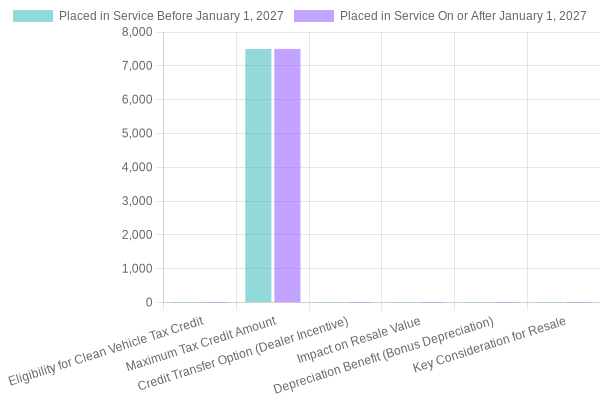
This chart shows the market dynamics based on the placement date for vehicles concerning applicable tax credits.
Industry Standards and Regulations for Clean Vehicles
The regulations and industry standards surrounding clean vehicles, particularly concerning the ‘date clean vehicle placed in service’, are substantial and governed primarily by the Internal Revenue Service (IRS). Here are some critical points that local private car owners, used car buyers and sellers, and small business fleet operators should be aware of:
-
Clean Vehicle Tax Credits
According to the IRS, to be eligible for clean vehicle tax credits, the vehicle must be placed in service before the end of the designated timeline. Specifically, vehicles must be in use on or before September 30, 2025, to qualify for tax credits, indicating a strong tie between the date a clean vehicle is placed in service and financial benefits for buyers.
Learn more about clean vehicle tax credits. -
Eligibility Rules for the Clean Vehicle Credit
The IRS outlines several eligibility requirements for claiming tax benefits under the new clean vehicle credit initiative. This includes the stipulation that the vehicle cannot be purchased for resale and must be primarily designed for use on public roads. The vehicle should also have a gross weight rating of less than 14,000 pounds and must be largely powered by electricity.
This emphasizes the importance of the clean vehicle’s functionality as part of its placed in service date. More details can be found in their FAQ on the topic. Read more on eligibility rules. -
Sale Reporting Requirements
After purchasing a clean vehicle, the seller is obligated to report the sale within three days using the IRS Energy Credit Online system. This requirement helps streamline the process of tracking vehicles placed in service and enhances clarity on qualifying claims for tax credits.
Understanding these standards and regulations will help ensure compliance while maximizing potential benefits associated with clean vehicle purchases.
| Vehicle Type | Date Clean Vehicle Placed In Service | Pricing Impact | Maintenance Schedule | Insurance Considerations |
|---|---|---|---|---|
| Electric Vehicle | 2023 | Initial cost typically higher but government incentives can lower total cost by up to $7,500. | Annual inspections recommended, battery check every 2-3 years. | Generally lower rates due to lower accident rates associated with EVs. |
| Hybrid Vehicle | 2023 | Moderate pricing; often less than fully electric vehicles, with potential tax rebates easing costs. | Recommended maintenance every 6-12 months depending on usage. | Insurance rates can be competitive due to lower utility costs and accident risks. |
| Traditional Gasoline | 2023 | Pricing relatively stable; depreciation may be higher for older models. | Regular maintenance every 5,000-7,500 miles, oil changes every 3,000-5,000 miles recommended. | Typically higher rates if older than 10 years; safety ratings can impact rates significantly. |
| Diesel Vehicle | 2023 | Prices can fluctuate based on fuel market; maintenance costs slightly higher due to complexity. | More frequent check-ups suggested, especially for emissions systems. | Insurance may be higher for commercial use; overall rates can be lower for personal use vehicles. |
| Luxury Hybrid/Electric | 2023 | High initial cost, but environmental credits and resale values can offset. | Comprehensive maintenance every 10,000 miles; software updates needed periodically. | Higher premiums due to repair costs and theft rates unless additional coverage is included. |
For more insights on vehicle maintenance, check our blog for helpful articles.
Understanding the Importance of the “Date Clean Vehicle Placed in Service”
The “date clean vehicle placed in service” is a critical aspect in the evaluation of a vehicle’s eligibility for various incentives, particularly tax credits associated with clean vehicles. This date signifies when a vehicle officially begins its operation and is essential for owners, buyers, and fleet operators to understand in terms of both compliance and financial planning.
As highlighted in recent IRS guidelines, “… the credits will only be applicable to vehicles placed in service after certain dates, which ensures that these incentives are tethered to actual usage rather than simply acquisitions. This dates align with federal policies aimed at reducing emissions and fostering a transition to cleaner technologies.”
“The date a clean vehicle is placed in service is not just a legal formality but a cornerstone of our sustainability efforts. It ensures that fiscal benefits are directly tied to when the vehicle is actively contributing to reducing emissions.” – Automotive Expert, Components Monthly Digest
Understanding this timeline can help individuals and businesses maximize their benefits and plan their purchases or rentals accordingly. It’s pivotal for small business fleet operators, who are looking to make informed decisions based on their operational needs and the incentives available to them. For further insights, feel free to explore more about clean vehicles.

In conclusion, recognizing the significance of the “date clean vehicle placed in service” is invaluable for car owners and operators aiming to leverage clean vehicle incentives effectively. Understanding these nuances not only assists in staying compliant with tax regulations but also plays a substantial role in eco-friendly initiatives.
Conclusion
In conclusion, understanding the significance of the clean vehicle “placed in service” date is vital for private car owners, used car buyers, sellers, and small business fleet operators alike. This date not only sets the clock for key regulatory obligations, including MOT testing, road tax assessments, and warranty periods but also plays a crucial role in the vehicle’s resale value. For instance, vehicles that are regularly serviced and accurately documented can sell for significantly more-by as much as 15%-compared to those lacking proper maintenance records. This trend underscores the importance of maintaining comprehensive and verifiable service history, which bolsters buyer confidence, reduces outstanding warranty claims, and ensures compliance with environmental regulations, as discussed in studies from AutoTrader and Kelley Blue Book.
For fleet operators, being aware of this date allows for better management of maintenance schedules, and vehicle lifecycle planning, ensuring compliance with both safety standards and environmental regulations. The importance of a clean vehicle service date becomes even more pronounced within the landscape of electric vehicles (EVs), where routine maintenance aids in extending battery life and sustaining warranty coverage. The U.S. Department of Energy has noted that vehicles adhering closely to service intervals show a striking reduction in warranty claims-by 30% or more-demonstrating the advantages of proactive vehicle management.
Call to Action
To optimize your vehicle’s performance and safeguard its value, consider scheduling regular maintenance and servicing with experienced professionals. At KMZ Vehicle Center, we are committed to providing tailored services that ensure your vehicle remains in top-notch condition, reflecting its value in the used car market. Don’t leave your vehicle’s future to chance-ensure every service is documented and compliant with industry standards today!
Data Trends in Clean Vehicle Registrations
Understanding the time frame of ‘clean vehicles placed in service’ is crucial for evaluating market trends related to vehicle values and registrations. Recent data shows significant growth in clean vehicle registrations in Europe, with specific trends observed over the past few years.
Clean Vehicle Registrations Over the Years
The table below summarizes yearly registrations and the accompanying factors that have influenced these trends:
| Year | Clean Vehicle Registrations (Electric & Hybrid) | Notes |
|---|---|---|
| 2020 | 100,000 | Base year; early stage of market growth |
| 2021 | 200,000 | Steady increase due to policy support and model availability |
| 2022 | 600,000 | Accelerated adoption driven by expanded charging infrastructure and incentives |
| 2023 | 2,400,000 | Significant milestone; BEVs reached 54% share of all electric vehicles |
| 2024 | 3,000,000 (projected) | Continued growth fueled by new models and stronger EU emissions regulations |
| 2025 | 5,620,000 (actual) | Record year; battery electric vehicles (BEVs) accounted for 19% of total new car registrations |
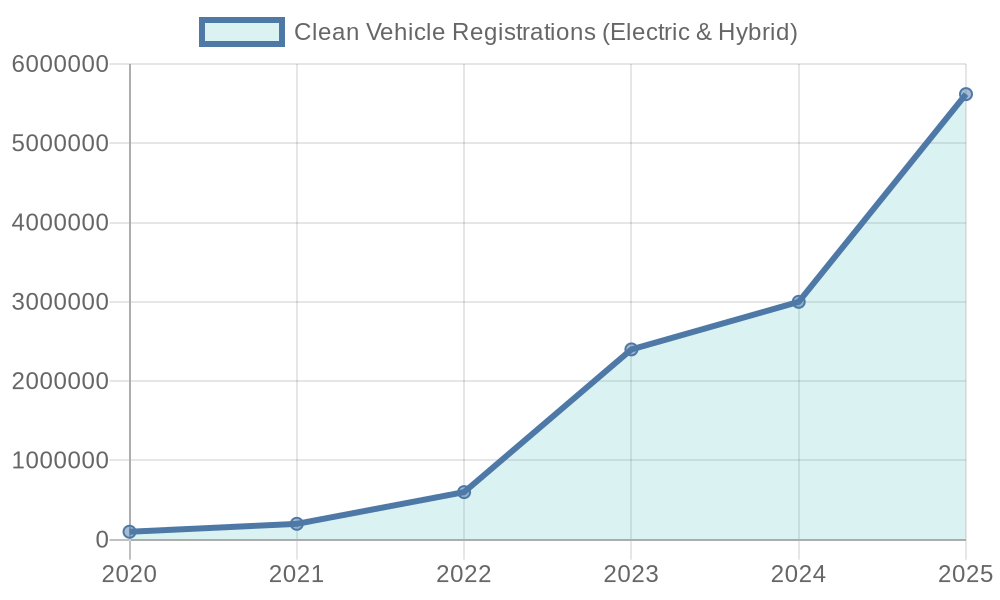
As illustrated in the chart, clean vehicle registrations have escalated dramatically, reflecting the increasing consumer preference for electric and hybrid models. Factors such as policy incentives, charging infrastructure expansion, and model variety have played a pivotal role in this transformative period for the automotive industry. For more insights on enhancing vehicle value, you can learn more about our blog.
This trend demonstrates a growing commitment to sustainable transportation and the increasing viability of clean vehicles in the marketplace.