
Motor vehicle service notifications are crucial tools for vehicle maintenance, alerting drivers to necessary servicing or repairs based on a vehicle’s onboard diagnostics. These notifications play a vital role in preventing minor issues from escalating into major problems, thereby ensuring safety and longevity. This guide aims to unpack the importance, functionality, and effective response to these notifications. Each chapter explores different dimensions—beginning with types and functions of service notifications, the pivotal role of sensors, the differences between scheduled and fault-based alerts, the significance of timely responses, and common issues with notifications, alongside their resolutions. By understanding these components, car owners and fleet operators can enhance their vehicle management practices.
Listening to the Dashboard: The Three Faces of Motor Vehicle Service Notifications and What They Tell You About Your Car’s Health
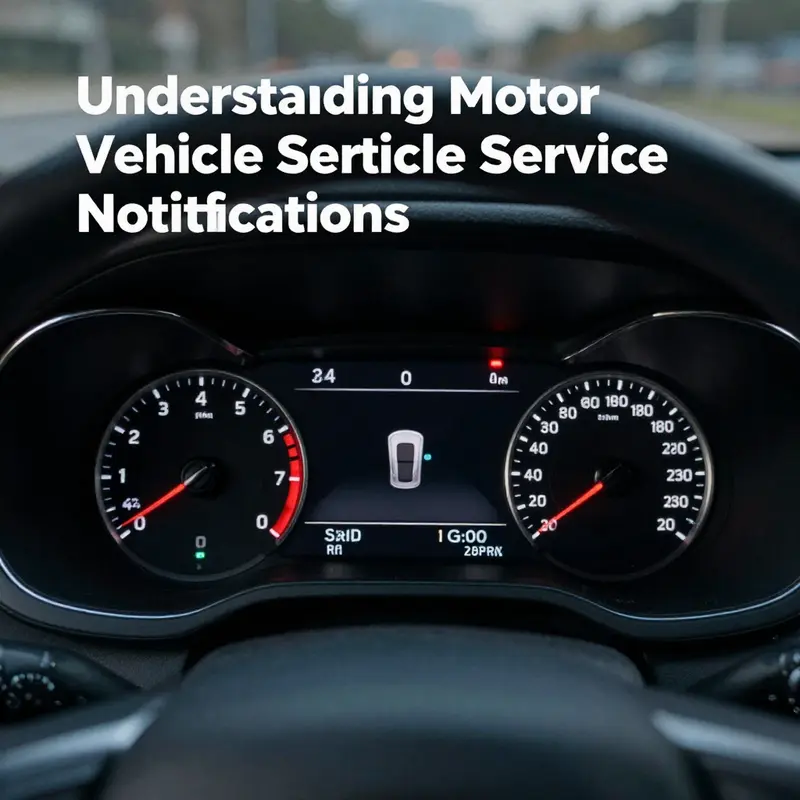
A motor vehicle service notification is more than a symbol on the dash. It is the vehicle’s way of speaking to its driver, a concise summary of what the onboard diagnostic system believes about the car’s health and operating needs. Modern automobiles are built around an intricate network of sensors, controllers, and software that continuously watch the engine, the transmission, the fuel system, and even the tires and brakes. When something wears, drifts out of specification, or simply reaches the end of a scheduled interval, the system translates that information into a clear cue on the instrument cluster. This cue is designed not to alarm but to invite timely action. Taken together, the notification system embodies a simple yet powerful philosophy: a well-maintained vehicle remains safer, more reliable, and less prone to costly failures. The logic behind it is straightforward, but the implications for daily driving are substantial. A driver who understands why a light comes on and what it asks for can make smarter decisions about maintenance, risk, and budget. In practice, there are three principal types of service notifications that drivers encounter, each with its own triggers, timing, and consequences. The first is a scheduled maintenance reminder, the second is a real-time diagnostic alert, and the third is a post-maintenance reset scenario that can masquerade as a fault if the reset is overlooked. The presence of these notifications reflects a broader shift in automotive care: the move from reactive repairs to proactive health management, powered by data rather than guesswork.
Scheduled maintenance alerts are the most familiar. They are set to pre-programmed criteria—mileage, time, or a combination of usage patterns—by the vehicle’s manufacturer. These alerts are not indications of a fault; rather, they are reminders that certain tasks should be performed at regular intervals to preserve performance, efficiency, and safety. Oil changes, filter replacements, coolant checks, tire rotations, brake inspections—these are the kinds of routine services that populate the maintenance schedule. The logic behind the pre-set cycle is not arbitrary. It rests on wear patterns established through testing, usage scenarios, and the realities of engine design. When the ECU, the vehicle’s central brain, reaches one of its predefined thresholds, it triggers the service indicator. The driver sees a dash light or a warning message that signals a future appointment with the shop, or in some cases the need to perform a minor in-vehicle reset or inspection. It is important to recognize that a scheduled alert does not imply a malfunction. It marks a planned step in the vehicle’s upkeep, an opportunity to prevent deterioration before it becomes a fault. The intervals can vary widely by model, but common themes persist: regularity, predictability, and a focus on the most critical wear items in the system.
The second category, real-time diagnostic alerts, arises from live sensor data that signals an abnormal condition or a possible imminent failure. These notifications are immediate, and they carry more urgency than a routine maintenance reminder. The triggers are specific and technical. For example, oil pressure sensors monitor lubrication, and a reading that dips below a safe threshold can trigger a warning. The same can happen if the oil level drops unexpectedly or if an abnormal air flow reading from the air mass or intake sensors indicates a leak, contamination, or a miscalibrated sensor. Throttle position anomalies, unusual engine load values, or unexpected sensor deviations can all prompt a fault-based notification. When a real-time alert appears, it is often accompanied by a diagnostic trouble code, an alphanumeric tag that helps a service technician trace the root cause. This is the system’s way of saying that something in the chain of reliability—lubrication, air intake, combustion, or timing—has deviated from the accepted norm. The right response is a check with an OBD-II scanner or a professional diagnostic scan, especially if the light is accompanied by rough running, misfires, loss of power, or unusual noises. Delaying inspection on a real-time alert can turn a minor anomaly into a major engine problem, so the principle remains clear: trust the sensor signals and treat them with prompt attention.
The third notable type—post-maintenance reset failures—occurs when the service light stays illuminated after a service visit, even though there is no overdue maintenance. This is not a fault in the engine or the car’s health; it is a procedural hiccup. Resetting the service indicator is a discrete, often model-specific task that clears the memory of the maintenance timer. If the reset is not performed correctly, the system continues to display the reminder despite a clean bill of health. The remedy is practical and straightforward: use the appropriate reset procedure, either through a diagnostic tool or via the vehicle’s in-dash menus. The exact steps vary by system family, but the underlying logic is consistent. In many cars, a dedicated sequence in the vehicle’s settings or service menu will reset the indicator after maintenance has been completed. In others, a handheld scanner is required to realign the ECU’s maintenance counter with the new service status. The risk of ignoring a reset is not that the car is unsafe; it is that you may become desensitized to the indicator, potentially missing real maintenance needs in the future. A light that refuses to turn off after a service should prompt a quick check of the reset procedure, and if uncertainty remains, a qualified technician can confirm that the maintenance counter is correctly synchronized.
These three notification archetypes—scheduled reminders, real-time diagnostics, and post-service resets—form the backbone of how modern cars communicate health and maintenance needs. Behind each light is a logic loop: gather data from sensors, compare it with limits or schedules, and translate the result into driver action. The safety and performance implications are substantial. A properly timed oil change can protect the bearings and the engine’s lubrication system, a timely check of tires and brakes can prevent flats and unsafe stopping distances, and a well-executed diagnostic reveal can avert a breakdown before it occurs. While the words on the screen may seem simple, the data behind them is complex, and the accuracy of the interpretation depends on the integration of software, hardware, and the conditions under which the vehicle operates. Driving in extreme temperatures, doing a lot of short trips, towing, or carrying heavy loads can shift maintenance needs and the frequency of both scheduled and sensor-driven alerts. The human factor remains essential: the driver’s attentiveness to the dashboard, the willingness to schedule service, and the capacity to interpret signals in context.
Interpreting the message correctly often requires a balance between trust in the automation and a practical understanding of the car’s habits. When a scheduled maintenance alert appears, it is worth considering whether the planned service needs to be adjusted to reflect real-world usage. A driver who makes frequent short trips, for example, may benefit from more frequent oil changes or filter inspections than the default interval would suggest. The same applies to other routine services like tire rotation and brake checks. The risk of overestimating the interval exists, but the risk of underestimating it is greater: delaying maintenance can lead to degraded performance, reduced fuel efficiency, and, in the worst case, serious mechanical failures. The guiding principle is to respect the manufacturer’s recommended limits while applying informed judgment based on driving patterns, climate, and load. A practical approach is to view the maintenance reminder as an annual or mileage-based promise rather than a fixed decree, adjusting within a narrow margin to reflect actual wear and use. For a deeper dive into oil-change intervals and how time and mileage interact, many readers will find value in exploring resources that break down the trade-offs in a practical, real-world way. See the discussion on oil-change intervals and mileage for a nuanced view of how to calibrate service timing to your habits: optimal oil change intervals time vs mileage.
Yet even with a clear framework for interpreting alerts, drivers should adopt a disciplined diagnostic habit. When a real-time alert appears, the first step is a careful check of the symptom situation and a quick visual inspection if safe to do so. Look for obvious issues in the engine bay, under the car, or at the tires. If the message is accompanied by symptoms such as vibration, loss of power, unusual noises, or smells, immediate service becomes more urgent. Even if the engine runs smoothly, a persistent fault code or a suspicious sensor reading warrants a scan with an OBD-II tool to retrieve fault codes and data streams. The codes act as a map, guiding technicians to the likely zone of concern—be it lubrication, air intake, or exhaust. A professional diagnosis can determine whether a simple repair, such as a sensor recalibration or a replacement, is sufficient, or whether the issue points to a deeper mechanical problem. In this sense, service notifications empower proactive maintenance without replacing judgment with guesswork. They invite a disciplined routine: track the light, interpret the signal in context, verify with data, and act in a timely, informed manner.
The lifecycle of a service notification—whether routine, diagnostic, or procedural—depends on three practical habits. First, keep the owner’s manual handy. It is the most reliable source for understanding the intent of the light, the intended maintenance window, and the correct reset procedure. Second, maintain a simple log of trip patterns, service visits, and any recurring light messages. This record helps tailor maintenance timing to actual use and can aid a technician in diagnosing issues that may not be obvious from a single event. Third, perform a preventative scan at regular intervals, even in the absence of a warning. A lightweight diagnostic scan every six months can reveal slow-developing issues that might not yet trigger a warning but could become critical later. This proactive stance aligns with the broader goal of vehicle health management: maximize performance, safety, and longevity while avoiding the tension of surprise repairs.
In closing, the practice of listening to the dashboard is really a discipline of listening to the car’s data. The service notification system translates a sprawling web of sensors, wear indicators, and software programs into actionable guidance for drivers. It distinguishes between reminders and alarms, between preventative care and urgent repairs, and between a maintenance ritual and a symptom that demands diagnosis. By understanding the three faces of these alerts, drivers can navigate maintenance with greater clarity and confidence, making informed choices about timing, cost, and safety. And when in doubt, a structured approach — check the light’s nature, compare it with the manual, verify with an OBD-II tool, and consult with a qualified technician — offers a reliable path to keeping a vehicle reliable across years of use. For readers seeking contextual information about regulatory standards and public guidance related to motor vehicle information, an external reference is available at the Registrar’s official information portal: https://www.registrar.gov.uk/motor-vehicle-information.
Sensors as Sentinels: How Real-Time Data Drives Motor Vehicle Service Notifications
Modern vehicles rely on a chorus of sensors that act as sentinels for the car’s health, constantly watching, listening, and measuring dozens of parameters. From the moment you turn the key or press the start button, this silent network of data points feeds the vehicle’s electronic brain—the onboard computer, often organized as an Electronic Control Unit (ECU)—which interprets conditions, flags anomalies, and, when necessary, prompts a service notification. This flow is not a simple alert system; it is an integrated health-management loop that connects the physical state of the car with a structured maintenance schedule, and increasingly, with remote diagnostics and predictive maintenance that extend beyond the vehicle’s walls. When we speak of motor vehicle service notifications, we are describing a technology-enabled mechanism that helps drivers avoid the kind of minor issues that can escalate into costly repairs, while also supporting safer and more efficient driving over the long haul.
The breadth of sensors on modern vehicles is both the source of their reliability and the complexity behind their notifications. Engine and propulsion system sensors monitor critical parameters such as temperature, pressure, flow rates, and catalytic converter activity. Engine temperature sensors, oil pressure sensors, and oil level indicators work in concert to assess lubrication and cooling—two fundamental pillars of engine longevity. A rise in engine temperature beyond expected thresholds can set off a fault-based alert because overheating can accompany a range of issues, from insufficient cooling to a failing water pump or a blocked passage. Simultaneously, sensors that gauge air intake, exhaust composition, and fuel mixture help the ECU determine whether combustion is efficient, clean, and within design tolerances. If any of these indicators drift toward abnormal values, the system can escalate a notification that something needs attention, sometimes with a warning light that accompanies a precise diagnostic message.
Not all service notifications are alarm bells. A large portion of today’s reminders are scheduled maintenance prompts—pre-programmed cues tied to expected wear and service intervals. These reminders are anchored in manufacturer-defined maintenance calendars and mileage or time-based thresholds. They serve as proactive nudges to perform routine tasks such as oil changes, filter replacements, brake inspections, or tire rotations. The sensors contribute to refining these reminders by confirming when the vehicle’s actual usage patterns or operating conditions suggest that a task may be overdue or approaching a wear limit. For instance, tire pressure sensors provide real-time readings that, when combined with wheel speed and temperature data, can influence maintenance timing by indicating tire health is approaching the end of its useful life. In this sense, sensors don’t merely signal “do this now”; they help tailor the maintenance cadence to how the vehicle is actually used, which is a departure from the one-size-fits-all approach of fixed intervals.
A crucial distinction exists between scheduled reminders and fault-based alerts, and sensors are at the heart of both. Scheduled reminders rely on data points that track time and distance traveled, but they are enriched by real-world operating data. If a vehicle traverses long highway stints with consistent operating temperatures, sensors may confirm that the standard maintenance window has not yet been reached or that an oil change is still within acceptable limits for the current use. Conversely, fault-based alerts arise when sensors detect deviations that imply a compromising condition. A drop in oil pressure, an irregular fuel-air ratio, an abnormal throttle response, or a misalignment in transmission sensors can all prompt an immediate service notification because these conditions threaten performance, efficiency, and safety. The notification may be as simple as a dashboard light, or it may be accompanied by a specific fault code that a technician can read with an appropriate diagnostic tool. In the hands of a skilled technician, this information accelerates diagnosis by narrowing the field of potential issues to the most probable culprits.
Beyond the local, on-board view, a growing facet of sensor-driven maintenance is connectivity. Many modern vehicles communicate sensor data to cloud-based platforms or manufacturer servers, ushering in a new era of predictive maintenance. Rather than waiting for a light to illuminate the dash, the system can analyze long-term trends in sensor data to forecast when a part is likely to fail or when a service interval should be adjusted based on actual usage patterns. Brake wear sensors, for example, may track the rate of pad erosion across multiple cycles and, when a specific observation pattern emerges, trigger a reminder or an appointment request through the vehicle’s infotainment system or a connected mobile app. This level of predictive maintenance can reduce downtime and help owners plan service visits with greater accuracy, potentially avoiding emergency repairs and extending component life.
The data journey from sensor to notification is not completed in isolation. The ECU processes inputs from dozens of sensors, applies fault-detection algorithms, and then issues a service message that is displayed to the driver. If the system identifies a confirmed fault, the message is typically reinforced with an illuminated warning light and often a diagnostic trouble code (DTC) that technicians use as a pinpointing tool during service. If the alert pertains to routine maintenance rather than a fault, the notification provides guidance on the type of service recommended and often how soon it should be performed. The nuance matters: a service light that appears with no accompanying driving symptoms generally points to routine maintenance, while a light that accompanies vibrations, loss of power, or unusual noises can signal an actual fault requiring urgent attention. In either case, the underlying signal—the sensor reading—remains the same: data captured by sensors, interpreted by the ECU, and translated into guidance that aims to preserve safety and reliability.
The role of sensors extends into the realm of personalized vehicle health management. As ownership records are linked to individual cars, sensor histories become part of a broader service narrative. Vehicle health data can be aggregated to create a longitudinal profile that preserves insights on component wear, maintenance efficacy, and repair history. This approach facilitates not only faster repairs but also better customer service, as technicians can anticipate parts needs and prepare appropriate recommendations ahead of time. Connected sensor networks enable remote diagnostics, where technicians access a vehicle’s health snapshot without a physical inspection, allowing for pre-visit planning and more efficient use of service time. It is important to recognize that this connectivity hinges on robust data standards and privacy safeguards. When data is shared with manufacturers or service providers, it is typically anonymized and aggregated to protect individual privacy while still delivering actionable insights for vehicle health management.
For readers who are curious about the technical underpinnings of these connected sensor systems, the broader automotive engineering discourse offers deep-dive analyses. Advances in sensor fusion—the method of combining multiple sensor measurements to improve accuracy and reliability—are central to producing dependable service notifications. Sensor fusion reduces the chance that a single erroneous reading will trigger an unnecessary warning by cross-checking readings across related sensors and applying redundancy. This layered approach helps to prevent nuisance alerts and supports the threshold logic that distinguishes routine reminders from genuine faults. The practical outcome is a smoother user experience where the driver is more likely to receive meaningful guidance rather than a jittery cascade of ambiguous lights.
From a practical standpoint, drivers should view service notifications as a health-readout rather than a control signal. When a light appears, the first step is to interpret whether it is a reminder of scheduled maintenance or a fault indication. If the alert is routine, consulting the vehicle manual or the maintenance section of the infotainment interface can clarify what service is recommended and when. The presence of a fault notification often warrants a diagnostic check with an OBD-II scanner, which can reveal the specific DTCs associated with the problem. It is essential to approach these indications with a balanced mindset: not every warning implies catastrophic failure, but ignoring a genuine fault can lead to accelerated wear or more serious breakdowns. If the road conditions allow, a cautious drive to a service center for assessment is prudent; otherwise, road-side assistance may be advisable to prevent damage.
The sensor-driven service ecosystem also redefines the temporal rhythm of maintenance. Rather than treating service as a one-off event tethered to mileage, many drivers now experience a maintenance cadence that reflects the car’s actual operating environment. In city driving with frequent stop-and-go traffic, sensor data may reveal greater wear in certain components or the need for more frequent checks, while highway cruising could extend intervals for others. This dynamic approach aligns with a broader shift toward value-based maintenance, where the objective is to optimize performance, safety, and total cost of ownership by aligning service with lived usage rather than a fixed calendar. The practical implication for drivers is simple: engage with the car’s health data, stay attentive to both reminders and warnings, and use the information to plan maintenance in a timely manner.
As the ecosystem evolves, the integration of sensor data with mobile apps and dealer networks becomes more seamless. Drivers can expect alerts to be delivered through familiar interfaces, with the added ability to schedule appointments and receive reminders tailored to their vehicle’s unique sensor history. This connected framework also opens avenues for proactive service planning, such as preparing for oil changes, filter replacements, or tire services in advance of a scheduled visit, based on predicted needs rather than a generic timetable. In this context, the sensor becomes not only a source of warnings but a catalyst for smarter ownership, enabling a smoother experience and a higher degree of vehicle reliability over the long run. The result is a driving world where maintenance is increasingly anticipatory rather than reactive, grounded in real-time data and enriched by predictive insights.
To deepen the reader’s understanding of where sensor data sits within the broader maintenance landscape, consider the following: the role of sensors is inseparable from the vehicle’s broader diagnostic framework, the reliability of the ECU’s interpretation, and the quality of the data connections that feed cloud-based platforms. The reliability of a service notification hinges on accurate readings, robust processing algorithms, and clear communication with drivers and technicians. Fault-based alerts are most valuable when they are timely and specific, enabling rapid triage and repair. Scheduled maintenance reminders are most effective when they reflect actual wear patterns, not merely elapsed time or mileage. In both cases, the sensor network is doing the heavy lifting behind the scenes, empowering drivers to act with confidence and helping service providers prepare precisely what a vehicle needs. For readers who want to explore more about how sensor networks underpin intelligent vehicle maintenance and connected diagnostics, a deeper technical discussion is available in the referenced scholarly work on automotive sensor systems and connected vehicle technologies: https://www.sae.org/publications/technical-papers/content/2023-01-1245/.
For a practical path to continuing education on maintenance timing that complements sensor-driven insights, you can consult a practical guide focused on oil-change intervals and the interplay between time and mileage, which helps translate sensor-driven cues into actionable maintenance planning: https://kmzvehiclecenter.com/optimal-oil-change-intervals-time-vs-mileage/. This resource illustrates how sensor data and manufacturer guidance converge to shape maintenance schedules in real-world terms, offering concrete examples that help bridge the gap between diagnosis and service.
In sum, sensors are the backbone of modern motor vehicle service notifications. They convert raw physical conditions into meaningful signals, enable both proactive and reactive maintenance strategies, and support a more informed relationship between drivers and the vehicles they rely on daily. By understanding how these sensors operate, how the ECU interprets readings, and how connectivity expands the reach of maintenance advice, readers gain a clearer sense of why service notifications exist in the first place: to keep vehicles safer, more reliable, and more efficient across a lifetime of use.
Listening to the Dashboard: Understanding Scheduled and Fault-Based Motor Vehicle Service Notifications
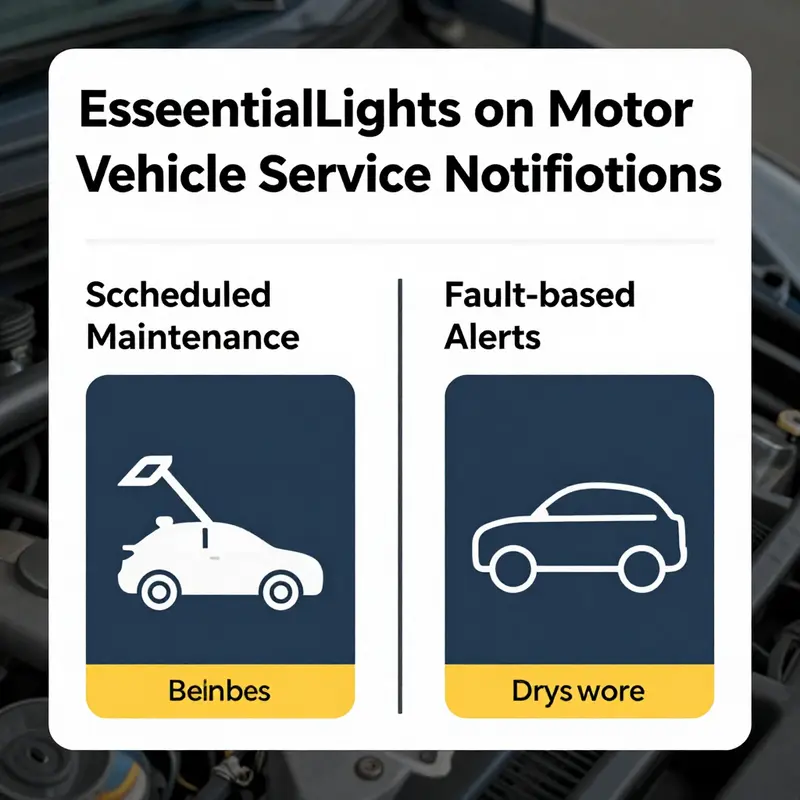
For further authoritative guidance, see the official maintenance guidance. This external resource provides a foundational perspective on how modern maintenance concepts are articulated and supported across vehicle platforms, reinforcing the idea that service notifications are part of a robust system designed to protect your vehicle’s health and your safety on the road.
Turning Alerts Into Action: How Timely Motor Vehicle Service Notifications Sustain Trust and Keep Vehicles on the Road
A motor vehicle service notification is more than a dashboard light. It is a structured prompt that travels across a conversation among the car, the driver, and the people who service the vehicle. When the warning appears, it signals that a specific maintenance task is becoming due, or that a sensor has flagged an abnormal condition that could compromise performance, safety, or longevity. The real value of these notifications rests not in the moment they illuminate, but in what happens next: the speed, clarity, and quality of the response. In many ways, timely responses to these alerts are about preserving a relationship built on trust. The customer seeks assurance that the vehicle will be kept in good shape, that maintenance will be scheduled without unnecessary friction, and that potential problems will be tackled before they cascade into breakdowns. The service provider, in turn, bears responsibility for turning data into action in a way that respects the driver’s time, minimizes risk, and preserves the vehicle’s reliability and resale value. When a notification is dispatched, it sets a service goal for the shop and for the driver. The goal is not merely to acknowledge the notification, but to translate it into a concrete plan that aligns with the vehicle’s needs and the driver’s schedule. A professional response begins with accurate data capture. It requires confirming the vehicle identification details, understanding the exact maintenance task or fault indicated by the system, and assessing whether the trigger was based on mileage and time or on a sensor driven condition. If a fault based alert points to potential risk, the response should escalate with a sense of urgency appropriate to the danger. If a scheduled maintenance reminder is issued, the response can proceed with a careful blend of standard procedure and practical timing, recognizing that the goal is prevention rather than reaction. In either case, the first promise of a timely reply is reassurance. The moment a notification arrives, a customer expects to be told what will happen next, when, and why. The most effective communications convey that the vehicle is not being treated as a problem but as a partner in ongoing care. This is why the tone of the outreach matters as much as the content. A concise, respectful message that explains the maintenance needs, the recommended interval, and the anticipated impact on safety and performance helps to set realistic expectations and reduces the likelihood of misinterpretation. It is here that the practice of proactive engagement proves its value. Rather than waiting for a frustrated customer to contact the shop, experienced service teams initiate outreach. They present a proposed appointment window, confirm whether the driver prefers digital reminders or phone calls, and offer alternatives such as after hours slots or shuttle services if the vehicle is a critical asset. In fleet operations, this approach translates into a measurable reduction in missed appointments, a lower risk of cascading failures, and a stronger alignment between maintenance cycles and vehicle usage patterns. The mechanics of timely response extend beyond the moment of notification. They require a robust operational framework that can absorb the flow of alerts from many vehicles, each with its own maintenance calendar and diagnostic profile. A well designed workflow anticipates routine reminders and separates them from fault based alerts, guiding staff through triage, prioritization, and execution. For routine reminders, the system can automatically propose an appointment date, check the customer’s availability, and confirm the booking with a single click or tap. For fault based alerts, the workflow should route to a technician with the right specialization, trigger appropriate safety checks, and, if necessary, arrange for immediate roadside assistance or on site evaluation. This is not bureaucratic overhead. It is a sequence that preserves the driver’s confidence and the vehicle’s safety, while reducing the risk of human error stemming from manual, ad hoc handling of notifications. Central to this capability is the accuracy of the contact data and the clarity of the vehicle profile. A preemptive data hygiene program is essential: up to date phone numbers, preferred contact channels, email addresses, and even preferred language. When drivers know that the messages they receive will reach them promptly and in a familiar format, the friction of scheduling drops significantly. The benefits of timely responses extend beyond convenience. They ripple into the realm of safety, reliability, and asset longevity. A timely notification paired with a prompt appointment can prevent a minor issue from becoming a major one. For example, a tire pressure warning combined with a scheduling prompt ensures a quick inspection that might avert a blowout or uneven tire wear. An oil quality warning paired with a fast oil change appointment helps to maintain proper lubrication, preserving engine health. In a high utilization setting, such as a commercial fleet, these small, well timed interventions accumulate into a dramatic improvement in uptime and total cost of ownership. The driver experience also matters. When a driver sees a proactive service notification that is followed by a timely, painless scheduling option, the feeling is of being supported rather than burdened. This fosters loyalty. It reduces the temptation to push the maintenance to the side, and it signals that the service provider respects the driver’s time and responsibilities. There is a subtle, but important, nuance in how the notification is framed. If the message implies blame or fault, it may provoke defensiveness. If it emphasizes care and partnership, it invites collaboration. The most effective messages describe what will be done, why it matters, and how it will fit into the driver’s routine. They avoid jargon that may confuse a non technical audience and instead present transparent, outcome oriented language. This is especially critical when a fault based alert appears. In those moments, the difference between calm, clear communication and hurried, uncertain messaging can determine whether the driver proceeds with maintenance, seeks a second opinion, or delays the necessary steps. The service provider should also be mindful of the possibility that a notification can persist after maintenance has been performed. A common situation is the reset of a maintenance counter that was not completed during the service visit. In such cases, the notification is not a fault but a system timing issue that can be resolved with the proper diagnostic procedure or by following the vehicle’s reset steps precisely. Training staff to recognize this scenario prevents unnecessary follow ups and preserves trust. A robust response strategy also considers the inevitability of roadblocks. There will be occasions when a driver cannot make an appointment within the suggested window, or when a shop is temporarily at capacity. In these instances, transparent alternatives matter. Offering a hold or a wait list, rescheduling with a clear explanation, or providing a loaner vehicle or a shuttle service can transform a potential frustration into a constructive experience. The practical side of timely responses is anchored in measurement. Service providers should track response times from the moment a notification is received to the moment the customer is contacted, the rate of appointment confirmations, and the rate of no shows. They should monitor the conversion of fault based alerts into completed diagnostic visits and the rate of successful recalls or safety campaigns that are resolved within a targeted timeframe. These metrics reveal where communications break down, whether it is in data quality, the coordination between departments, or the availability of appointment slots. In this sense, timely responses are as much a discipline as a technology capability. It requires a culture that values prompt, accurate, and empathetic communication. That culture is reinforced by standard operating procedures that codify how to respond to different notification types, what information to include in the initial outreach, and how to document the outcomes of each engagement. It is not enough to tell customers that maintenance is due; the system must also support a predictable, repeatable, and respectful experience. The deeper payoff is relational. A customer who receives consistent, helpful, and timely communication tends to develop a longer term engagement with the service provider. They are more likely to schedule regular maintenance, to bring vehicles in for inspection ahead of critical thresholds, and to recommend the service experience to colleagues and peers. This creates a virtuous loop where timely notifications reinforce trust, keep vehicles performing as designed, and ensure safety on the road. For those who manage or operate vehicle service networks, the lesson is to view every notification as a touchpoint with a customer and a chance to demonstrate competence. It is a moment to translate data into action and build a reputation for reliability. As a practical note, consider this approach: assign ownership of notification responses, standardize the language used in outreach, and provide the customer with a simple, intuitive path to schedule. Integrate the scheduling flow into the same system that generates the notification, so that the user experiences a single, seamless process. Combine this with a clear policy for fault based alerts, including escalation protocols and safety checks, so that drivers receive timely guidance about risk management. In doing so, the organization not only protects the customer’s investment but also contributes to broader road safety objectives. To deepen the practical understanding of maintenance interval planning alongside notification responsiveness, see this reference on oil change intervals and timing versus mileage as a contextual resource: Optimal oil-change intervals: time vs. mileage. The single most important takeaway is that timely responses convert a technical indicator into a trusted service experience. They turn a potentially impersonal process into a human conversation guided by efficiency, clarity, and care. The end result is a vehicle that remains dependable, a driver who feels supported, and a shop that earns a reputation for professionalism and reliability. In the wider ecosystem, those outcomes translate into fewer roadside disruptions, more consistent maintenance compliance, and a quieter, smoother operation for fleets and private owners alike. This alignment between notification governance and customer experience is precisely what sustains trust in the modern automotive service environment and what drives the durable performance that customers expect when the dashboard lights come on. For broader context on improving customer communication in automotive services, readers may find value in industry guidance that emphasizes practical messaging and process efficiency: Automotive Customer Communication Best Practices at the following external resource.
Understanding Motor Vehicle Service Notifications: Common Pitfalls and How to Resolve Them
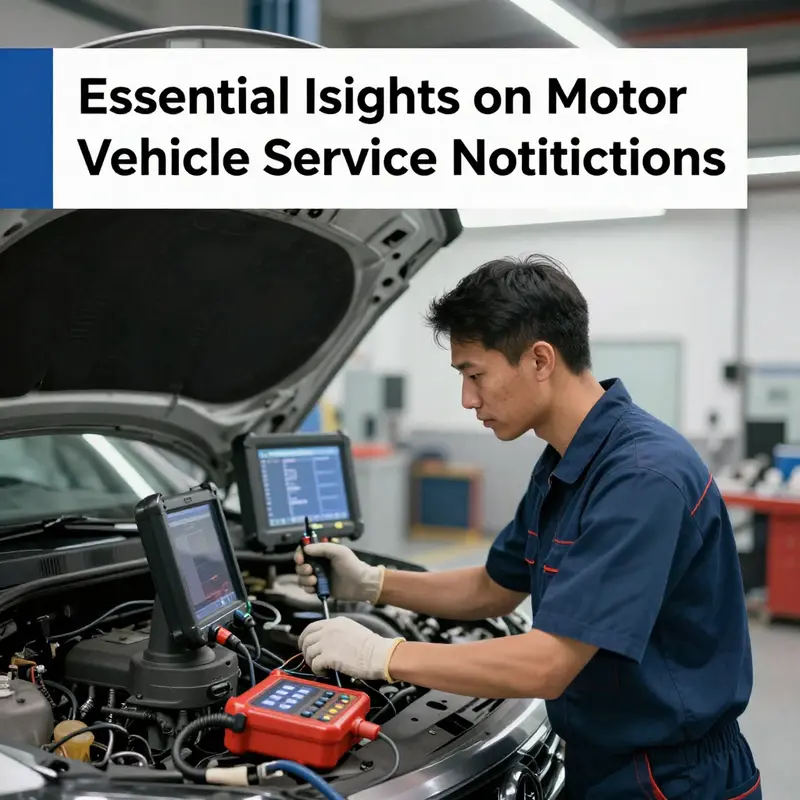
A motor vehicle service notification is a tool for health management that helps drivers schedule maintenance and respond to actual faults. However, misinterpretation and unsolicited notices can lead to confusion, unnecessary costs, or safety risks. This chapter outlines the most common issues: misleading alerts, delayed or inaccurate reminders, unclear warranty or contract terms, and questions of authenticity. For each scenario, readers will find practical steps: verify through official manufacturer channels, compare reminders with the published maintenance schedule, read the contract terms carefully, keep organized records, and seek professional diagnostics when indicated. The goal is to equip drivers to distinguish routine notifications from genuine problems, and to act promptly when a real fault is identified, while avoiding overreaction to benign counters or resets.
Final thoughts
Understanding motor vehicle service notifications empowers car owners, used car buyers, and fleet operators to maintain their vehicles efficiently. Recognizing the types, the technology behind the notifications, and responding promptly can prevent costly repairs and enhance vehicle longevity. It’s not merely about being informed; it’s about taking proactive steps to ensure optimal vehicle health. Embracing this knowledge not only fosters safer driving experiences but also contributes to the overall efficiency of vehicle operation.