
The vehicle services industry in the United States plays a crucial role in maintaining the safety, efficiency, and longevity of millions of vehicles on the road. This multifaceted sector encompasses everything from routine maintenance to complex mechanical repairs, catering to the needs of private car owners, used car buyers and sellers, and small business fleet operators. As vehicle technology evolves and customer expectations grow, understanding the various aspects of vehicle services becomes increasingly important. Each chapter of this guide delves into vital components of the industry: we will begin with routine maintenance, discussing its significance in vehicle longevity and performance. Next, we will explore mechanical repairs that address the core functionalities of vehicles, followed by specialized services that cater to unique customer requirements. Finally, we will examine market dynamics and key players in the USA vehicle service industry, highlighting how they shape the sector. Together, these insights aim to empower vehicle owners and operators with knowledge that enhances their automotive experience.
The Backbone of Reliability: Routine Maintenance in USA Vehicle Services
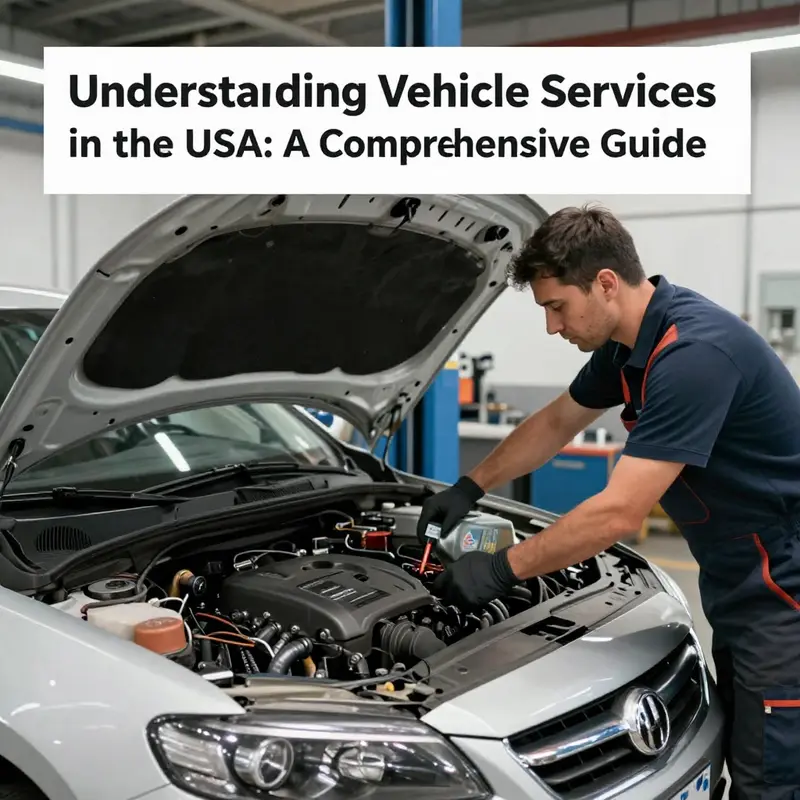
Routine maintenance is the steady heartbeat of the United States vehicle services landscape. It is the scheduled, proactive care that keeps millions of machines on the road performing safely, efficiently, and reliably. Though it manifests as familiar tasks—oil changes, tire rotations, brake inspections, fluid checks, filter replacements, and battery testing—its value extends far beyond the immediate service visit. When done consistently and well, routine maintenance reduces the risk of unexpected breakdowns, preserves fuel economy, and sustains the vehicle’s resale value. In a country as car-dependent as the United States, where daily life and commerce hinge on dependable transportation, routine maintenance becomes less a luxury and more a prerequisite for mobility, safety, and economic efficiency.
The essence of routine maintenance rests in its scheduling and its comprehensiveness. The cadence varies by vehicle and driver, yet the core idea remains constant: address wear and degradation before they escalate into failures. Technicians perform a set of core checks at prescribed intervals, such as oil and filter changes to lubricate and cleanse the engine, tire rotations to promote even wear, and brake inspections to verify stopping power. Fluid checks—coolant, transmission fluid, brake fluid, and others—help manage heat, lubrication, and hydraulic performance. Filters, including air and cabin filters, play a quiet but critical role in protecting the engine and occupant comfort. Battery testing, often part of a broader electrical system evaluation, ensures reliable starting and power delivery for increasingly electronics-laden modern vehicles. These tasks, while routine, are the foundation of longer-term reliability and safety.
What makes routine maintenance in the United States particularly consequential is the scale and diversity of the vehicle fleet. The market supports a wide spectrum of vehicles, from economical sedans to heavy payloads and advanced hybrids or electrics. Each class presents its own maintenance demands, with some requiring more frequent inspections for tires or fluids, and others demanding more extensive diagnostics as they incorporate advanced driver assistance systems and electrified powertrains. The journey from a simple oil and filter service to a holistic, system-wide diagnostic process reflects a broader shift in the industry toward proactive, data-driven care rather than reactive repairs. Technicians now balance traditional mechanical checks with electronic diagnostics to ensure that wear or failure in one subsystem does not quietly compromise the rest of the vehicle’s performance.
The modern vehicle is a symphony of electronics. It is not unusual for a single vehicle to contain a dozen, dozens, or even more electronic control units (ECUs) that manage engine timing, emissions, braking, transmission, infotainment, and driver-assist features. In some high-end or advanced models, the number of ECUs can surpass two hundred. These systems communicate across a web of sensors, actuators, and software applications, and a failure in one can ripple outward, diminishing fuel efficiency, safety, or ride comfort. This reality has transformed routine maintenance from a purely mechanical discipline into a diagnostic discipline as well. A thorough service now often requires diagnostic scans of major electronic subsystems to verify that all systems are functioning within specification and that no latent faults are lurking in the background.
The shift toward comprehensive system scanning before and after maintenance work has grown out of a discipline borrowed from collision repair and safety standards. The idea is straightforward: before any service, technicians collect a complete system readout to establish a baseline. After the work is completed, they re-check to confirm that the repair or maintenance did not introduce new faults and that the pre-existing issues were fully resolved. This data-driven approach is increasingly framed as the best practice in modern service bays. It embodies a commitment to prevent creeping issues that might erode reliability over time and to protect the customer’s investment in their vehicle. A 2025 piece from a leading industry publication emphasizes the principle with a practical focus: when the vehicle is returned, we want to ensure that every issue observed on arrival has been addressed and that no new problems have been introduced during the repair process. This holistic, end-to-end perspective underscores how routine maintenance has evolved beyond a checklist of parts and fluids to a comprehensive, vehicle-wide assurance process.
The practical implications of this evolution are notable. For technicians, a full-system scan becomes a routine part of the workflow, not a special-case add-on. It requires access to reliable diagnostics software, a well-organized process for recording findings, and a clear communication channel with customers about what the data mean and what actions are required. For customers, the benefits are tangible: better reliability, fewer surprise repairs, and a clearer understanding of how each service contributes to the overall health and performance of the vehicle. It also makes maintenance more transparent, turning maintenance visits into opportunities for education and proactive planning. When a customer learns that a particular concern is not just a problem for today but a pattern that could worsen with time, they are more likely to engage in timely service and consider longer-term maintenance strategies.
The consumer experience of routine maintenance in the United States has also grown more complex in the best possible way: the service history of a vehicle is increasingly captured in digital records, and those records enable better decision-making across repairs and maintenance. A well-documented service history helps technicians understand pattern recognition—repeating wear on a particular subsystem, recurring warnings, or gradually shifting performance metrics. This data-based perspective aligns maintenance with real-world usage, which varies widely across drivers, climates, and road conditions. A customer’s annual routine may differ from a commercial fleet’s needs, but the underlying principle remains the same: establish a baseline, monitor deviations, and intervene before those deviations become disruptive or costly.
The industry landscape around routine maintenance is highly fragmented, with a mix of national networks and independent shops serving communities across the country. This fragmentation presents both opportunities and challenges. On one hand, consumers enjoy broad access and convenience—neighborhood shops, local technicians, and smaller operators who can offer personalized service. On the other hand, consistency becomes a concern when it comes to diagnostic capabilities, data integrity, and adherence to evolving industry standards. As the vehicle fleet grows more sophisticated, the importance of standardized training, consistent diagnostic practices, and robust quality control becomes more pronounced. In response, many shops are investing in standardized service procedures, staff training, and accreditation-like validation from recognized industry bodies. While specific brand affiliations may vary, the shared emphasis is on reliability, safety, and customer trust.
Alongside the human and procedural elements, the role of testing and compliance in routine maintenance cannot be overstated. In the broader automotive ecosystem, validation and certification practices help ensure that maintenance and repair work meet established technical expectations. While the mechanics of certification are not the visible aspect of every customer interaction, they contribute to the overall reliability of the system. For manufacturers, repair facilities, and service centers, adherence to validated testing standards translates into safer vehicles, better performance, and greater long-term value for owners. The broader ecosystem thus supports a cycle of continuous improvement: service providers learn from data, standards bodies articulate and update expectations, and customers benefit from more reliable, safe, and efficient transportation.
To complement the technical and procedural narrative, it is useful to connect routine maintenance to the broader trends and resources that shape the market. Industry analyses describe a market underpinned by both scale and specialization. The size and diversity of the U.S. automotive service market reflect the wide range of vehicle types and usage patterns, from daily commuter cars to work trucks and fleet vehicles. This diversity reinforces the need for flexible maintenance strategies that can adapt to different operating environments, budgets, and time constraints. It also spotlights the value of consumer education. When drivers understand the purpose and benefits of routine maintenance—why certain fluids need changing, why wheel alignment matters, or how a tire rotation contributes to longevity—they are more likely to participate actively in the maintenance process and to plan ahead for service visits.
For readers who want to explore practical, actionable aspects of routine maintenance, a focused resource on oil-change intervals can be especially informative. It offers a concrete example of how maintenance planning translates into real-world decisions about service timing. See the resource on Optimal oil change intervals (time vs mileage) for guidance on tailoring intervals to vehicle use, driving conditions, and manufacturer recommendations. This kind of resource helps bridge the gap between generic maintenance principles and personalized, vehicle-specific planning. Optimal oil change intervals (time vs mileage)
In sum, routine maintenance in the United States is not a static set of tasks but a living, data-informed discipline that integrates mechanical checks with electronic diagnostics, historical service data, and standardized quality practices. It reflects a broader shift toward proactive care, where the goal is not merely to fix what is broken but to protect the vehicle’s performance, safety, and value over time. The chapter you just read is a lens into that shift: a lens that reveals how routine maintenance has become the backbone of reliability in the USA vehicle services landscape, enabling millions of drivers to rely on their vehicles with greater confidence and less anxiety about unexpected failures. As vehicles continue to integrate more sophisticated software and smarter sensing, the routine maintenance framework will only grow more central to the promise of dependable mobility for everyday life and commerce.
External reference: For a perspective on holistic vehicle inspection and the broader maintenance mindset, see this Motor Age piece: Motor Age.
Steering the Network: Mechanical Repairs as the Backbone of USA Vehicle Services
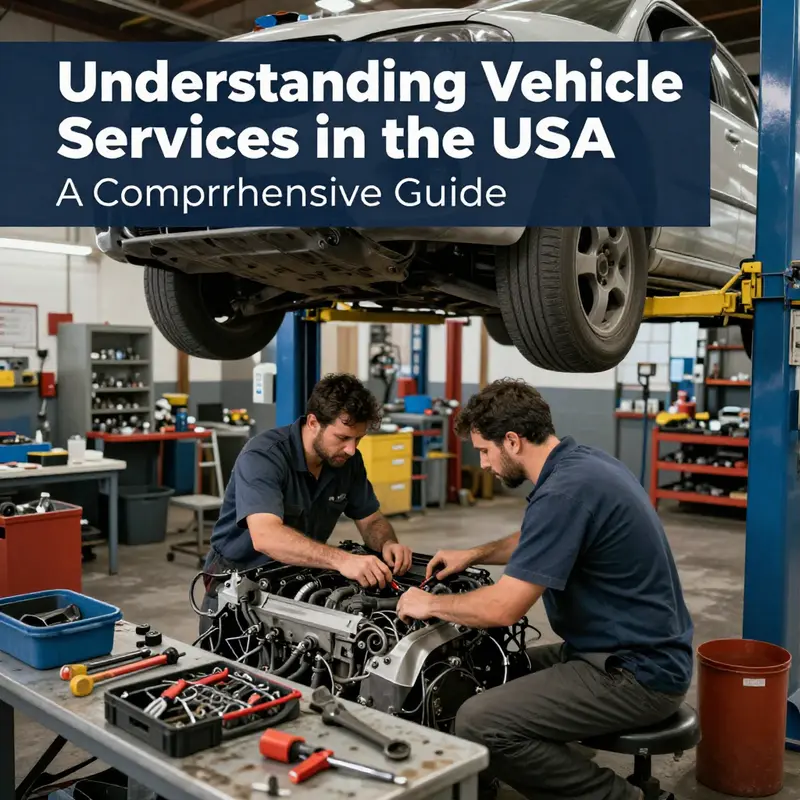
Mechanical repairs form the backbone of the USA vehicle services landscape. This role rests on precision, trust, and an evolving toolkit. In a country with millions of vehicles on roads that span coasts to interior regions, the demand for reliable, safe, and timely repairs rests on a disciplined craft that translates symptoms into diagnoses and actions that restore performance while guarding the owner s wallet and the public s safety. This chapter explains how mechanical repairs fit within the broader ecosystem of vehicle services in the United States, how technicians approach the work, and why the system, despite its fragmentation, strives for consistency, safety, and value for the everyday driver. The diagnostic moment is the spark that sets a repair in motion and moves from the workshop floor to the wider market forces that shape how repairs are chosen, priced, and delivered across the country. The diagnostic moment is more than a check engine light; it is the interface between a machine that speaks in codes and a technician who translates signals into a plan that can be executed with confidence. Factory issued Technical Service Bulletins TSBs play a pivotal role in this process. These documents translate model specific observations into repair paths, distill field data into actionable procedures, guiding technicians to diagnose known issues quickly and to apply fixes that are proven reliable across similar cases. When a vehicle shows recurring concerns such as irregular idle, transmission hesitation, or brake system quirks, the TSBs provide a map that keeps repair downtime from ballooning. They help reduce downtime, which matters to the owner who relies on a dependable daily ride and to the service provider whose resources are finite. In practice, technicians rely on TSBs along with diagnostic tools such as live data readers, oscilloscopes to visualize sensor signals, and mechanical gauges to verify tolerances on components such as valves, cams, and injectors. The result is a repair that is not just fixed but fixed in a way that aligns with the vehicle design and real world operating conditions. The reliability of a mechanical repair feeds back into the consumer experience. In a diversified market, the quality of a repair often depends on the trained skill of the technician and the rigor of the shop process. Across the country a range of service centers from broad networks to independent neighborhood shops compete on accuracy, speed, and price. The mix of service models reflects a market that values accessibility as much as expertise. Consumers can access a networked capability that promises standardized procedures and predictable outcomes, while also enjoying the personal touch and local knowledge that small shops bring. The challenge and opportunity lie in reconciling these two forces the efficiency and consistency of a network with the intimacy and specialization of smaller, community based shops. In this tension the industry leans on shared standards, ongoing training, and certification pathways that elevate the craft beyond chance repairs. Training is a central pillar of this craft s maturity. Technicians in the field are expected to develop a broad skill set that spans electrical systems, engine performance, and drive line mechanics, often augmented by ongoing education that keeps pace with new platforms and technologies. Certification programs etched into the industry s fabric set benchmarks for knowledge and safety. Mechanic teams that pursue these credentials are better positioned to interpret diagnostic data, devise repair plans that minimize invasive work, and communicate clearly with vehicle owners about the nature of the problem and the rationale for the recommended fix. This emphasis on professional development is vital as the repair landscape expands beyond traditional mechanical issues into integrated systems the kind of systems that coordinate engine performance with transmission control, braking with stability programs, and suspension with adaptive ride controls. The modern repair is rarely a one off fix; it is a systems level intervention that preserves safety, comfort, and longevity. Behind the scenes, the market structure influences how mechanical work is priced and delivered. The United States hosts a sprawling mix of national networks and independent shops. The networks offer scale, standardized processes, and broad coverage that makes it possible for owners to find service quickly, even when traveling. Independent shops contribute local expertise, flexible scheduling, and often more personalized attention. For consumers, the result can be a practical blend: the convenience of a familiar local shop paired with the assurance that the work will be guided by established industry practices. For operators, the model presents a continuous balancing act. Managers must maintain consistent diagnostic and repair quality while managing parts supply, labor costs, and facility readiness. The market rewards those who invest in modern diagnostic tools, invest in technician training, and build reliable supply chains for parts and equipment, even as price competition remains a defining feature of a fragmented landscape. Standards and certification extend beyond the shop floor. The safety and reliability of repairs depend on adherence to testing and compliance frameworks that define what constitutes a quality repair. Certification bodies provide the toehold of external validation that the service being performed meets a defined standard of performance and safety. For instance, third party testing and certification programs assess both the repair processes and the tested outcomes, offering a form of assurance to owners who otherwise face a bewildering array of options. This ecosystem of technicians with trained hands, documentation that guides the work, and independent validation that confirms quality creates a virtuous loop. When a repair work passes through this loop, it reduces the risk of a repeat failure and strengthens consumer trust in the broader vehicle services market. The repair cycle often intersects with other facets of vehicle care. Routine maintenance such as oil changes, fluid checks, and tire rotations lays a foundation for reliable mechanical operation. Yet as vehicles grow more complex, the boundary between maintenance and repair blurs. A routine maintenance visit can reveal latent issues that demand immediate attention, while a repair can open the door to preventive maintenance strategies that extend a vehicle s life. An integrated approach treats the vehicle as a living system whose health is maintained not by isolated fixes but by a coherent plan that marries diagnostics, timely interventions, and periodic re evaluations. In cities, suburbs, and rural areas alike, this holistic mindset helps owners avoid cascading failures and unplanned downtime, making the experience of vehicle ownership more predictable and less stressful. A practical thread runs through these dynamics the importance of clear communication. Vehicle owners rely on the technician s expertise to explain not just what is broken, but why it happened, what the repair will involve, and how it will influence the vehicle s performance going forward. The best shops translate technical details into plain language, outlining the expected outcomes, the potential risks, and the range of costs. They also set expectations about how long a repair will take and when the vehicle can be expected back on the road. This communicative discipline strengthens trust, which is essential in a market where ownership experiences vary widely from shop to shop and even day to day. It is this combination of diagnostic rigor, certified workmanship, and transparent communication that makes mechanical repairs more than a transaction. They become a service that upholds safety and sustains mobility across a country whose drivers depend on dependable transportation. For those who own and operate fleets or commercial vehicles, the stakes are even higher. The economics of uptime govern decisions about when to repair versus replace and how to structure maintenance plans that align with operating schedules. In these contexts, the precision of repair work and the predictability of service quality become strategic assets. A well executed repair not only resolves a current issue but also informs future maintenance through documented diagnostics, service histories, and performance trends. The value proposition shifts from a single encounter with a mechanic to a collaborative, ongoing program of vehicle health management. The implied promise to owners is simple but powerful: repairs that restore the vehicle s intended performance, performed efficiently, and backed by a history of verifiable service quality. Within this broader narrative, a notable tension persists between scale and customization. National networks can deliver standardization and rapid access, while independent shops can tailor their services to local conditions and owner preferences. In practice, successful mechanics strike a balance by adopting standardized diagnostic and repair frameworks while preserving the flexibility to address model specific quirks, regional driving patterns, and unique owner expectations. The outcome is a system that can adapt to the pace of technological change without sacrificing the human touch that makes repair work trustworthy. It is not about a single model of service but about a resilient approach to keeping a diverse fleet safe, efficient, and dependable on American roads. The chapter would be incomplete without acknowledging the role of information and accessibility. Once the repair is completed, the value of the service extends into the vehicle s continuing life. Modern service records, digital maintenance histories, and transparent warranties provide a narrative trail that owners can consult when planning future interventions. For readers who own trucks or heavy duty vehicles, practical maintenance guidance such as regular checks of fuel delivery systems and robust attention to diesel-specific components becomes integral to preserving engine health and uptime. For people seeking resources tailored to these needs, practical guidance is available in dedicated truck maintenance resources, including articles such as truck maintenance tips for first time owners, which emphasize the balance between routine care and urgent repairs. As this chapter progresses through the mechanics of repair, it becomes clear that mechanical work is not a one off fix but part of a broader system of vehicle care. The segment of the market that performs repairs must stay attuned to evolving electrical architectures, increasingly computerized control strategies, and the integration of diagnostic data with physical repair steps. This alignment requires both skilled hands and a culture of ongoing learning. The industry strength lies in its capacity to translate intricate engineering into practical, reliable outcomes that keep people moving. When a customer returns to the road with renewed confidence, safety restored, and performance restored, that outcome is the measure of repair success. In essence mechanical repairs are the hinge that connects the owners immediate needs with the longer arc of vehicle preservation and road safety across the United States. To place this discussion in a wider context consider how the market for vehicle services evolves alongside shifts in consumer expectations, regulatory frameworks, and technology adoption. The growth in advanced driver assistance systems, electrification, and modular repair procedures means that the skill set demanded of mechanics continues to expand, yet the core objective remains to restore the vehicles design intent and reliability while minimizing downtime and cost. The broad distribution of service centers ensures owners have access to skilled repair professionals close to where they live and work, while certification standards and independent testing provide a check against variability in the quality of service. In this way the country s mechanical repair ecosystem reinforces the overarching purpose of USA vehicle services: to maintain mobility, safeguard safety, and sustain the economic and personal value that reliable transportation provides every day. External reference: https://www.mordorintelligence.com
Specialized Vehicle Services: Keeping America’s Critical Fleets Ready for Action

When people think about the USA vehicle services ecosystem, they often picture routine oil changes, tire rotations, and quick brake inspections. Yet beneath that surface lies a realm of highly specialized services that keep the most crucial fleets operational. These are not casual maintenance tasks; they are deliberate, safety-focused activities that ensure emergency responders, mass transit, and industrial operators can perform when it matters most. The specialized segment of vehicle services operates at the intersection of safety, reliability, and regulation. It requires deep technical expertise, access to sophisticated testing and diagnostic tools, and a disciplined adherence to standards that govern performance, environmental impact, and safety inside and outside the vehicle. The result is a system that supports millions of miles of operation every year—often in high-stakes contexts where uptime can be a matter of life and death, and where delays ripple across communities, from first responders racing to a medical call to a train arriving on schedule to pick up passengers and freight.
Within this specialized realm, the maintenance and repair of emergency response vehicles stand as a prime example of the discipline required. Ambulances and fire apparatus live on the edge of reliability. Their systems span everything from life-support equipment and medical gas handling to braking, steering, and hydraulic functions that power critical tools. Routine inspections become a ritual of safety: daily checks that the sirens and lighting work as intended, weekly tests of power supplies, and monthly diagnostics of brake pressure, tire integrity, and fluid health. Yet these checks are more than mechanical; they are procedural, driven by federal and state regulations that specify cadence and documentation. Fleet operators rely on service providers who can diagnose subtle faults that might not be evident in a standard shop visit. A failure in a life safety system, or the sudden exposure of a hydraulic leak during a high-pressure call, can compromise a response when the clock is ticking. The consequence is not only vehicle downtime but the potential loss of life and property.
In parallel, rail gear inspections and maintenance illuminate how specialized vehicle services extend beyond roadways into the vast networks that move people and goods across the country. Rail systems depend on the integrity of couplers, braking systems, wheel assemblies, and the structural robustness of the rolling stock. The risk calculus here is measured in miles, minutes, and the ability to avert derailments or service disruptions. Inspectors perform comprehensive checks that blend on-board diagnostics with trackside verifications, often guided by federal and industry-specific standards. Maintenance regimes for rail vehicles are inherently preventive, designed to identify fatigue cracks, wear patterns, and misalignments before they escalate into costly downtime or unsafe conditions. The discipline also places a premium on documentation and traceability; every inspection, test, and repair becomes part of a safety record that regulators and operators rely upon to prove ongoing compliance.
A growing and visibly consequential area within specialized vehicle services is the battery health and lifecycle management for electric and hybrid fleets. As the country accelerates toward zero-emission transportation for buses, trucks, and other commercial vehicles, battery services move from a hedged bet into a central operational concern. Diagnostics that once focused on conventional propulsion now integrate cell-level health checks, thermal profiling, and state-of-health assessments for large battery packs. Service providers perform performance validation to ensure that batteries retain their rated energy density, have appropriate charge acceptance, and do not exhibit thermal anomalies under load. Lifecycle management becomes a strategic activity: scheduling capacity replacements, evaluating second-life options, and coordinating fleet-wide charging strategies that minimize downtime while maximizing energy efficiency. In this space, specialized shops work hand in hand with transit authorities and private fleets to align maintenance windows with service schedules, reducing the risk of mid-route interruptions and extending the usable life of expensive battery systems. The emphasis on reliability in this domain mirrors broader sustainability goals, as energy-efficient operation directly affects operating costs and environmental footprints.
Alongside land-based and energy-focused work, watercraft and performance validation services illustrate how specialized vehicle expertise reaches into marine and utility arenas. Watercraft used for emergency response or specialized industrial tasks carry their own unique demands. They navigate corrosive saline environments, require hull integrity checks, propulsion system validation, and compliance with maritime environmental regulations. Performance validation extends beyond top speed and acceleration. It includes stability testing under various sea states, fuel system integrity, bilge safety, and the reliability of navigation and communication gear necessary for coordinated operations. These validations are not performed in isolation; they are tightly integrated with regulatory frameworks that govern safety, emissions, and waste management at sea. The result is a fleet of watercraft that can operate with confidence in unpredictable waters, which in turn supports the people and communities who depend on them.
The conventional maintenance shop often learns lessons from these specialized services that apply across the broader vehicle services landscape. The market for specialized support is highly fragmented—comprising regional specialists who understand local regulatory environments and national or multi-region providers who can deliver standardized procedures across larger footprints. In this environment, reliability becomes a competitive differentiator, not just speed or price. Fleet operators demand consistent outcomes, whether the vehicle is a disaster-response unit, a commuter train, or a utility vessel. To meet this expectation, practitioners rely on a blend of advanced testing and certification processes. Organizations that provide formal testing, certification, and compliance validation help align shop work with established technical standards. This is where independent standards bodies and third-party laboratories play a crucial role by offering objective assessment of equipment performance, safety margins, and service quality. The result is a market that values both rigorous science and practical know-how.
A notable facet of this ecosystem is how technology accelerates both diagnostics and preventive care. Modern specialized services harness data-driven approaches that pair on-board sensors, telematics, and cloud-based analytics with hands-on expertise in the workshop. When a fleet manager receives warnings about subtle changes in vibration patterns, battery temperatures, or hydraulic pressures, the technician can translate those signals into precise maintenance actions. Predictive maintenance—grounded in real-world failure data and probabilistic models—helps reduce unplanned downtime. It also allows for better scheduling of parts and labor, which in turn lowers costs and improves overall fleet availability. This convergence of digital tools with skilled craftsmanship marks a turning point for specialized vehicle services: the work becomes more proactive, more traceable, and more aligned with fleet performance goals.
Within this evolving landscape, credible certifications and testing services underpin the quality assurance that customers expect from specialized providers. Industry observers often point to third-party testing and certification bodies that help facilities verify mechanical integrity, electrical safety, and environmental performance. These bodies assess a facility’s processes, equipment calibration, training standards, and workflow control. By providing an external yardstick, such organizations reduce the risk of inconsistent workmanship and bolster confidence among fleet operators and regulators. The emphasis on certification complements the hands-on skill of technicians, creating a robust ecosystem in which reliability, safety, and regulatory compliance reinforce one another. In the U.S. market, this collaborative framework helps bridge regional expertise with national safety expectations, ensuring that specialized services remain both locally adept and globally credible.
The broader context of specialized vehicle services also highlights the way the industry communicates and shares knowledge. Fleet operators often rely on educational resources and field guidance to stay updated on best practices, safety protocols, and evolving standards. Practical tips on maintenance planning, inspection cadences, and risk assessment can be found in industry-focused resources and practitioner blogs, which serve as important channels for disseminating experience-based insights. For readers seeking practical maintenance perspectives and industry context, a trusted resource is the kmzvehiclecenter blog, which aggregates tips and real-world guidance at the intersection of maintenance know-how and fleet operations. You can explore this resource here: kmzvehiclecenter blog. This kind of content helps bridge the gap between high-level standards and day-to-day shop floor decision making, illustrating how operators translate complex requirements into actionable, repeatable routines.
The specialized services discussed here sit within a larger, diverse USA vehicle services market that includes large networks and independent shops alike. While the scope may appear broad, the common thread is a commitment to uptime, safety, and regulatory alignment. Fleets serving public safety, transit, and critical infrastructure demand a level of dependability that pushes providers to invest in advanced diagnostic capabilities, rigorous training, and transparent quality controls. The payoff is steady operational readiness—the ability to respond when communities need essential services most. And as environmental and energy considerations continue to influence fleet strategies, specialized services will increasingly integrate battery health management, energy-efficient propulsion, and thermal performance optimization into standard operating procedures. In this sense, the specialized segment not only protects performance today but also paves the way for the more sustainable, resilient fleets of tomorrow.
For readers who want to explore external perspectives on how specialized services are advancing the field, industry analysts and standards bodies highlight the importance of certification and cross-cutting testing. A representative external reference informs how independent testing and certification contribute to reliability and safety across specialized domains. You can learn more about these standards and verification processes at a related external resource: https://www.specialized.com. This resource provides broader context on how specialized vehicle services align with safety and performance expectations across emergency, transportation, and marine applications.
Market Currents, Major Players, and the Data-Driven Road Ahead: A Deep Dive into USA Vehicle Services
The United States vehicle services landscape is both broad and deeply intricate, a living system that keeps millions of cars, trucks, and light commercial vehicles safe, reliable, and roadworthy. It is a sector built on routine, yet continually transformed by technology, regulation, and the shifting expectations of drivers. At its core, the industry comprises essential maintenance tasks—oil changes, tire rotations, and fluid checks—that keep a vehicle performing as designed. Yet beneath this surface lies a sprawling ecosystem of mechanical repairs, safety-critical diagnostics, and specialized services such as bodywork and refinish operations that address the consequences of wear, accident, and the evolving demands of modern powertrains. The result is a service mosaic that must balance accessibility, quality, and speed while adapting to a marketplace that rewards both consistency and innovation. This is the throughline of the USA vehicle services sector: reliability we can count on, delivered through networks that span neighborhoods and highways alike, supported by data-driven insights that translate customer need into timely, effective care.
The market today is markedly fragmented, a trait that reflects both geography and consumer preference. Across the nation, countless independent shops and regional networks compete to provide a breadth of services, from preventative maintenance programs to advanced repairs. This fragmentation is not a weakness but a signal of a diverse, responsive market: it invites competition on service quality, convenience, and trust, while also presenting a patchwork of standards that customers must navigate. In parallel, there is a wave of consolidation and scale, with sizable national- and regional-networked service providers expanding footprints to improve access, standardize processes, and pursue efficiency through centralized procurement, training, and branding. This dynamic tension between scale and local autonomy helps explain why the market remains both competitive and resilient, capable of absorbing shocks while continuing to evolve to meet new needs.
To understand the shape of the industry, it helps to map its principal components. Routine maintenance remains the backbone of the vehicle services market. Oil changes, tire services, brake inspections, battery checks, and fluid top-offs are evergreen tasks that drivers seek out at regular intervals—often driven by manufacturer-recommended schedules, warranty considerations, and the practical realities of owning and operating a vehicle in frequent urban, suburban, and rural environments. These services generate recurring revenue, foster customer loyalty, and create touchpoints for upselling more complex work, such as diagnostics or component replacements. Yet the maintenance loop is increasingly complemented by more sophisticated repairs and diagnostics that rely on electronic control units, onboard sensors, and networked data streams. The diagnostic journey—from symptom to root cause to repair—has become a centerpiece of modern vehicle services, demanding skilled technicians, robust test equipment, and a disciplined approach to process control.
The repair domain itself is multi-faceted. Brake systems, engine diagnostics, transmission work, steering and suspension, and electrical systems each present unique challenges and skill requirements. The evolution of vehicle technology has intensified this complexity, as more systems become computer-driven and communication protocols grow more intricate. In response, service providers invest in technician training, ongoing certification, and access to advanced testing equipment. The industry also places a premium on safety and quality, often evidenced by third-party certification and adherence to recognized standards. In this regard, certification bodies and standard-setting organizations help ensure that facilities meet consistent criteria for performance, safety, and reliability, contributing to overall consumer confidence in the service ecosystem. The mention of certification and testing standards in industry narratives underscores a broader truth: independent shops and national networks alike must align with rigorous quality benchmarks to maintain trust in a highly competitive market.
Beyond the repair and maintenance work, body repair and refinishing occupy a crucial role in the ecosystem. Accidents happen, and the demand for high-quality collision repair that restores aesthetics and structural integrity remains persistent. The body shop sector intersects with insurance workflows, rental car logistics, and partnerships with manufacturers and fleet operators. Although bodywork is a specialized service line, its health is interwoven with the broader market because it expands the array of choices available to customers and affects how quickly a vehicle can re-enter service, which, in turn, influences fleet utilization and consumer satisfaction.
A distinguishing feature of the current market configuration is the deep integration of data and analytics. The technology layer is no longer a backdrop; it is a primary driver of decision-making. Industry participants increasingly rely on datasets that capture new-vehicle registrations, vehicle ownership patterns, and demographic trends. Such data illuminate demand signals, helping automakers, dealers, and fleets forecast maintenance needs, plan service capacity, and optimize staffing and inventory. The ability to access and interpret near-real-time data, including end-of-month vehicle registration figures, lends a sharp, forward-looking edge to the commercial calculus. When a service center can anticipate rising demand for specific maintenance or repair services in particular regions or among certain vehicle classes, it can align its scheduling, parts procurement, and technician expertise to meet that demand efficiently. This data-driven stance is not a luxury; it is increasingly fundamental to staying competitive in a market that prizes speed, accuracy, and the ability to tailor services to evolving owner profiles.
In parallel with these data capabilities, the market witnesses ongoing evolution in consumer preferences. Customers increasingly expect transparent pricing, clear communication about the scope of work, and predictable turnaround times. They also want access to convenient service options, whether through extended hours, online appointment booking, or transparent work orders that explain what is being done and why. The rise of digital platforms and customer analytics has shifted some power toward the consumer, who can compare shop ratings, turnaround histories, and estimated costs with greater ease. For providers, this creates a demand for consistent service quality and the ability to transform data into personalized customer journeys. It also highlights the importance of loyalty as a business asset; repeat customers tend to yield higher lifetime value and stronger word-of-mouth referrals, both of which are crucial in a market with many local options.
The market also wades through broader macro forces. Vehicle ownership trends continue to rise, with more households owning multiple vehicles, and fleets expanding to support last-mile delivery, regional distribution, and service-based businesses. This expansion fuels demand for comprehensive vehicle maintenance and fleet management services. At the same time, the rise of electric vehicles (EVs) adds new layers of service considerations. EVs bring different maintenance profiles, battery health concerns, and software updates that require specialized training and equipment. The transition to EVs is gradual, but it is unmistakable, shaping service menus, technician skill requirements, and investment decisions for maintenance networks. Independent shops and large networks alike are recalibrating their offerings to accommodate EV-related service, while ensuring that traditional maintenance and repair capabilities remain robust for internal combustion engines and hybrid configurations.
From an asset-management perspective, the market is structured around both people and process. The workforce must be equipped with the right mix of skills, from diagnostic technicians who can interpret raw data streams to technicians who can perform precision mechanical work and body refinishing with high-quality results. Process-wise, facilities adopt standardized workflows, digital work orders, and integrated parts procurement to streamline operations. This alignment of people and process is what enables high-volume centers to deliver consistent outcomes, maintain margins, and sustain a strong reputation in a crowded field. In this sense, the sector’s health depends as much on operational discipline as it does on the technical depth of its technicians.
All of this unfolds in a landscape shaped by policy and standards. Certification and quality assurance bodies, including international and regional organizations, contribute to ensuring that service providers meet established technical criteria and safety requirements. The presence of such third-party verification helps manufacturers, repair facilities, and fleet operators align on shared expectations for reliability and performance. When a shop holds recognized credentials or adheres to industry-standard testing protocols, it signals to customers and business partners that it commits to quality and safety—even as it competes on price and convenience. In an era where consumers increasingly scrutinize service experiences, these assurances matter more than ever.
The market’s expansion is not merely a matter of more shops and more cars. It also reflects a broader shift toward data-enabled decision-making across the industry. Real-time, near-instantaneous data about vehicle registrations and ownership patterns, when integrated with service demand models, empowers manufacturers and service networks to align capacities with anticipated needs. This alignment helps reduce wait times, optimize technician utilization, and shorten the cycle from diagnosis to repair. It also feeds into strategic planning for partnerships with insurers, rental fleets, and municipal fleets, where predictable service delivery and rapid turnaround are valued. In this way, the vehicle services sector is increasingly about orchestration—bringing together data, talent, equipment, and partner networks to deliver timely, trusted service at scale.
For readers seeking a richer, more quantitative picture of these trends and the market outlook, industry analyses point to a growing body of market intelligence. One recent synthesis estimates that the U.S. automotive service market stood at over two hundred billion U.S. dollars in the mid- to late 2020s and is projected to grow at a steady pace into the early 2030s. The numbers underscore a durable demand base, supported by ongoing vehicle ownership growth and the expansion of aftermarket services that complement new-vehicle sales. These projections, while contingent on broader economic conditions, illustrate a trajectory in which the sector remains a cornerstone of the automotive ecosystem, capable of absorbing technological shifts and evolving consumer expectations while maintaining a robust service footprint across urban, suburban, and rural areas.
As this landscape continues to evolve, stakeholders across the spectrum—from independent shops to large networks and from lenders to fleet operators—will increasingly lean on data-driven insights to navigate constraints and capitalize on opportunities. The convergence of maintenance expertise, repair capabilities, and data analytics creates a powerful competitive dynamic. Those who can translate consumer needs into precise service offerings, align labor and parts with demand forecasts, and uphold rigorous quality standards will be well-positioned to sustain growth, improve customer trust, and contribute to safer, more reliable driving experiences. In this sense, market dynamics are not merely a backdrop; they are the engine driving strategic choices across the entire ecosystem of USA vehicle services.
For readers who want to see how these themes translate into practice, consider how a service network might approach capacity planning in a way that reflects regional variations in vehicle registrations and ownership profiles. The same network can tailor its service mix by analyzing regional demand for preventive maintenance versus complex repairs, then deploy technicians with targeted expertise to the right locations. It can also invest in training to keep pace with EV maintenance needs, balance the portfolio of services offered, and cultivate customer relationships through transparent pricing and communication. The result is a more resilient, customer-centric service model that can adapt to shifting ownership trends, emerging vehicle technologies, and evolving regulatory expectations. In short, the narrative around market dynamics and major players in USA vehicle services is a story about resilience, adaptability, and the continual redefinition of value in a data-informed economy.
To explore a practical perspective on how these dynamics unfold in real-world practice, you can visit the KMZ Vehicle Center blog for insights and reflections on servicing vehicles in the current environment: KMZ Vehicle Center blog. This resource offers a lens into the daily realities of shop owners, technicians, and customers navigating the evolving service landscape.
External resources that contextualize the market outlook and the scale of opportunity include industry analyses that quantify the sector’s size and growth trajectory. For a comprehensive, data-rich outlook, see this external resource on the US automotive service market outlook through 2030. It provides a structured view of market segments, projected demand, and strategic considerations for stakeholders seeking to align with long-term trends in maintenance, repair, and aftermarket services: https://www.kenresearch.com/industry-reports/us-automotive-service-market-outlook-to-2030/.
Final thoughts
The USA vehicle services industry is vital for ensuring the smooth and safe operation of countless vehicles. By understanding the intricacies of routine maintenance, mechanical repairs, specialized services, and market dynamics, vehicle owners and operators can make informed decisions that enhance their automotive experience. Whether you are a private car owner looking to maintain your vehicle, a used car buyer ensuring reliability, or a small business fleet operator managing multiple vehicles, this comprehensive guide equips you with the knowledge needed to navigate the complexities of vehicle services effectively. Embracing these insights will not only help in maintaining vehicle performance but also in fostering a safer driving environment on the roads.