
Understanding how a vehicle service brake operates, its safety standards, and maintenance tips is essential for all car owners. The vehicle service brake is the primary braking system responsible for deceleration or stopping while driving, working through either hydraulic or mechanical means. A firm understanding of its mechanism is crucial, especially for local private car owners, used car buyers, sellers, and small business fleet operators. This article will detail the operation of service brakes, explore their safety standards and functions, and provide guidance on maintaining and optimizing their performance. Mastering these aspects will not only enhance driving safety but also prolong the longevity of your vehicle.
The Normal Operation of the Vehicle Service Brake and Everyday Control

The vehicle service brake is the essential mechanism that translates a driver’s intention into a controlled stop. It remains quiet and unseen until the pedal is pressed, at which moment a chain of hydraulic and mechanical actions delivers braking force to the wheels. The heart of the system is the hydraulic circuit: pressing the pedal increases pressure in the master cylinder, and this pressure is transmitted through brake lines filled with fluid. Because brake fluid is nearly incompressible, a small pedal movement yields a strong response at the wheels. The force is applied at the wheel brakes by calipers and pads in a disc setup or by wheel cylinders and shoes in drums, converting kinetic energy into heat through friction. As the braking effort rises, electronic systems may modulate pressure to refine control, improve stability, and prevent wheel lock. Modern vehicles blend hydraulic power with electronics such as ABS to maintain steerability during heavy braking, delivering pulsing or vibrating pedal feedback when the system engages. The service brake also relies on accurate maintenance: clean lines, fresh fluid, and worn components replaced before performance deteriorates. In everyday driving, the result is a predictable, repeatable deceleration that helps the driver exploit stopping distances and respond calmly to changing traffic. The overall goal is reliable control under a wide range of conditions, from dry highways to wet surfaces and steep descents. Maintenance and safety resources reinforce that a well cared for brake system is essential to road safety.
Normal Duty, Extraordinary Safety: How the Vehicle Service Brake Anchors Everyday Driving
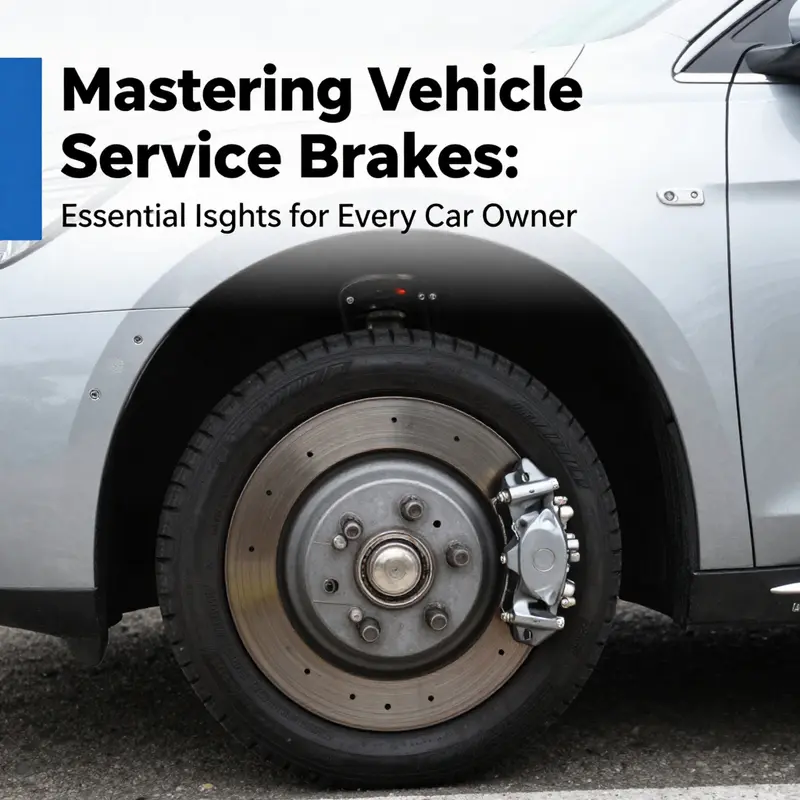
A vehicle service brake is normally the primary braking system used during normal operation, and its proper function is the everyday guarantee of safe driving. When you glance at the road ahead, you expect the car to respond with precise control as you press the brake pedal. Behind that simple action lies a carefully engineered network designed to slow, modulate, and ultimately stop the vehicle while preserving steering control and stability. This is not a collection of isolated parts but a coordinated safety system that must perform reliably under a wide range of conditions, from a dry highway to a rain-slicked surface, from a light daily commute to an abrupt emergency maneuver. The safety standards that govern these brakes exist not merely to prevent accidents on a sunny afternoon but to minimize risk when judgment or visibility is compromised, when road texture suddenly changes, or when traction fades. In modern braking architecture, redundancy, intelligent control, and timely feedback to the driver are the hallmarks of a system crafted to be dependable in real-world use as much as in controlled tests.
At the heart of the service brake is the dual-circuit configuration, a fundamental design choice that embodies the principle of safety through redundancy. In many vehicles, the braking system is split into two circuits that operate independently so that a failure in one does not render the entire system impotent. This split can occur in front/rear legs of the system or diagonally across the vehicle, depending on the engineering approach and regulatory framework applied in different markets. The result is a brake pressure map that still yields some deceleration even if one circuit is compromised. This is not merely a matter of performance on paper; it translates into meaningful, real-world outcomes. In abrupt stops, for instance, drivers often depend on the assurance that one functioning circuit can still deliver brake force, enabling the vehicle to shed speed and steering control with confidence. The dual-circuit principle aligns with international safety standards, including regulatory expectations that seek to prevent a total loss of braking capability in the event of a single point of failure. The outcome is a system designed to keep the vehicle controllable while decelerating, which is especially vital when road conditions demand precise wheel management and operator input.
Beyond redundancy, the service brake is enhanced by electronic and electro-hydraulic technologies that optimize how braking force is delivered. Anti-lock Braking Systems, or ABS, represent a standard feature in modern braking systems. ABS prevents wheel lock-up during heavy braking, particularly on slippery surfaces. When braking force approaches the threshold where wheels would skid, ABS modulates pressure to each wheel to maintain contact with the road and preserve the ability to steer. The driver still applies the pedal, but the system interprets the pedal motion and wheel speed to maintain lateral control. In practice, this means that an emergency stop on a wet road can feel more controllable than in a vehicle lacking ABS, because the tire contact patch—the crucial interface that translates braking into deceleration—remains available for steering input. This control feel, often described as a pulsating resistance through the brake pedal, is not a nuisance; it is the tangible sign that the system is actively protecting wheel slip and steering geometry while reducing stopping distance on many surfaces.
The ABS framework does not operate in isolation. It works in concert with Electronic Brakeforce Distribution, or EBD, which fine-tunes the braking effort across the vehicle’s wheel set according to load, weight distribution, and dynamic conditions. EBD reads signals from wheel speed sensors and other inputs to allocate more force to wheels that can most effectively translate it into deceleration, while easing pressure on wheels that could lose grip. This proportional distribution is essential for maintaining directional stability during deceleration. Consider a loaded vehicle with a heavy rear end; as braking begins, EBD can shift more force to the front wheels where the braking capacity is often greater, helping to prevent yaw and instability. In lighter, unloaded configurations, EBD can distribute pressure to all four corners to maintain predictable braking behavior. The synergy between ABS and EBD demonstrates how modern brakes do more than stop; they manage how the vehicle’s mass moves toward a halt in a way that respects vehicle dynamics and road conditions.
Brake Assist, or BA, is another critical piece of the system’s safety envelope. BA monitors how quickly the driver applies the brake and how much pedal pressure is developed, especially in urgent scenarios. When the system detects what it interprets as an emergency stop, it automatically increases hydraulic pressure to achieve the maximum braking force available from the given configuration. This feature is not a substitute for a stable driver input but an augmentation that helps achieve the quickest possible deceleration when it matters most. BA works in the blink of an eye, shortening the time to peak braking and thereby reducing the risk of collision in high-stakes scenarios. The integration of BA with ABS means that the vehicle can pursue aggressive deceleration while avoiding the loss of steering control or unpredictable tire slip, two outcomes that would otherwise escalate risk.
A seemingly simple, often overlooked element—the High-Mounted Stop Lamp, or HMSL—plays a role in braking safety as well. The HMSL provides an additional visual cue to following drivers during rapid deceleration or a stop. While not a direct brake action, a conspicuous HMSL reduces the chance of rear-end collisions by signaling to vehicles behind that the car is slowing more rapidly than usual. It is a small but meaningful component that complements the physical action of braking with clear, early warning. In aggregate, these technologies—redundant circuits, ABS, EBD, BA, and HMSL—constitute a layered safety framework that makes the service brake more than a mechanical device. It becomes a dynamic system that interacts with road texture, weather, load, and vehicle geometry to deliver controlled, predictable, and safe deceleration.
As a reader progresses through the story of the modern service brake, it becomes clear that safety standards are not simply checkboxes to be filled. They are a living set of expectations about how vehicles should perform under varied circumstances. Independent crash testing programs, such as those conducted by Euro NCAP, gather real-world performance data to quantify how a vehicle behaves in emergencies and everyday braking. The ratings reflect more than raw stopping distances; they capture the integration of braking with vehicle safety systems, the resilience of the dual-circuit design under fault conditions, and the driver’s ability to maintain control during deceleration. A high score in these assessments signals that a vehicle’s braking architecture not only slows the car but also preserves steerage, stability, and predictability—attributes that influence a driver’s avoidance options in critical moments. The Euro NCAP framework highlights the incremental benefits of embracing advanced brake technologies as part of a comprehensive safety strategy rather than treating braking as a standalone performance parameter.
In practice, the service brake’s reliability translates to tangible consumer confidence. When a driver presses the pedal, the anticipation is not merely a brief friction event; it is a structured response that engages several subsystems in a carefully choreographed sequence. The master cylinder generates hydraulic pressure that flows through brake lines to calipers and wheel cylinders. In the dual-circuit arrangement, the pressure is partitioned to two independent hydraulic networks, each connected to a subset of wheels. The Anti-lock Braking System monitors wheel rotation and modulates pressure to prevent lock-up. If a wheel begins to slip, the ABS controller signals the brake modulator to bleed off pressure or reapply pressure as needed, thus preserving contact. Meanwhile, the Electronic Brakeforce Distribution system analyzes load and vehicle attitude to decide how much braking force each wheel should receive. Brake Assist may amplify the initial pedal input to reach peak deceleration sooner, especially when the vehicle’s speed is high or the scenario indicates an imminent collision risk. Finally, the HMSL provides a rearward signal to following drivers, supporting the human factors of braking by reducing the likelihood of a rear-end event.
The real-world implications of this architecture extend to the daily driving experience. In a city with unpredictable stops, the dual-circuit design reduces the probability that a single failure leaves a driver with insufficient braking capability. The ABS system both helps the driver steer around hazards and minimizes the stopping distance on wet or uneven surfaces. EBD ensures that a car loaded with passengers and cargo still behaves in a balanced way as it decelerates, avoiding over-braking one axle and under-braking another. BA reacts when seconds count, turning potential near-misses into controlled slows. The HMSL is a subtle, often overlooked piece that contributes to safer follow-on traffic behavior by enhancing visibility of deceleration. Across these layers, the brakes become a safety system that does more than satisfy standards; they shape the driver’s ability to respond to risk with confidence and composure.
From a maintenance perspective, this complex coordination depends on regular inspection, proper hydraulic fluid maintenance, and wear monitoring. The service brake’s components—pads, discs or drums, calipers, lines, fluid, sensors, and valves—work as a system. When pads wear down, the braking distance naturally lengthens and the feedback to the driver changes. If hydraulic fluid becomes contaminated or absorbed by moisture, braking performance can degrade under high-demand conditions. Regular brake fluid replacement, pad thickness checks, and line inspections are routine practices that keep the system in its designed operating envelope. The goal of maintenance is not only to prevent failure but to preserve the predictability that drivers rely on when they press the pedal. For drivers, the difference between a brake system that is simply functional and one that is finely tuned under a spectrum of conditions often correlates with how proactively maintenance is performed and how well the system’s components are integrated into routine service.
The safety calculus of braking is also influenced by ongoing evaluation through independent tests and regulatory changes. Euro NCAP, for example, provides ratings that reflect the real-world effectiveness of braking systems under a variety of scenarios, including emergency stops and controlled deceleration. These assessments yield a benchmark for consumers and manufacturers alike, reinforcing the idea that braking performance is inseparable from overall vehicle safety. The chain from contact with the pedal to wheel deceleration, vehicle stability, and resulting occupant protection remains as strong as its most fragile link. When one link becomes weak—whether through wear or a fault—the entire braking chain can be compromised. This is why the redundancy built into dual-circuit designs and the proactive safety logic of ABS, EBD, and BA are so essential. They form a guardrail that helps prevent cascading failures and supports a driver’s ability to negotiate hazards with steadiness and assurance.
The whole conversation about the service brake also touches on the human factors that influence braking outcomes. Even the most sophisticated brake hardware depends on the driver’s input: the timing, force, and intention behind the pedal press. The presence of ABS, EBD, and BA changes the feedback loop between driver and machine. Rather than a simple mechanical reaction to pedal pressure, braking evolves into an interactive process in which the driver’s intent is interpreted by sensors and controllers that adjust pressure, distributing effort across the vehicle in a way that maintains steering control and minimizes stopping distance on a given surface. The HMSL further augments this ecosystem by signaling to following drivers, a reminder that braking is a shared safety activity among road users. Taken together, the system transforms from a mere mechanical device into an integrated safety strategy—one that coordinates hydraulic mechanics, electronic control, and human perception to produce safe, predictable outcomes.
As the story of the service brake unfolds, it is helpful to keep in mind the purpose behind each feature and how they align with safety outcomes. The dual-circuit design is not a luxury but a safety necessity that preserves braking functionality under a fault. ABS is the shield that keeps steering usable when hard braking would otherwise cause wheel lock. EBD serves as the manager, allocating braking effort to maintain vehicle stability as loads and dynamics shift. BA acts as the accelerator of safety, boosting brake pressure when time matters most. HMSL serves as the communication line to other drivers, a vital cue during deceleration. These elements are not merely technologies to be admired in tests; they are everyday tools that help drivers make better decisions in real time. The literature on braking safety, including standards and rating programs, reinforces the central truth: a well-designed service brake is indispensable to safe driving. It is a real-world system whose value emerges most clearly in moments when perception, reaction, and road conditions collide in a fraction of a second.
For readers who want to explore practical implications beyond theory, maintenance and inspection resources are a good place to start. Practical guidelines and checklists often appear on specialist automotive sites and professional blogs. A well-chosen resource can reinforce the habit of routine brake checks, such as listening for unusual noises, monitoring brake pedal feel, and paying attention to changes in stopping distance. To connect readers with a hands-on perspective while preserving the focus on safety standards, you can explore the broader vehicle maintenance landscape through the KMZ Vehicle Center blog, which offers practical tips and insights into brake upkeep and related topics. KMZ Vehicle Center blog
No matter the vehicle type or the driving environment, the service brake remains the central safety mechanism that links human intent with machine response. Its robustness depends on a blend of architectural redundancy, sensor-driven control, and timely, driver-centered feedback. This is why safety standards, real-world testing, and ongoing maintenance matter so much. The service brake is not a single component but a living system that continuously interfaces with the road, the weather, the load in the car, and the driver’s decisions. When that interface functions smoothly, daily driving feels confident, predictable, and safe. When it falters, even small anomalies can cascade into larger safety concerns. Understanding the core functions and safety goals behind the service brake helps readers appreciate the quiet engineering that makes stopping and slowing down a reliable part of every journey.
External reference: Euro NCAP vehicle safety ratings provide independent benchmarks that reflect how modern braking systems perform in practice, including emergency stop scenarios and interactions with other safety technologies. For a deeper look, see https://www.euroncap.com/en/vehicle-safety-ratings/.
The Normal Service Brake: Maintenance and Performance as the Quiet Backbone of Everyday Safety
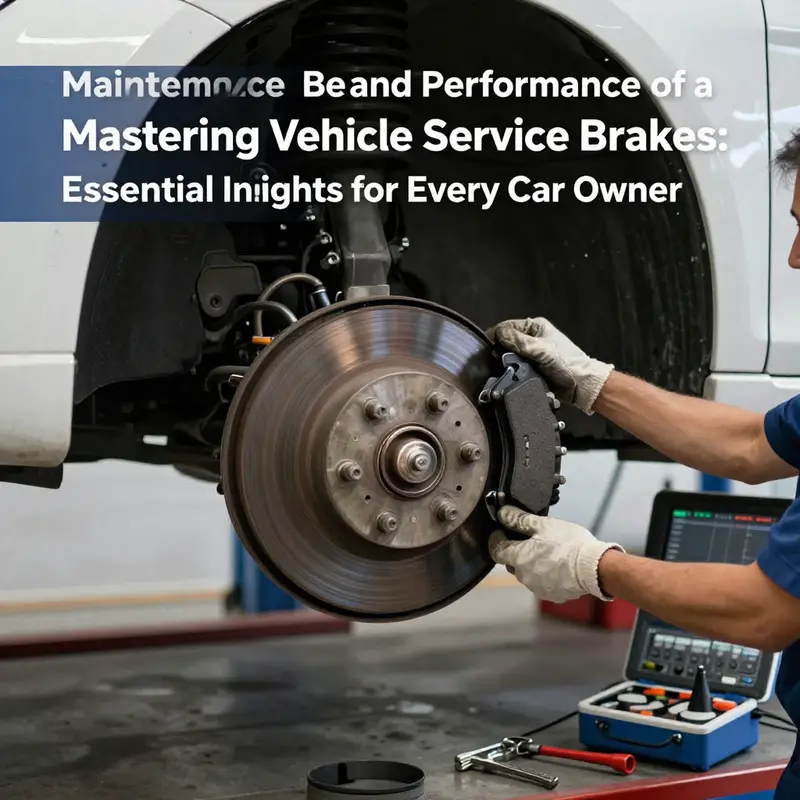
In the steady routine of daily driving, the vehicle service brake performs a quiet, indispensable role. It is the primary braking system most drivers rely on to slow down, come to a stop, or respond decisively in an emergency. When everything is functioning as it should, the brake pedal offers a predictable, linear feel; the car slows in a controlled, confident manner; and the job of stopping becomes almost automatic. Yet beneath this sense of normalcy lies a complex chain of components and processes that must work in harmony. The service brake is not a single device but an integrated system built to transform pedal pressure into stopping power through a careful balance of mechanical leverage, hydraulic pressure, friction, and heat management. Understanding how this system maintains its performance over the long arc of daily driving helps demystify what a well-maintained car should feel like when the road demands restraint rather than speed.
From a high-level perspective, the service brake begins with the driver’s input at the brake pedal. Pressing the pedal translates a deliberate intent to slow or halt into mechanical and hydraulic action. In many modern vehicles, this action is carried through a master cylinder that pressurizes brake fluid within a closed circuit. The fluid, essentially an incompressible medium, transmits the pressure to the wheel cylinders or calipers at each wheel. When pressure reaches the calipers, pistons compress the brake pads against the rotors (in disc brakes) or the shoes against the drums (in drum brakes). The resulting friction converts kinetic energy into heat, which raises the temperature of the pads, rotors, and surrounding components. This heat must be dissipated efficiently to preserve stopping power and to prevent the system from fading under repeated use. If heat builds faster than it can escape, braking performance can degrade, pedal feel can become soft, and stopping distances can lengthen—an outcome that undermines safety in the immediate moment and in the longer term.
The heart of the normal service brake is an elegant, practical chain that translates human intention into mechanical work with reliability you can count on while driving—and it does so under a wide spectrum of conditions. The hydraulic portion of the system is particularly important because it makes braking feel uniform and predictable across all four corners of the vehicle. The brake fluid must remain incompressible, resist moisture ingress, and maintain a stable boiling point. Fluids that absorb water over time become more prone to vaporizing under heat, which introduces air bubbles into the hydraulic line. The presence of air disrupts the pressure that would otherwise be transmitted evenly to each wheel, resulting in a feel that is spongy or inconsistent. The scenario is easy to picture: with each stop, the brake system works harder, generating heat that needs to be managed just as a radiator manages engine heat. If the vehicle operates in a place with heavy uphill traffic, frequent downgrades, or a vehicle with high payloads, the thermal load increases further. The designers anticipate this by selecting materials and geometries that spread heat well, often employing vented rotors for disc brakes to enhance cooling and reduce the chance of brake fade.
Wear is the inevitable companion of any friction-based system. Brake pads and rotors wear in response to the repeated contact required for stopping. Pads are made from friction material designed to deliver reliable stopping performance while resisting heat and wear. Over time, as pads shed material, their thickness decreases, and the distance required to achieve the same stopping effect grows. Rotors, which provide the hard, rotating surface against which the pads bite, gradually develop scoring, grooves, or a resurfaced, smooth glaze if the heat cycle becomes extreme or moisture accumulates in the contact surface. Proper bed-in procedures after rotor or pad replacement help align fresh friction surfaces with the existing rotor surface, ensuring maximum bite and even wear. Vehicle owners may notice subtle cues long before a dangerous fault arises: a slight decrease in pedal stiffness, a change in stopping distance, a faint metallic or burning odor after heavy braking, or a pulsing sensation in the pedal when braking at highway speeds. These cues warrant attention, not neglect, because small anomalies can cascade into reduced safety margins if left unaddressed.
A well-balanced brake system depends on more than the friction pair of pad and rotor. The hydraulic lines, master cylinder, and calipers must remain free of leaks, air bubbles, and contamination. Brake fluid, often overlooked, deserves close attention because its condition directly influences pedal feel and braking consistency. Over time, moisture in the fluid lowers the boiling point, making it more susceptible to vaporization during heat buildup. When vapor forms, it compresses, momentarily diminishing braking efficacy until the vapor is purged and replaced with fresh fluid. This is a subtle but critical dynamic, especially in vehicles that routinely carry significant loads or engage in frequent stop-and-go driving in hot climates.
Beyond the chemistry of the fluid, the system’s physical integrity matters as well. Seals, rubber hoses, and metal lines can degrade and leak. A tiny brake fluid leak may not be immediately obvious, but it can lead to a drop in hydraulic pressure, loss of braking power, and uneven braking performance across axles. A leak detected early can prevent a dangerous failure downstream. The service brake is also intricately connected to other safety subsystems that many drivers rely on, such as ABS and electronic stability control. When these systems engage, they adjust brake force at individual wheels to preserve steering control and vehicle balance. In normal operation, the driver experiences a coordinated response: the vehicle decelerates smoothly, wheels maintain traction, and the vehicle tracks where the driver intends to go without the sensation of wrestling with the car to stay in a lane.
From a maintenance standpoint, keeping this delicate balance intact involves a holistic view of the car’s health. It is not enough to know when the pads are worn; it is also essential to monitor rotor condition, fluid quality, line integrity, sensor functionality, and the broader mechanical linkage that transmits the pedal’s command into wheel deceleration. Routine inspections should verify pad thickness, rotor surface condition, and the absence of scoring or glazing on friction surfaces. They should include checks for signs of leakage around calipers or master cylinders and an assessment of the brake fluid’s color and level. A dark, cloudy, or syrupy fluid can indicate contamination or aging and should be replaced according to the manufacturer’s recommended intervals. Equally critical is a review of the brake system’s interaction with other components, especially in vehicles equipped with ABS, traction control, or stability programs. These systems rely on accurate braking force distribution and wheel speed sensing to operate correctly. Any misalignment in the service brake’s performance can ripple into the electronics that help the vehicle stay stable in adverse conditions. In this sense, the service brake is not isolated from the rest of the vehicle’s safety architecture; it is a cornerstone around which other systems calibrate their safeguards.
A practical way to frame maintenance is through the lens of interval-based care, not just reactive repairs. The service light on a dashboard often serves as a bellwether for more than a single issue. When illuminated, it typically signals that maintenance is due or that an inspection has uncovered something that warrants attention. If the brake system is the primary concern behind a service warning, ignoring the alert can have immediate consequences: degraded braking performance, longer stopping distances, or, in the worst case, a partial or complete brake failure. The warning light, therefore, is best treated as a call to action rather than a prompt to postpone. A qualified technician can determine whether the car simply requires routine maintenance—fluid top-off, pad replacement, rotor resurfacing, or a complete brake service—or if more complex issues such as a hydraulic leak or a faulty sensor are at play. In any case, timely, informed repairs preserve the system’s integrity and keep the vehicle dependable on the road.
One practical implication of this maintenance mindset is the value of a proactive maintenance schedule that addresses the brakes in parallel with other essential services. In many vehicles, the maintenance calendar includes checks at specific mileage or time intervals, whichever comes first. These checks are not arbitrary; they reflect the realities of wear, exposure to environmental elements, and the cumulative thermal load the brakes experience. For drivers who spend a lot of time in heavy urban cycles—stop-and-go traffic, frequent red lights, and school zones—the brakes experience more frequent use and more heat cycles. For those who routinely drive in mountainous terrain or with heavy payloads, the braking system again endures higher stress. In all cases, the key is consistency: keep an eye on pad thickness, rotor surface condition, and the fluid’s health, and do not delay service when a warning light or a noticeable change in braking behavior appears. The goal is to preserve a service brake system that feels predictable and reliable, so the driver can rely on the car to respond as expected when the moment demands immediate deceleration or a controlled stop.
To connect maintenance practice with everyday driving, consider the broader pattern of vehicle care. Regular oil changes are essential for engine health, but the rationale for maintenance scheduling extends to braking components as well. The same discipline that leads a driver to track oil-change intervals—balancing time, mileage, and the vehicle’s operating environment—applies to brake components. While the friction materials and hydraulic components have different wear characteristics, both are subject to aging, contamination, and thermal stress. A practical takeaway is to view maintenance as an integrated program rather than a series of isolated tasks. The brakes do not exist in a vacuum, and their performance depends on the health of the entire drive system. A well-timed brake service keeps you safer and reduces the likelihood of unexpected repairs that can disrupt daily routines.
For readers seeking concrete guidance on maintenance intervals, see the guidance that links maintenance timing to mileage and time on the road: Optimal oil change intervals: time vs mileage. While this resource focuses on engine oil, the underlying principle is the same: maintenance tasks should be scheduled based on a balanced assessment of time, usage, and operating conditions, rather than waiting for components to fail or for warning lights to illuminate. By adopting this mindset, drivers can cultivate a maintenance rhythm that keeps the service brake performing with the certainty that everyday driving depends on.
The conversation around maintenance would be incomplete without acknowledging the value of authoritative, surface-level information from safety agencies and credible automotive press. National highways safety agencies emphasize that braking systems, including service brakes, are central to vehicle control and crash avoidance. They outline the roles of hydraulic circuits, friction materials, and proper service protocols in maintaining stopping power and reliability. These resources, along with manufacturer-recommended service schedules, form the backbone of a sound maintenance strategy that respects the vehicle’s design intent and the demands of real-world driving. Given the complexity of modern braking ecosystems, it is wise to approach brake maintenance with a blend of hands-on checks and professional diagnostics. A service visit should confirm not only that the pads and rotors appear within spec but also that the hydraulic system shows no leaks, that the fluid remains within its expected quality parameters, and that the ABS and related controls are communicating properly with wheel speed sensors and modulators. When these pieces come together, the service brake sustains its role as the quiet backbone of everyday safety.
In sum, the normal service brake is a system of remarkable reliability, built to deliver predictable, linear stopping performance under a wide variety of conditions. Its health depends on the ongoing care of its friction surfaces, hydraulic integrity, fluid quality, and compatibility with electronic safety systems. By recognizing the brake system as an integrated, living assembly rather than a collection of discrete parts, drivers can appreciate why routine maintenance matters as much as the act of braking itself. The result is not just a shorter stopping distance on a straight line but a vehicle that responds consistently to steering inputs, weather, road conditions, and the occasional sudden hazard. It is, in its everyday stability, a quiet testament to engineering discipline and attentive ownership—the essence of a vehicle service brake’s normal, dependable performance.
External reference for readers seeking further context on how service indicators relate to maintenance decisions: https://www.autoblog.com/2024/03/18/what-does-the-service-light-mean-on-a-car/
Final thoughts
A well-functioning service brake is crucial for your vehicle’s safety and performance. By understanding how a vehicle service brake is normally operated, being aware of relevant safety standards, and committing to regular maintenance practices, you can ensure your vehicle remains reliable and safe on the road. For every car owner or fleet operator, prioritizing braking system knowledge is fundamental not only for safety but for enhancing the overall lifespan of the vehicle.