Understanding what a Vehicle Service Contract (VSC) covers is essential for any car owner, especially for local private car owners, used car buyers and sellers, and small business fleet operators. This comprehensive guide will clarify the components included in VSCs, highlight common exclusions and limitations, and discuss their cost implications. By the end, you will have a well-rounded understanding of how to maximize your vehicle protection and investment.
Beyond the Warranty: A Thorough, Real-World Guide to What a Vehicle Service Contract Covers
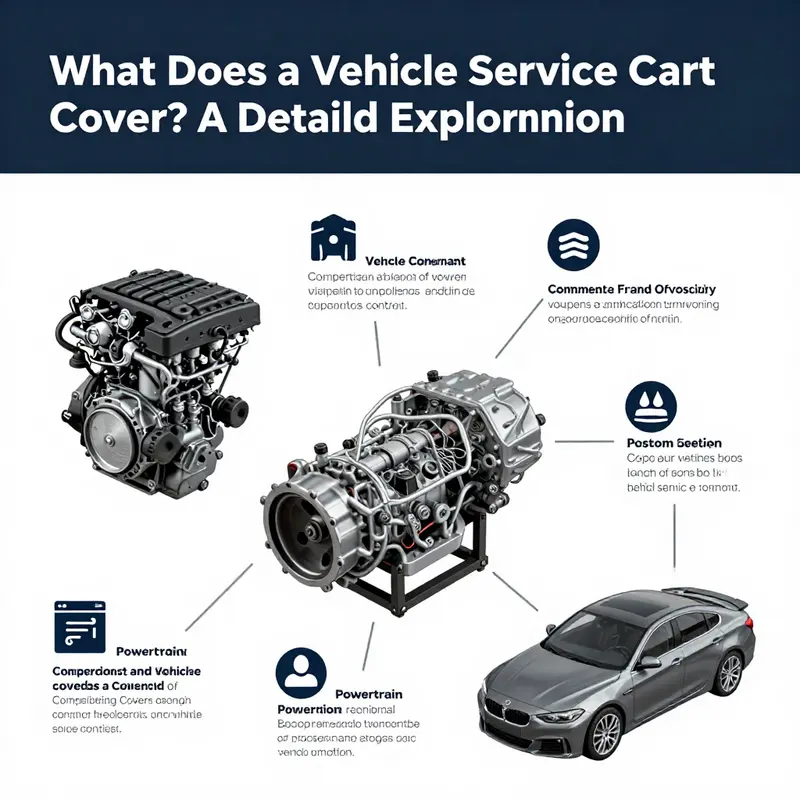
A vehicle service contract exists as a financial shield once a vehicle’s original manufacturer warranty lapses, but its value comes from clarity rather than assurance alone. The idea is simple: transfer some of the risk of expensive repairs from the owner to a third-party provider, in exchange for a predictable premium. Yet the reality of what a contract covers is nuanced. Coverage is shaped by the plan level, the vehicle’s make and model, its mileage, the age of the contract, and the fine print that defines exclusions and limitations. Reading the terms closely matters as much as selecting a plan. Without that careful reading, a contract can feel comprehensive in name but thin in reality when a costly failure hits. This chapter keeps the focus on what those contracts tend to cover across the major systems, while also explaining where coverage commonly stops and why those boundaries exist.
The engine sits at the heart of every vehicle’s function, and it is the component most people expect a vehicle service contract to guard. In a broad, properly scoped plan, coverage typically includes the engine block and cylinder head, along with the moving parts that live inside the engine’s critical compartments: pistons, crankshaft, camshaft, timing components (chain or belt), oil pump, and the essential sensors that monitor lubrication, pressure, and temperature. When internal failures occur—a blown gasket due to manufacturing defect, a seized engine from oil starvation, or a malfunctioning oil pump that leaves the engine without proper lubrication—these are precisely the failures that contract coverage is designed to address. The appeal is clear: avoiding the catastrophic cost of a major engine repair can be a decisive factor in whether a vehicle remains economical to own in its later years. At the same time, the engine is also a frequent source of disputes in coverage because many plans explicitly carve out failures resulting from improper maintenance, use of incompatible fuels, or severe neglect. The contract specifications, therefore, often require that the failure be traced to a covered internal condition rather than to a broader external cause. In practice, the line between a covered internal failure and an uncovered external factor can be subtle, and it is a reminder that nothing substitutes a careful read of the exclusions.
Beyond the engine, the transmission represents the second pillar of protection. Whether the vehicle uses an automatic or a manual transmission, the goal is to preserve the ability to transfer power smoothly from engine to wheels. Coverage usually includes the transmission housing, the torque converter in automatics, the clutch assembly in manuals, internal gears and shafts, solenoids, and often the control modules that govern shift logic. A slipping, grinding, or complete transmission failure is typically the kind of repair a service contract aims to prevent turning into a ruinous bill. Yet, as with the engine, coverage is not universal. Many plans exclude wear-related failures attributable to harsh driving, misfluiding, or the use of third-party additives that alter lubrication characteristics. Some plans also cap coverage on certain high-cost components or require pre-authorization for repairs that straddle multiple subsystems. The result is that, while a sound transmission is a strong candidate for coverage, the contract’s precise language is what ultimately decides which repair qualifies and which does not.
The drivetrain, which encompasses the components responsible for delivering power to the wheels, receives a similarly pragmatic protection approach. Key parts such as driveshafts, differentials, axles, universal joints, and CV joints are often included because failures in these areas can suddenly immobilize a vehicle and are frequently expensive to repair. Coverage for drivetrain elements tends to focus on defects and failures that occur despite normal maintenance and within the scope of the contract’s terms. Wear-and-tear, misalignment, and damage resulting from improper use frequently complicate claims, but a well-constructed plan will still capture critical drivetrain failures that could otherwise leave an owner stranded with a large bill. As with the engine and transmission, the precise boundaries vary by provider and plan level, underscoring the importance of aligning expectations with the policy language before purchase.
Modern vehicles rely heavily on electrical and electronic systems, and this has become a central point of value in many vehicle service contracts. Coverage commonly extends to the alternator, the starter motor, the battery (specifically for internal defects rather than external wear or improper charging), and a range of electronic control units (ECUs) that manage everything from ignition timing to fuel delivery to complex body-system operations. The broader the coverage for ECUs, the more attractive a plan tends to appear to owners of newer or more technologically advanced vehicles. Still, software glitches, calibration issues, and user-induced damage are frequently excluded or subject to separate conditions. In practice, customers often encounter coverage that protects the hardware and critical internal electrical pathways, while leaving software-only issues or updates outside the contract’s remit unless an add-on specifically addresses that space. The reality of modern vehicles is that electronics can be as integral to drivability as any mechanical assembly, so the inclusion of ECUs and related components is a meaningful differentiator among contracts.
The heating, ventilation, and air conditioning system is another area where coverage can provide noticeable relief during long maintenance cycles. The HVAC system relies on a compressor, condenser, evaporator, blower motor, and the associated wiring and controls. When refrigerant leaks or a compressor fails, the timely repair becomes part of the value proposition of a service contract. Some plans extend to include the electrical controls that drive climate control features, while others limit coverage to the mechanical core. Because an HVAC system issues can affect comfort and cabin air quality, this portion of coverage often carries practical weight for owners in regions with extreme seasonal weather. As with other subsystems, the specific list of covered components and the exclusions—such as leaks caused by improper handling or pre-existing condition—must be understood before committing to a plan.
Fuel delivery and emissions control systems form another substantial area of coverage. In many contracts, components such as fuel injectors, the fuel pump, fuel lines, and fuel filters fall under the umbrella of coverage when their failure directly leads to drivability issues or engine damage. Emissions-related equipment—catalytic converters, oxygen sensors, EGR valves, and associated sensors and tubing—also often appear in the covered roster because these parts are expensive to replace and critical for regulatory compliance. The emphasis here is on preventing a cascade of problems that stem from a single failure, which can be especially costly when the vehicle is well beyond its factory warranty. Plans that exclude certain emissions components or require additional add-ons to cover high-ticket items are found in the market, so buyers benefit from a careful tally of what’s included and what’s not when considering these contracts.
In some cases, a contract might explicitly address safety-related systems, acknowledging their importance to occupant protection and vehicle integrity. Some providers offer add-ons or enhanced coverage for a subset of safety-oriented hardware or software, especially for features that integrate with advanced driver-assistance systems (ADAS). While a growing number of writers and consumers alike recognize the value of maintaining sensor suites, cameras, and related control modules, many contracts treat these as optional or require a higher tier for inclusion. The overarching philosophy is practical: the more such systems are integrated into a car’s core operation, the greater the potential repair cost if they fail, but the price of coverage also rises with each added component.
Of course, no vehicle service contract is truly comprehensive without a clear map of exclusions. Routine maintenance items—the oil, oil filter, air filter replacement, tire rotations, and battery checks—are almost universally excluded because they represent regular upkeep rather than unexpected failures. Likewise, wear-and-tear items such as brake pads, brake rotors under certain conditions, tires, wiper blades, and windshield glass are commonly excluded, unless a failure is specifically due to a manufacturing defect or a covered internal issue. Accidents, collision damage, and damage from misuse or neglect are typically outside the scope of VSCs, as are problems arising from improper installation or the use of non-approved parts. Some plans impose mileage-based caps or require that repairs be performed within an approved network to qualify for reimbursement. Others cap the maximum payout per claim or over the lifetime of the contract. The practical takeaway is straightforward: coverage can look broad on a list, but the exclusions and limits often shape the real protection—and that means reading the fine print closely.
The way a contract is designed—its plan level, term length, and deductible structure—has a direct impact on how useful it feels in the real world. A base plan might cover a narrower set of components or place lower payout limits, while a more comprehensive plan broadens the scope to include many major systems and sometimes even ancillary protections like rental-car reimbursement during a covered repair. A longer-term contract can lock in protections that align with the vehicle’s remaining risk horizon, but it also binds the owner to premiums for a longer period. Deductibles, whether fixed or per-claim, influence the moment a repair becomes financially sensible to pursue under the contract. The more a buyer can anticipate their near-term maintenance needs, the better they can judge whether a plan’s structure will pay off when a repair arises. In short, the right plan balances the vehicle’s age, mileage, and anticipated repair risk against the premium and deductible cost, and that balance is different for every owner.
To navigate these choices with confidence, it helps to frame the contract as a risk-management tool rather than a product you simply “buy.” A contract’s value emerges when it reduces exposure to high-cost, low-frequency failures that could otherwise disrupt daily life or drain a savings reserve. Yet the tools used to assess value—the fine print, the provider’s network strength, the clarity of the claims process, and the real-world performance of the coverage—are not always visible at first glance. A robust provider network matters because it translates into better access to trained technicians, quicker claim resolution, and smoother parts logistics. The contract’s geography can matter even more in areas without dense coverage; a good plan will offer a reliable pathway to service, including regional adjustments and support agreements with local shops or authorized service centers. This is where the strategic dimension of choosing a plan becomes apparent: you are paying for a promise of service quality as much as for repair protection.
In practice, evaluating a vehicle service contract means more than tallying the list of covered parts. It requires a careful audit of exclusions, coverage limits, and the claim workflow. A well-cut contract typically clarifies whether pre-approval is required for certain repairs, how diagnostic costs are handled, and what the process looks like if a multi-system failure occurs. It should also spell out what happens if a repair cannot be completed in a single visit, including whether a replacement vehicle or rental car is covered and for how long. The discussion should extend to whether the contract covers the costs of towing to a service facility, and whether there are additional protections for parts replacement that involve specialized tools or dealer-level expertise. While some buyers assume that a longer-term plan will automatically provide better protection, the reality is more nuanced: coverage must be aligned with the vehicle’s likelihood of a given failure, the repair complexity, and the owner’s willingness to bear certain upfront costs.
The broader market context also shapes how these contracts are structured and delivered. Providers with established networks tend to offer more predictable service experiences because they can leverage relationships with OEMs, Tier 1 suppliers, and a wide repair ecosystem. This connectivity matters when a claim requires specialized diagnostics or the sourcing of rare parts. In regions with dense automotive activity, the market supports faster parts availability and a more seamless customer journey through the claims process. Conversely, in areas with fewer qualified technicians or longer supply chains, a plan that emphasizes network access and regional knowledge can deliver outsized value by reducing downtime and minimizing hassle. The geographic dimension is not merely a convenience factor; it directly affects how quickly and smoothly a repair can be completed, which, in turn, influences the contract’s real-world effectiveness.
For those evaluating contracts on behalf of a business fleet or a corporate procurement program, the calculus expands further. A business buyer often weighs not only the coverage but the provider’s claims-handling efficiency, the size of the regional network, and the agility of the service partners in key markets. A provider with a proven track record of rapid claim resolution, strong regional expertise, and a well-integrated service workflow can deliver consistent uptime across a fleet, even when vehicles operate in demanding environments. In these contexts, the choice of a plan is as much about risk management as it is about cost control. The decision often hinges on a portfolio view: how a single contract interacts with other risk-transfer tools, such as maintenance services, extended warranties, or fleet management programs. The strategic buyer will ask not just “What does it cover?” but “What happens if a covered system fails under heavy use in a high-demand market?”
In all of this, the human element remains central. A contract that looks comprehensive on paper can still fall short if the claims process proves opaque or if the network lacks responsiveness at a critical moment. Therefore, the purchase decision should include conversations with the provider about the typical claim timeline, the documentation they require, and the availability of customer support during and after repairs. A practical test is to map out a hypothetical scenario: a mid-life vehicle experiences a transmission issue in a market far from the nearest approved shop. If the plan promises service but cannot guarantee prompt diagnostics, parts access, or a rental vehicle during the downtime, the owner has not merely purchased coverage; they have purchased peace of mind that comes with predictable service expectations.
As you move from understanding the general scope of coverage to applying it to a particular vehicle and use case, a simple but powerful step becomes clear. Align the plan with the vehicle’s current risk profile: the age, the mileage, the known maintenance history, and any pending repairs. If a vehicle is older with higher mileage, the likelihood of significant mechanical or electronic failures increases, altering the value proposition of adding a broad coverage plan. Conversely, for a newer or low-mileage vehicle, the incremental protection may seem less compelling, but the cost of potential failures—especially in a rising-cost repair environment—can still justify a carefully chosen plan. The balance rests on honest risk assessment and a clear-eyed read of the contract’s terms, aided by a willingness to compare multiple plans side by side. When done thoughtfully, selecting a vehicle service contract becomes a disciplined exercise in risk management rather than a reflex purchase.
For readers seeking practical context beyond the policy language, a useful touchstone is a broader maintenance and ownership guide that situates VSCs within the day-to-day realities of owning and operating a vehicle. This broader context helps bridge the gap between what is technically covered and what owners actually experience when a repair is needed. It illuminates how service contracts interact with routine maintenance, how to plan for potential repairs in regions with variable service access, and how drivers can maintain records that support smooth claims processing. Reading about maintenance practices can also inform a buyer’s expectations about wear items and preventive care, reinforcing that a well-kept vehicle is less likely to present frequent claims while still benefiting from the protection a solid contract provides in the event of a genuine mechanical surprise. In that sense, a vehicle service contract complements prudent upkeep rather than replacing it.
To connect this discussion with practical, experience-based resources, consider exploring maintenance-focused guidance that complements the protection narrative. For instance, a comprehensive set of tips for first-time truck owners can offer hands-on perspectives on maintenance routines that intersect with what a service contract covers. This context is especially valuable when evaluating plans for vehicles used in demanding or unusual conditions, where a driver’s routine maintenance and timely repairs become how the contract proves its worth. For readers who want to combine hands-on maintenance insight with coverage considerations, the following resource provides accessible, vehicle-specific tips: truck maintenance tips for first-time owners. truck maintenance tips for first-time owners.
In sum, a vehicle service contract is not a one-size-fits-all promise. It is a carefully structured agreement that translates broad protection into a tailored, callable plan for the parts and systems your vehicle relies on most as it ages. The engine and transmission typically anchor the coverage, with the drivetrain, electrical systems, HVAC, and fuel and emissions components offering further protection depending on the plan’s scope. Yet the real-world value emerges only when you understand the exclusions, the payout limits, the network strength, and the claim process. The better a buyer understands these elements—and how they apply to their vehicle, their driving patterns, and their service options—the more effectively they can use a vehicle service contract to manage risk without paying for protections that deliver little value. In that sense, the contract becomes a practical tool for sustained mobility, not a theoretical guarantee of problem-free ownership. For those who would like to explore the topic further, an external reference provides additional perspective on how these contracts are designed, evaluated, and used in everyday ownership: https://www.consumerreports.org/cars/vehicle-service-contracts/.
Beyond Warranty: Navigating Exclusions and Realities of Vehicle Service Contracts

A vehicle service contract offers protection against costly repairs after the manufacturer’s warranty expires, but it does not cover everything. The value of a plan depends on what it includes, what it excludes, and how the terms are applied in practice. In this chapter we unpack typical exclusions and limitations, explain why they exist, and show how to read the fine print to decide whether a plan fits your vehicle, budget, and driving habits. The core idea is simple: coverage is most useful when it targets the parts most likely to fail for your car’s age and usage, while maintenance and wear items are usually excluded.
Typical inclusions focus on major powertrain and electrical systems, such as the engine, transmission, and certain electronic control modules. Some plans extend to cooling systems, fuel delivery, and some climate-control components. However, coverage is rarely uniform across providers, and add-ons can change the scope significantly. Before signing, compare plans side by side and ask specific questions about deductibles, per-claim limits, network requirements, and how repairs are approved and paid.
Exclusions form the backbone of risk allocation. Routine maintenance (oil changes, tire rotations), wear-and-tear items (brake pads, wiper blades), and damage from accidents or neglect are commonly excluded or restricted. Many contracts also exclude pre-existing conditions or impose waiting periods. Third, examine the contract’s limits: time and mileage caps, per-claim or aggregate limits, and whether repairs must occur at an authorized shop or within a network. These details determine whether a plan reduces your out-of-pocket costs in your real life.
Finally, take a practical approach to shopping: gather several quotes, read the terms, and run through hypothetical scenarios (e.g., a major engine issue, transmission failure, or cooling-system rebuild) to estimate out-of-pocket costs with deductibles and potential limits. A contract is most valuable when it aligns with your vehicle’s age, reliability history, how you drive, and your tolerance for risk.
Weighing the Price of Peace of Mind: What a Vehicle Service Contract Covers and How its Cost Shapes Your Budget
A vehicle service contract, often labeled an extended warranty, sits at the crossroads of promise and practicality. It is not simply a line item in a monthly budget; it is a mechanism that shifts risk from the owner to a coverage provider. When you consider what a VSC covers, you are assessing not only the potential for avoided repair bills but also the terms that determine whether those savings ever come to pass. The core idea behind a VSC is straightforward: after the manufacturer’s warranty expires, a contract can take on the financial burden of repairing or replacing critical components. Yet the practical value of that protection is tethered to both the scope of coverage and the price you pay up front, as well as any deductibles and contractual limits. Understanding these variables helps you gauge whether a contract meaningfully reduces your exposure to repair costs or simply adds another line item to your annual expenses. In this sense, the discussion turns from “Is this coverage worth it?” to “How will this coverage actually affect the money you need to spend, and when will it save you more than it costs?” This perspective frames the chapter’s exploration of cost implications as a practical, decision-making guide rather than a doctrinal defense of a single path.
The cost dynamics of a VSC begin with the upfront investment. The price you pay for a contract depends on several factors, including the vehicle’s make and model, its age and mileage, and the tier of coverage you select. A newer vehicle with low mileage will typically cost less to insure against expensive failures than an aging model with high mileage, where the odds of a breakdown creep higher. The range for upfront costs can stretch from a few hundred dollars to over a thousand, depending on how broad the protection is and how long it lasts. This initial outlay resembles an investment in risk management. If you anticipate the almost certain possibility of a major repair—such as a transmission rebuild or engine work—the cost of the contract may be easy to justify, because those repairs can far exceed the price of the contract and the typical out-of-pocket cost you would face without protection. For example, replacing a transmission can run into the thousands, a figure that makes a substantive VSC payout look almost modest by comparison. Yet a crucial nuance remains: the contract only pays when the covered failure occurs and only within the scope defined by exclusions and limits. The up-front cost, therefore, must be weighed not in a vacuum but against the vehicle’s condition, your risk tolerance, and your ability to absorb a potentially substantial repair bill if coverage is insufficient.
From there, total cost of ownership provides a broader lens through which to view a VSC. A contract can alter your financial trajectory by smoothing out repair expenses that would otherwise spike your maintenance budget. The total cost of ownership is not simply the sticker price of the contract; it includes deductibles, potential gaps in coverage, and the probability that the contract will pay for itself through the life of the vehicle. For a relatively new car under the original warranty, the decision may seem less compelling. You may enjoy another few years of peace of mind from the factory warranty and routine maintenance programs that already shield you from the most alarming failures. But as the vehicle ages, the risk of mechanical trouble rises—and with it, the potential value of a service contract. In such cases, the contract can be a predictable shield against unexpected, high-cost repairs. However, even in this context the decision hinges on how long you expect to keep the vehicle, how aggressively you drive, and how diligently you maintain it. Someone who drives primarily in city traffic may encounter different failure profiles than a person who logs long highway miles, and those patterns influence whether the contract’s economics work in your favor.
A critical, often underappreciated aspect of the cost equation is the deductible structure. Some contracts require a per-repair deductible, which can be modest—commonly around $50 to $100. Others might offer a zero-deductible option, but at a higher upfront price. The math becomes: how many repairs are likely to occur within the contract period, and what portion of those repairs would incur a deductible? The deductible effectively compresses your risk into a shared responsibility with the provider. If you anticipate several substantial repairs within a year, a higher deductible could still be cost-effective if it accompanies a significantly lower upfront price or broader coverage in the most essential systems. Conversely, if repairs are infrequent or if you expect only minor issues, a low-deductible plan might end up costing more than it saves. The sensitivity of this balance to your driving habits and vehicle condition means that the same contract can be a bargain for one owner and a poor choice for another.
Coverage limitations, however, are the junction where expectations meet reality. A common refrain from buyers is that VSCs do not cover routine maintenance—oil changes, tire rotations, and other scheduled services are generally outside the envelope. Wear-and-tear items such as brake pads, tires, and wiper blades typically fall outside protection, as do components damaged by accidents, neglect, or improper maintenance. Beyond these broad strokes, many contracts impose mileage caps or time limits, offering protection for a fixed number of miles or years. Some plans may cover certain electronic control modules or powertrain components, while others clearly exclude these parts. The precise list of covered items, the definitions of what constitutes a covered repair, and the process for approval and payment all shape whether a contract delivers the promised peace of mind. A compact way to approach this is to read the fine print as if you were evaluating a medical plan: you want to know not only what is paid for but also what is excluded, what triggers the coverage, and what documentation you must provide to access benefits. Without clarity here, the apparent value of a policy can quickly evaporate the moment you file a claim.
As you compare options, it helps to distinguish between kinds of protection in the market. Some contracts are marketed as “powertrain” or “engine and transmission” protection, which tends to focus on the core, high-cost components that historically drive the most expensive repairs. Other plans span more modules and systems, including certain electronic and safety-related components. Yet more choices exist in the realm of third-party providers versus those offered in conjunction with car manufacturers or dealerships. The breadth of coverage correlates with cost, but breadth does not guarantee value for every vehicle or every driver. A practical approach is to map the coverage against your own vehicle’s failure history, the likelihood of certain repairs given the model and maintenance history, and your own willingness to bear risk. For some, a narrow, targeted coverage that includes the most expensive likely repairs offers the best return; for others, broader protection provides a steadier budget with fewer surprises. In all cases, the decision benefits from a clear understanding of what is covered and what is not, and from recognizing that a VSC’s real value rests in the alignment between its terms and your circumstances.
To connect these considerations to real-world shopping decisions, it helps to compare multiple providers, read the terms carefully, and consult independent reviews or consumer resources. The goal is to identify a plan whose price and terms align with your vehicle’s profile and your financial expectations. The process benefits from a disciplined, numbers-driven approach: estimate projected maintenance costs for the next several years, factor in the contract’s upfront price and any deductibles, and compare that total to the expected out-of-pocket costs of potential major repairs absent coverage. If the contract promises to cover the kinds of repairs you most fear, and if the deductible and exclusions are reasonable given your risk tolerance, it can be a wise hedge. If not, the same money could likely be invested elsewhere for broader financial resilience or set aside as a contingency fund against repairs. When in doubt, set up a simple decision framework: list the top two or three repairs you most want to avoid paying for, assess how likely each is given your vehicle’s history and age, then see whether the contract’s terms align with those priorities. A practical note is that this analysis should reflect your personal budgeting approach as well; some drivers prefer predictable monthly or annual costs, while others are comfortable with variable outlays tied to the timing of repairs.
The decision context also benefits from thinking about the vehicle’s expected future use. A car that will be kept for several more years, with uncertain maintenance records or higher mileage, may justify a more protective plan. If you plan to trade in the vehicle soon or anticipate a sale, the value of a VSC can be more nuanced, as the contract’s terms may or may not transfer to a new owner. In such cases, you might weigh the potential for elevated resale value against the risk that the contract’s terms will not be honored after transfer. A thoughtful buyer weighs not just the economic hit of the upfront cost but the intangible benefits: the reassurance of predictable maintenance costs, the convenience of claim processing, and the reduced anxiety around the possibility of a sudden, expensive repair derailing plans or budgets.
As you refine your choice, consider practical steps that strengthen your position. Gather maintenance records, obtain a vehicle inspection or pre-purchase assessment if you are buying used, and quantify both your savings and exposure under several scenarios. If you decide to pursue a VSC, you can often tailor the plan to your own driving profile and maintenance discipline. For example, drivers who schedule regular, proactive servicing might appreciate plans that cover major failures while offering lower deductibles for larger, more expensive repairs, balancing price against potential payout. Conversely, those who are more conservative in their maintenance approach might prefer plans with zero-deductible options or broader coverage that shields against a wider array of failure modes. In the end, the price of peace of mind is not simply a function of the contract’s headline cost but of how well the contract’s coverage, deductibles, exclusions, and duration map onto your vehicle’s actual risk. When the fit is right, the contract can convert a potentially disruptive repair event into a manageable expense, preserving both your budget and your schedule.
For readers who want a practical touchstone beyond personal calculations, exploring a diverse set of perspectives can be illuminating. The KMZ Vehicle Center blog offers a practical lens on maintenance considerations that can inform your broader budgeting approach, helping you weigh not just large, one-off repairs but the regular upkeep that preserves value and reliability over time. You can visit the blog here: KMZ Vehicle Center blog.
In addition to individual diligence, it is valuable to test the assumptions you make about cost and coverage against reputable external guidance. A widely cited consumer resource offers a structured overview of what vehicle service contracts entail, including typical inclusions, exclusions, and the behavioral patterns that influence whether a contract pays off. This external perspective is not a substitute for your own vehicle history, but it provides a framework to interpret the terms you encounter and to calibrate your expectations accordingly. For a practical, consumer-oriented overview, see Consumer Reports’ guide to vehicle service contracts. Consumer Reports: What Is a Vehicle Service Contract? (2026).
Final thoughts
In summary, understanding what a Vehicle Service Contract covers is crucial for ensuring the longevity and functionality of your vehicle. Recognizing both the coverage provided and the limitations inherent within these contracts empowers you as a consumer. Additionally, grasping the financial implications associated with these contracts can significantly influence your decision-making process. Equip yourself with this knowledge to make a well-informed choice that suits your vehicle needs.