Nestled in Wainsbury, West Midlands, A&R Vehicle Services Ltd stands as a beacon of reliability and expertise for local private car owners, small fleet operators, and used car buyers. With a state-of-the-art facility covering six acres, the company specializes in commercial vehicle repairs, ranging from regular maintenance to accident restoration. This article delves into five compelling chapters, highlighting the comprehensive services offered, the technology driving innovations, the economic benefits for the community, strict compliance with regulatory standards, and a commitment to customer satisfaction that reinforces why A&R Vehicle Services is a trusted partner for vehicle owners across the UK.
A&R Vehicle Services: Integrated Repair, Refurbishment, and Regulatory Support

A&R Vehicle Services, based on a six‑acre campus in Wainsbury, West Midlands, combines high‑volume repair capacity with a strong focus on safety, quality, and regulatory compliance. The facility houses twenty‑one fully equipped repair bays and three low‑temperature spray booths, enabling rapid turnaround for accident repairs, routine maintenance, tank cleaning, re‑branding, and frame straightening. Each vehicle undergoes a rigorous quality‑assurance process that validates structural integrity, fluid levels, emissions readiness, and alignment before it leaves the site, providing fleets with auditable evidence for compliance audits and insurance requirements.
Beyond the physical shop floor, A&R offers a suite of ancillary services that address the complex regulatory landscape of heavy‑vehicle operation. The company assists clients in securing permits for restricted‑access routes, planning optimal travel corridors, and conducting travel‑impact assessments to minimise disruptions and safety risks. Accreditation support helps operators meet the standards required for specific contracts or highway use, while detailed documentation of repairs and inspections creates a transparent maintenance history.
The integration of repair, refurbishment, and regulatory services reduces the fragmentation that many fleet managers face when dealing with multiple vendors. By centralising these functions, A&R delivers faster return‑to‑service times, lower downtime, and clearer visibility into lifecycle costs. Operators benefit from a single accountable partner that not only restores vehicles to optimal condition but also ensures that every step of the process aligns with the latest legal and safety requirements.
For fleets seeking to enhance reliability and compliance, A&R Vehicle Services represents a comprehensive solution that blends technical expertise with regulatory navigation, ultimately supporting safer, more efficient heavy‑vehicle operations across the UK.
Beyond the Repair Bay: Technology, Autonomy, and the Customer Experience at A&R Vehicle Services
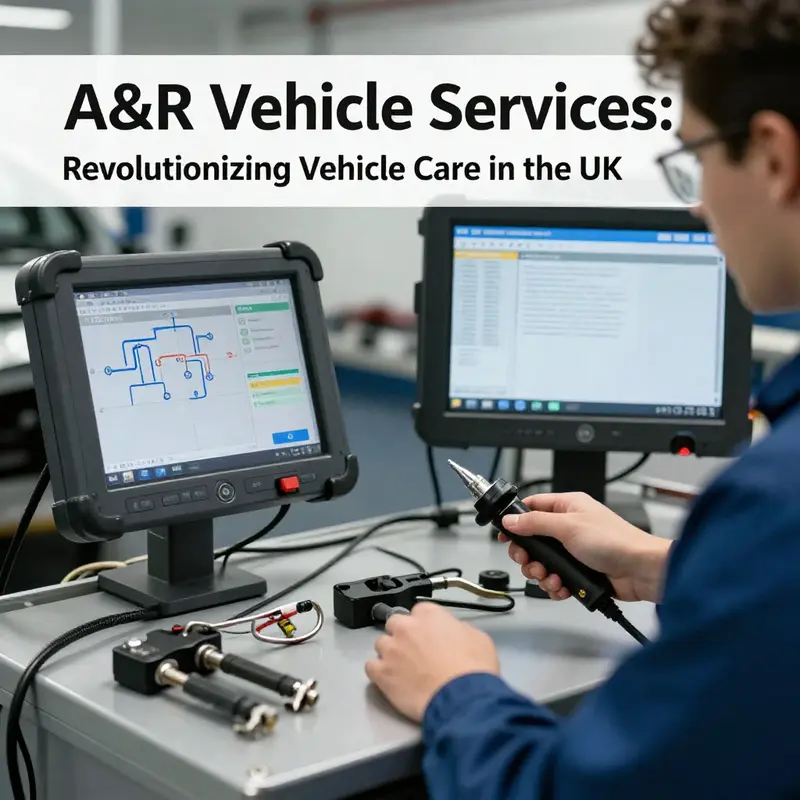
Within the six-acre campus in Wainsbury, A&R Vehicle Services stands as a clear example of how a modern commercial vehicle repair partner can combine scale with precision. The facility uniquely blends capacity and craft: twenty-one fully equipped repair stations allow for concurrent work on a variety of chassis, body, and electrical systems, while three commercial low-temperature spray booths enable consistent refinishing without compromising cure times or coating integrity. The promise of such a site rests not in size alone but in the relentless discipline that governs every process. Before a vehicle leaves the bay, it passes through a rigorous quality assurance sequence that checks alignment, structural integrity, fluid systems, braking performance, emissions readiness where applicable, and cosmetic standards. Regulatory compliance is woven into every step, from data capture and traceability to the disposal of waste streams and the management of hazardous materials. In short, A&R has built a facility where high throughput lives hand in hand with accountability, an essential foundation for introducing the kind of innovations that the industry now expects to see. The capacity and culture that define this site set the stage for a deeper integration of technology that is reshaping every facet of vehicle care, from the moment a fleet arrives to the moment its wheels roll away again with renewed confidence.
The first layer of transformation comes from Autonomous Vehicle technologies, where artificial intelligence acts as the central brain for perception, navigation, and decision making. AI interprets sensor data, forecasts potential hazards, and helps technicians diagnose issues that extend beyond the obvious signs of wear. The range of sensors employed in modern practice is diverse and deliberately redundant: LiDAR for depth perception, radar for reliable detection under varied weather conditions, and cameras that capture high-resolution imagery to recognize patterns that humans might overlook. High-definition mapping provides a precise reference frame for operations, ensuring that the software guidance used for diagnostics and test procedures aligns with the real world geometry of every vehicle. Machine learning algorithms then take the data generated by hundreds or thousands of service events, allowing the shop to refine diagnostic templates, predict component wear, and streamline interventions. As these systems mature, the industry moves closer to a future where autonomous capabilities, even if not fully deployed in every vehicle today, inform the way technicians approach every repair and maintenance task, elevating safety margins and reducing cycle times.
AR, or augmented reality, makes its mark not only in the lab but in the hands of the customer and the technician alike. In the service environment, AR overlays bring real-time information directly onto the physical world. For the customer, this means the post-accident or post-maintenance journey becomes more transparent; a heads-up display or a tablet view can show which parts were replaced, how systems were tested, and what remains under review, with visuals anchored to the actual components. For technicians, AR can guide diagnostic steps by displaying repair instructions directly on the engine bay, or by highlighting the exact fasteners that require attention. The effect is twofold: error rates decline and less time is spent hunting the right procedure, so the vehicle moves through the repair line more quickly without sacrificing quality. Even maintenance guidance can be supported by AR, guiding operators through recommended service intervals and procedures with live feedback that builds confidence and reduces the need for backtracking. The practical value of AR in a facility with 21 repair stations becomes clear when one considers the typical mix of tasks—frame straightening, refurbishment, tank cleaning and testing, and rebranding—that demand both precision and real-time decision support. By making information visible at the point of work, AR strengthens the chain of accountability and ensures that every decision is justified in the moment rather than afterward.
The customer experience, perhaps more than any other aspect, benefits from this convergence of AI and AR. When a vehicle arrives, the intake process can be augmented with data-driven estimates of repair time and resource needs, which helps fleet managers plan downtime with greater accuracy. The integration of real-time diagnostics into the service dialogue allows customers to see how tests validate performance, and it opens space for discussion about alternatives, such as scheduling gaps to minimize operational disruption or exploring refurbishment options that restore value to aging fleets. The sense of control that customers gain through visible data aligns with the company ethos of compliance and traceability, ensuring that every repair is not only effective but also fully auditable. The six-acre site, with its capacity for simultaneous projects, becomes a living demonstration of how a modern repair partner can manage complexity without sacrificing predictability. The slow, careful arc of best practice—careful handling of hazardous waste, strict calibration of spray equipment, and rigorous post-service testing—still anchors the operation, but the new tools provide the means to execute that arc with greater confidence and speed.
At the same time, the workforce at A&R learns to move with the rhythm of these technologies. Technicians receive training that blends traditional hands-on skills with data literacy and digital collaboration. They learn to interpret sensor dashboards, follow AR-guided workflows, and participate in continuous improvement cycles that feed data back into AI models. This is not a displacement of craft; it is an augmentation of it. The frame straightening bay, the refurbishment shop, and the tank cleaning and testing line benefit from AI insights that anticipate tool wear and optimize material usage, while AR prompts reduce repetitive errors during complex disassembly or reassembly tasks. The result is a safer, more efficient operation that still honors the core manual competencies that made skilled repair work possible in the first place. And because every step is designed to align with regulatory expectations, the shop maintains rigorous documentation and traceability, ensuring that any service decision is supported by a provable audit trail.
Critically, these technological shifts also redefine the relationship between the service provider and the client. Transparency becomes a feature of the process rather than an aspirational benefit. Customers now access a live view of the repair workflow, with diagnostics, test results, and maintenance recommendations presented alongside the physical vehicle. The AR-enabled experience helps to reduce uncertainty during downtime, so fleets can reallocate capital and plan logistics with greater clarity. This alignment of operational excellence and customer engagement is especially valuable for operators who rely on tightly scheduled routes and maintenance windows. The facility’s capability to handle accident repair, routine maintenance, and refurbishment within a unified ecosystem means that information flows uninterrupted from diagnosis to delivery, with every stage supported by the best available data, kept secure and auditable. It is a practical embodiment of the modern service paradigm in which technology and human expertise reinforce one another rather than compete for attention.
The broader significance of what A&R Vehicle Services is doing lies in how such innovations move from pilot ideas to everyday practice. AI and AR do not merely offer incremental gains; they alter the economics of repair by reducing cycle times, improving first-time fix rates, and providing customers with credible, actionable information. As autonomous systems become more capable and more integrated into vehicle technology, repair and maintenance practices will increasingly reflect a culture of anticipatory service, where predictive maintenance and proactive component lifecycle management are the norms rather than the exceptions. In such a world, the six acres of the Wainsbury site become a microcosm of the industry at large: a place where capacity, precision, and customer trust converge to redefine what is possible in commercial vehicle care. The careful orchestration of people, processes, and digital tools creates a feedback loop in which data from every repair informs future diagnostics, and the insights gathered during diagnostics refine the guidance delivered to customers and technicians alike. The overall effect is not just faster service but smarter service—one that respects safety, compliance, and the long-term value of the fleets it serves.
For readers seeking practical illustrations of how AR can augment service delivery, the KMZ Vehicle Center blog offers accessible discussions that bridge theory and hands-on practice in the automotive space. It is a useful reference point for seeing how real operators translate digital concepts into day-to-day improvements on the shop floor and in the customer journey. KMZ Vehicle Center blog. Those who want to connect the dots between research and industry applications may also consult the broader scientific literature on autonomous systems and service innovation, including studies that explore AI driven perception, HD mapping, and AR guided maintenance. The sources illuminate the trajectory from laboratory concepts to field-ready processes that A&R’s facility is beginning to exemplify in day-to-day operations.
Ultimately, technology and innovation in automotive services is about shaping the experience of mobility itself. It is about building trust through transparency, reducing risk through precise diagnostics, and accelerating the path from problem identification to effective resolution. In the context of A&R Vehicle Services, the convergence of AI, sensors, high-definition mapping, and AR is not an abstract agenda; it is a practical, scalable framework that informs every repair decision, every maintenance interval, and every interaction with a fleet operator. It is easy to imagine a future where autonomous systems handle routine driving tasks on certain routes, while human technicians remain indispensable for interpreting complex failures and executing high-stakes interventions. What remains constant, however, is the commitment to quality, safety, and regulatory compliance that defines the company. The six-acre complex in the West Midlands is not just a site of repair; it is a living laboratory where innovation meets reliability, and where the customer can witness the transformation of a repair service into a capable, trusted partner for an era of increasingly intelligent vehicles.
External reference: For further insight into these technological developments, refer to the detailed study available here https://www.sciencedirect.com/science/article/pii/S235214652300089X
Mobilizing the Midlands: The Economic Ripple of A&R Vehicle Services on the Local Community

From its six-acre campus in the West Midlands to its 21 repair stations and three low-temperature spray booths, A&R Vehicle Services sits at the heart of a regional economy built on mobility. The scale of this operation means more than vehicles are serviced; it shapes the life of the community by turning repair capability into a stable source of income, apprenticeships, and predictable employment. The facility’s adherence to rigorous quality checks and regulatory compliance underpins confidence not just in the fleet it touches daily, but in the broader supply chain that supports road transport across the region. The result is a durable infrastructure of trust that allows local businesses to plan, invest, and grow.
Direct employment follows the needs of a complex service ecosystem. Skilled technicians, customer-service professionals, and fleet coordinators find stable roles within the business. Each role supports a larger objective: keeping commercial vehicles on the road, reducing downtime, and ensuring that every journey by an employer or a contractor is backed by reliable maintenance. The value of these jobs goes beyond the wage; it includes opportunities for upskilling and career progression, which help to anchor families in the community and raise local income levels over time.
Indirect employment grows through the networks that connect repairs with parts suppliers, insurance brokers, fuel distributors, and training providers. As the A&R facility grows its throughput, it creates demand for components, lubricants, and servicing equipment that local businesses supply. This ripple effect strengthens the market for small and medium enterprises, encouraging them to hire, innovate, and expand. In turn, the local workforce gains exposure to wider industries, from logistics to construction, widening the region’s labor market resilience.
Beyond the shop floor, the economic impact touches everyday life through consumer mobility. When fleets are well maintained, workers can access employment opportunities without excessive downtime. Students reach campuses, patients attend appointments, and families enjoy travel options that would otherwise be compromised by vehicle unreliability. For commercial fleets, dependable transport underpins delivery schedules and retail operations, which in turn sustains local vendors and hospitality venues that rely on steady customer flow. The synergy between mobility and opportunity grows stronger when repair capacity sits within a community rather than at a distance.
Investment in a facility of this scale also nudges infrastructure forward. Roads, lighting, power supply, and digital connectivity benefit from the back-and-forth between business needs and municipal planning. Streamlined traffic management on surrounding corridors reduces congestion during peak repair cycles and improves safety for workers and motorists alike. Utilities upgrades to support heavy workshops can yield longer-term dividends for nearby enterprises, from data centers that require stable energy to service firms that depend on reliable internet and communication networks.
Local business growth often follows the enhanced mobility that repair ecosystems enable. Delivery services, service drivers, and maintenance contractors rely on the dependable operation of vehicles to meet tight schedules and customer expectations. When a fleet is kept in top condition, a small logistics firm can expand its range and scale, while a local retailer benefits from reliable restocking and predictable service levels. The presence of a robust repair and maintenance cluster also attracts ancillary services such as training centers, diagnostic laboratories, and compliance consultants, all of which contribute to a resilient local economy.
Quality assurance and regulatory compliance are not abstract commitments for A&R. They are the foundation of trust that underwrites every leg of the regional economy. A rigorous testing regime and standardized processes reduce the risk of breakdowns that disrupt employment, deliveries, and services across many sectors. When the community witnesses a vehicle that is safe, compliant, and ready for service, it reinforces a shared sense of reliability and steadiness that businesses, families, and public services depend on. This alignment between industry practice and public interest helps sustain a climate where firms can invest in equipment, facilities, and people with confidence in the longer horizon.
To understand the broader picture, it helps to connect local experience with national insights. The Department for Transport has undertaken a comprehensive assessment of the vehicle leasing and rental sectors, quantifying their contribution to the economy at regional and local levels. While the specifics vary by location, the underlying message is clear: mobility and vehicle management are engines of employment, trade, and growth. The alignment of policy understanding with the realities of a major repair and maintenance hub reinforces the argument that investments in such facilities pay off across towns and counties, not just within a single company.
Practical guidance for owners and managers seeking to understand this dimension of value can be found in the wider industry discourse. For example, ongoing maintenance best practices, especially those that emphasize reliability, fuel efficiency, and environmental stewardship, support both financial performance and community resilience. A single maintenance mindset—sustained by routine checks and disciplined scheduling—can differentiate a local fleet’s uptime from the volatility of downtime. For readers seeking further practical context, a helpful starting point is the broader reservoir of knowledge available at kmzvehiclecenter.com/blog/.
Ultimately, the economic footprint of a vehicle service hub is about more than the balance sheet. It is about people—mechanics who learn a craft, business owners who supply parts, and drivers whose reliability keeps markets moving. It is about the neighborhoods that become more connected as roads are kept clear and safety standards rise. It is about a regional economy that can attract investment, create pathways for young workers, and sustain the services that communities rely on every day. In this sense, A&R Vehicle Services is not simply a repair shop; it is a steady amplifier of opportunity, a catalyst for local enterprise, and a partner in the shared project of keeping the regional economy moving forward.
External resource: For a wider economic perspective on this sector at the national level, see the Economic Impact Assessment of the Full-Service Vehicle Leasing and Rental Sector in the UK. https://www.gov.uk/government/publications/economic-impact-assessment-of-the-full-service-vehicle-leasing-and-rental-sector-in-the-uk
Raising the Bar: How Regulatory Compliance and Standards Shape A&R Vehicle Services

In the heart of the West Midlands, A&R Vehicle Services operates from a custom-built six-acre campus that stands as a credible reminder of how scale and stewardship converge in modern fleet repair. The site houses 21 fully equipped repair stations and three commercial low-temperature spray booths, a configuration designed to meet the relentless demands of a sector where downtime translates to cost and risk. Every vehicle that passes through this hub is subjected to stringent quality checks and assurances before it leaves, a practice that aligns with the rigid regulatory expectations that govern vehicle safety, environmental stewardship, and employee welfare. In such an environment, compliance is not a back-office obligation but a living standard embedded in process design, asset management, and frontline behavior. This is especially true as the regulatory climate grows more complex, stretching from factory floor discipline to data governance across service records, digital workflows, and customer privacy. The organization’s footprint and practices thus become a case study in how large repair operations translate rules into reliable performance on the shop floor and beyond it into trust with customers and partners.
Key developments in the regulatory landscape reveal that as global concerns over vehicle safety, emissions control, and data privacy rise, the automotive sector must adopt a systematic approach to ensure compliance with evolving frameworks. The trend is toward a more integrated, technology-enhanced model in which rules are not merely checked but woven into the daily cadence of maintenance, repair, and refurbishment. For a business of A&R Vehicle Services’ scale, this means rethinking governance, audit, and measurement with clarity and speed. It is no longer enough to rely on annual reviews; executives and operators must embed change management into every work order, every calibration, and every rebranding project, so that compliance becomes a built-in outcome rather than a retrospective afterthought. The result is a culture in which corporate policy, shop-floor practice, and customer-facing transparency reinforce one another in real time.
Best practices begin with governance: a strong governance structure with clearly defined responsibilities ensures that accountability travels with every job card, every inspection, and every repair. When roles are explicit, decision rights are clear, and escalation paths are visible, technicians, estimators, and supervisors operate within a coherent framework. A well-mapped governance model reduces ambiguity in decision-making and creates traceability when issues arise, which is essential for fleet clients that demand consistency across thousands of miles and dozens of maintenance events. The governance architecture at A&R Vehicle Services supports compliance without stifling productive speed; it aligns standard operating procedures with regulatory expectations while preserving the flexibility needed to respond to urgent repairs or last-minute customer changes.
Audit processes form another pillar of robust compliance. Regular internal and external audits become not a punitive exercise but a learning loop that identifies potential risks early and prompts timely corrective action. The audit cadence touches every corner of the six-acre facility—from maintenance scheduling and tank cleaning protocols to frame straightening and rebranding activities. When findings are translated into action plans, they improve reliability, reduce rework, and support compliance with standards that regulate emissions, waste handling, chemical use, and occupational safety. The digital footprint of audits—logs, checklists, and corrective actions—creates a data trail regulators, customers, and insurers increasingly expect to see as part of transparency and assurance. This data trail also feeds continuous improvement cycles, allowing the business to demonstrate progress over time rather than merely proving compliance at a single point in time.
Digital technology integration is the accelerant here. Cloud-based compliance management platforms, coupled with AI-assisted risk alert systems, offer a proactive layer of control that scales with the facility’s capacity. For A&R Vehicle Services, this means centralized policy libraries, real-time risk scoring, automated reminders for training refreshers, and dashboards that illuminate compliance performance across 21 repair stations and three spray booths. Such systems enable the organization to monitor regulatory changes as they occur, test scenarios, and simulate how new rules would affect scheduling, material handling, or the use of certain chemicals. The result is not only greater efficiency but also a higher degree of confidence that every service, down to frame straightening and frame-related repairs, meets both the letter of the law and the expectations of customers who rely on robust, predictable outcomes. In practice, this translates into tighter documentation, faster retrofit cycles for compliant components, and the ability to demonstrate due diligence in audits with minimal disruption to daily throughput.
Employee training remains foundational. In a landscape where regulatory patchwork evolves rapidly, continuous learning ensures frontline personnel understand the latest requirements and apply them consistently. Training programs extend beyond statutory minimums to cover industry best practices, data protection fundamentals, and the ethics of service quality. On the shop floor, this means technicians, estimators, and support staff share a common language about risk, safety, and compliance. It also means supervisors embed learning into daily routines, using audits and performance feedback to reinforce correct behavior and to spot emerging gaps before they widen into non-compliance. The human element cannot be outsourced to software alone; the most effective compliance systems rely on people who are confident to question procedures, report anomalies, and act decisively when safety or regulatory indicators shift.
Viewed through a business lens, compliance yields tangible benefits beyond avoiding fines. It strengthens customer trust, enhances brand reputation, and creates competitive differentiation in a market where fleet operators demand reliable performance and predictable outcomes. The disciplined approach to governance and verification reduces rework, shortens cycle times, and improves the predictability of repairs and maintenance—critical for fleets where downtime costs ripple through a customer’s operations. At the same time, robust data practices protect customer information and support more accurate reporting to regulators and insurers, further reinforcing the company’s role as a trusted partner in a demanding industry. The payoff extends to smoother partnerships, more consistent service levels, and a resilient operating model that can weather regulatory cycles without sacrificing efficiency on the shop floor.
Looking ahead, the automotive sector’s regulatory compliance and standards are evolving toward a more rigorous, comprehensive, and technology-driven direction by 2026. The shift reflects growing concerns about road safety, environmental performance, and the digital footprint of service providers. A&R Vehicle Services, with its integrated facility and capacity, is positioned to translate macro-level regulatory intent into concrete operational discipline. Governance and audits, backed by cloud-based tools and AI-enabled risk alerts, can transform compliance from a merely defensive function into a strategic advantage. The gains are not limited to legal protection; they extend to reputational resilience, smoother partnerships with insurers and customers, and a more sustainable operating model that aligns with broader industry expectations.
Those seeking deeper perspectives on industry trends and compliance best practices can explore the KMZ Vehicle Center blog, which offers insightful context and practical viewpoints on maintenance governance and vehicle care. KMZ Vehicle Center blog.
External reading: for a synthesized view of automotive compliance trends and how leading operators respond to regulation, see Sustainability Reporting Automotive Compliance Trends 2026. https://www.sustainabilityreporting.org/automotive-compliance-trends-2026
Quality at the Core: How A&R Vehicle Services Delivers Customer Satisfaction Through Rigorous Standards

From the moment a fleet operator pulls into the six-acre campus near Wainsbury, the promise is clear: service that blends reliable engineering with transparent, respectful communication. At A&R Vehicle Services, customer satisfaction is not an afterthought; it is the compass by which every job is planned and completed. The scale of the operation—twenty-one fully equipped repair stations and three low-temperature spray booths—could be overwhelming, but it is harnessed to create consistent, predictable outcomes. This is not only about what is fixed or refreshed; it is about how clients feel throughout the process, and how the company guards that feeling through every interaction, every check, and every mile the vehicle travels after service ends.
A core portion of that experience rests on the meticulous approach to intake and planning. When a client arrives, the team listens intently to the vehicle’s history and the client’s objectives. A well-documented intake is more than a form; it is a contract, establishing clear expectations about scope, timing, and responsibility. The value of this clarity compounds as work proceeds. Estimates are transparent, and any deviations from the plan are communicated promptly, with a revised timeline and cost implication made available before the work continues. This transparency helps to build trust at the outset and sustains it through the entire lifecycle of the service event. Clients are invited to see the diagnostic path unfold, not as a mystery but as a traceable journey, with milestones that can be reviewed and revised in collaboration with the technician team.
Once the work begins, the quality assurance framework comes to the fore. Each repair or maintenance task travels through a standardized sequence designed to minimize variability and maximize predictability. Procedures are codified and accessible, ensuring that a technician who joins the team can perform to the same standard as any veteran colleague. At A&R Vehicle Services, the emphasis on consistency extends beyond the shop floor. A multi-point quality check is embedded at every phase, from the initial diagnostic to the final test drive. Before any vehicle leaves the facility, it undergoes a comprehensive quality assurance review that verifies the work completed, confirms the absence of new leaks or anomalies, and confirms that the vehicle meets the relevant legal and regulatory requirements. The checks are not perfunctory; they are designed to be decisive moments of assurance for the client and for the wider community that relies on dependable commercial transportation.
The facility itself is an enabler of this discipline. A six-acre site dedicated to heavy maintenance and repair signifies more than capacity; it signals resilience. The three spray booths operate at controlled temperatures that support durable finishes and meticulous color matching, while the twenty-one repair stations provide the workflow space necessary to keep vehicles moving through the process with minimal waiting. Even the most routine tasks are approached with rigour because the environment reinforces standards: cleanliness, traceability, and immediate access to required tools and spare parts reduce the margin for error and shorten the time clients spend in the shop.
Behind the scenes, the human element remains central to enduring customer satisfaction. The technicians and engineers who work at A&R Vehicle Services bring deep expertise, but expertise alone is not enough. The organization fosters a culture of continuous learning and accountability. Regular training sessions update teams on evolving regulatory requirements and best practices, and competency checks accompany every progression in skill and responsibility. This investment yields tangible benefits: fewer callbacks, faster fault isolation, and a higher rate of first-time fixes. When a client receives news about the state of their vehicle, they do so with the confidence that the information reflects both technical accuracy and a commitment to their time and budget.
Communication remains a thread that ties every stage together. Clients are informed with timely status updates, formatted reports, and clear explanations of the work performed. The focus is not only on what was done, but why it mattered for the vehicle’s safety, reliability, and efficiency. This approach reduces ambiguity and makes the client feel involved in the decision-making process, rather than passive recipients of a service. In the rare event that an unexpected issue is discovered, the team presents options with honest assessments of risk, benefit, and cost, allowing the client to choose the path that aligns with their operational needs and financial constraints. The aim is a partnership rather than a transaction.
Quality assurance at A&R Vehicle Services also embodies a proactive stance toward safety and regulatory compliance. Every procedure is aligned with the relevant legal requirements, but the commitment goes beyond checkbox compliance. The team routinely reviews procedures against evolving standards and applies practical improvements based on observed outcomes and client feedback. This continual refinement is not a solitary activity; it is embedded in the organization’s cadence through audit cycles, post-service reviews, and after-action discussions that welcome input from frontline staff as well as clients. The result is a service ecosystem that can adapt without sacrificing the core value of reliability.
A key element of sustaining high customer satisfaction is the way handovers are conducted. When the vehicle is ready for delivery, the client is invited to inspect the work and verify that the service meets the agreed scope. Documentation accompanies the handover, detailing the work performed, parts used, and any recommendations for future maintenance. This transparency helps owners plan ahead, schedule routine upkeep, and avoid the sudden costs that can disrupt operations. It also signals respect for the client’s time and assets, reinforcing a sense that the vehicle is not just repaired but safeguarded for the road ahead.
The journey does not end at the gate. A robust post-service engagement plan keeps the relationship active, inviting clients to share feedback and experience. The organization tracks satisfaction signals across multiple touchpoints, translating insights into tangible improvements. This feedback loop is essential to the long-term trust that A&R Vehicle Services aims to cultivate. When clients observe that their concerns are acknowledged, and that those concerns lead to measurable changes—whether in scheduling, communication, or process refinements—the relationship deepens. Trusted clients become advocates, and the service becomes an enduring partner in fleet reliability.
For readers seeking practical, ongoing guidance on vehicle care, the KMZ Vehicle Center blog offers a resourceful companion to the offline rigor described here. It provides curated maintenance insights that complement the critical thinking deployed in the shop, helping operators anticipate wear patterns, plan preventive care, and minimize unscheduled downtime. Explore practical tips and perspectives at the KMZ Vehicle Center blog, where content is organized to support both immediate fixes and forward-looking maintenance planning. KMZ Vehicle Center blog.
In addition to the in-house discipline and external knowledge-sharing, A&R Vehicle Services demonstrates the way a modern vehicle service provider can balance capacity with care. The six-acre facility with its substantial repair footprint is not just a sign of scale; it is a platform for consistent outcomes that clients can count on. The combination of skilled technicians, rigorous procedures, and clear communication creates a service experience that feels predictable in a business where unpredictability can be costly. Clients know that their fleets will be ready on time, with work that stands up to scrutiny and a traceable record that supports accountability. This is the essence of customer satisfaction rendered through rigorous quality assurance: a dependable process, a transparent relationship, and a shared commitment to safe, efficient, and compliant vehicle operation.
External reference: For a broader perspective on industry standards and regulatory compliance in vehicle service, see the official resource at https://www.arvehicleservices.com
Final thoughts
A&R Vehicle Services Ltd exemplifies excellence in the vehicle repair industry through its comprehensive range of services, cutting-edge technology, strong community ties, unwavering regulatory compliance, and steadfast commitment to customer satisfaction. Whether you are a private car owner looking to maintain your vehicle’s integrity, a used car buyer seeking expert services, or a small business fleet operator needing reliable repairs, A&R Vehicle Services stands ready to support you. Their holistic approach ensures that vehicles are not just repaired but enhanced, making each client’s experience unparalleled and trusted.