
Importance of Vehicle Safety and Service Brakes
In today’s fast-paced world, vehicle safety is of paramount importance for everyone on the road. From families heading out on weekend trips to business operators managing small fleets, understanding the intricacies of a vehicle’s braking system-particularly the service brakes-is crucial. Service brakes are essential for controlling a vehicle’s speed and ensuring a safe stop when necessary. This article will delve deep into the operation of service brakes, exploring how they function, their vital role in overall vehicle safety, and tips for maintaining them effectively. By understanding service brakes better, car owners and fleet operators can enhance their vehicle safety protocols and ensure a smoother, safer driving experience. For those looking for more information on related topics, check out our guide on brake problems diagnosis to keep your vehicle in top shape.
Understanding Service Brake Operation
Service brakes are a crucial component of a vehicle’s safety system, allowing drivers to control speed and bring vehicles to a complete stop when necessary. The mechanics behind service brake operation typically involve a hydraulic system that engages when the driver presses the brake pedal. This section explains how the service brake operates and the essential brake system components involved in this process.
How Service Brakes Work
When the driver presses the brake pedal, it activates a lever connected to a piston within a hydraulic cylinder. This action generates hydraulic pressure, which forces brake fluid through the lines to the brake calipers located near the wheels.
- Brake Pedal: The initial step starts with the brake pedal. Pressing the pedal moves a lever connected to a push rod.
- Hydraulic System: This movement pushes a piston within the hydraulic master cylinder, generating pressure in the brake fluid.
- Brake Calipers and Pads: The pressurized fluid travels through brake lines to the brake calipers at each wheel. The calipers contain the brake pads, which squeeze against the brake rotors (discs) when the fluid pressure is applied.
- Friction Creation: This friction between the brake pads and the rotors is what slows down or stops the vehicle.
- Release Mechanism: Upon releasing the brake pedal, the hydraulic pressure is relieved, allowing the brake pads to retract and the vehicle to resume normal movement.
Importance of Regular Inspection
Regular inspections and maintenance of the service brake system are vital for vehicle safety. Components such as brake pads, fluid levels, and lines need to be in good condition to ensure effective braking. Check out our tips for diagnosing brake problems to extend the life of your brake system.
Understanding how service brakes operate can help local car owners and fleet operators maintain their vehicles effectively and ensure a safe driving experience.
Common Issues with Service Brakes
Service brakes are essential for safe vehicle operation, and various problems can arise that compromise their performance. Here are some common issues to watch for:
- Squeaking or squealing noises when braking, indicating worn brake pads.
- Poor braking response, where more pressure is needed to slow down the vehicle.
- Vibration or pulsating feel in the brake pedal, which could signal warped rotors.
- Brake fluid leaks, potentially leading to a drop in brake performance and increased stopping distances.
- Burning smell, often a sign of overheated brakes due to excessive friction.
Regular maintenance can help address these issues early. For further insights, check out brake problems diagnosis.
Service Brake Maintenance Tips
Maintaining your vehicle’s service brakes is essential for safety, performance, and longevity. Regular service brake maintenance ensures that your brake system functions optimally, helping you avoid costly repairs and safety hazards. Here are some practical tips to keep your brakes in top condition:
-
Regular Inspections
Schedule routine brake inspections at least once a year or every 12,000 miles. Having a professional mechanic examine your brake system can help identify issues before they become serious problems. For more insights on what to check during these inspections, learn more here. -
Maintain Brake Fluid Levels
Check your brake fluid levels regularly, as low levels can lead to brake failure. Ensure that the fluid is clean and free from contaminants, and replace it per your manufacturer’s recommendations. -
Monitor Brake Pads and Rotors
Keep an eye on the thickness of your brake pads and the condition of your rotors. Worn-out pads can drastically reduce braking efficiency and should be replaced promptly to ensure proper function. -
Listen for Unusual Noises
Pay attention to any strange sounds when applying the brakes, such as grinding or squeaking noises. These sounds may indicate worn brake pads or other issues requiring immediate attention. -
Brake Performance Tests
Conduct basic performance tests. If your vehicle pulls to one side when braking or requires more effort to stop, it’s time for a professional evaluation.
Routine brake maintenance not only boosts your vehicle’s performance but also contributes to your safety on the road. For additional tips and best practices on vehicle maintenance, explore our truck maintenance tips for first-time owners. By prioritizing brake care, you will save money in the long run and have peace of mind while driving.
Comparison of Service Brake Types
To help car owners, used car buyers, and small fleet operators understand the differences between various service brake types, the following table summarizes the key features of disc brakes and drum brakes, including their advantages, disadvantages, and typical use cases.
| Brake Type | Advantages | Disadvantages | Typical Use Cases |
|---|---|---|---|
| Disc Brakes | – Better heat dissipation – Shorter stopping distances – Lower risk of brake fade – Compatible with anti-lock braking systems (ABS) |
– Generally more expensive – More complex installation – Prone to corrosion if not maintained |
– Modern vehicles, sports cars, high-performance cars, and vehicles using ABS. – Preferred for heavy-duty applications and racing. |
| Drum Brakes | – Typically less expensive – Simpler design – More effective in low-speed situations – More efficient in holding the vehicle stationary |
– Less efficient at heat dissipation – More prone to brake fade – More difficult to service and maintain |
– Older vehicles, economy cars, and light-duty vehicles where cost is a concern. – Often used in rear brake applications where braking forces are lower. |
For more insights into maintaining your vehicle’s braking system, consider reading about brake problems diagnosis to extend brake life. You can also discover truck maintenance tips for first-time owners to ensure optimal performance.
Understanding Braking Distances for Different Vehicles
Braking distance is a critical consideration in vehicle safety. It is influenced by various factors including vehicle type, road conditions, and driver reaction time. According to multiple studies, braking distances can vary significantly among different vehicle types:
- Cars: At a speed of 60 mph, the average braking distance on dry roads is approximately 60 feet; however, this can double to around 120 feet on wet surfaces.
- Trucks: Given their larger mass, trucks generally require more distance to stop. On dry ground, they may take up to 80 feet to stop, which increases to about 160 feet in wet conditions.
- SUVs: Similar to trucks, SUVs exhibit greater stopping distances than standard cars, averaging 70 feet on dry roads and 140 feet when conditions are less than optimal.
Importance of Service Brakes
Maintaining proper service brakes is crucial for ensuring these statistics hold true. Braking systems need to be regularly inspected and maintained to ensure optimal stopping performance. Underestimating the necessity of effective brakes can lead to dangerous situations on the road, particularly in heavy traffic or adverse weather conditions. For additional information on brake issues, consider checking our brake problems diagnosis guide.
A further understanding of how weather conditions affect braking can be found in various articles exploring this topic here.

“Maintaining brake systems is crucial for safety. Continuous use generates friction and heat, causing brake components to wear down. Prioritizing maintenance safeguards the vehicle’s braking capability, which is vital for avoiding accidents.”
- Chico’s Towing, Comprehending the Significance of Brake Maintenance
Conclusion
In summary, the service brakes of a vehicle are not merely mechanical components; they are essential to ensuring vehicle safety. A well-functioning braking system plays a crucial role in the overall performance of a vehicle, allowing for safe stopping and optimal control during operation. Regular maintenance and inspections are imperative, as they can significantly extend the lifespan of these components, as well as enhance the safety of the driver and passengers. Notably, neglecting brake maintenance could lead to dangerous situations, as worn-out brake components can severely impact a vehicle’s braking performance and handling.
Moreover, as highlighted, the complexities involved in the braking system necessitate a proactive approach to maintenance. For local car owners and small business fleet operators, understanding the importance of service brakes is key to preventing accidents and costly repairs down the line.
As you ensure your vehicle’s safety, remember to consider Summit Fairings for your braking needs and more-your safety starts with proven quality. For additional maintenance tips, feel free to check out helpful resources on brake problems diagnosis and truck maintenance tips.
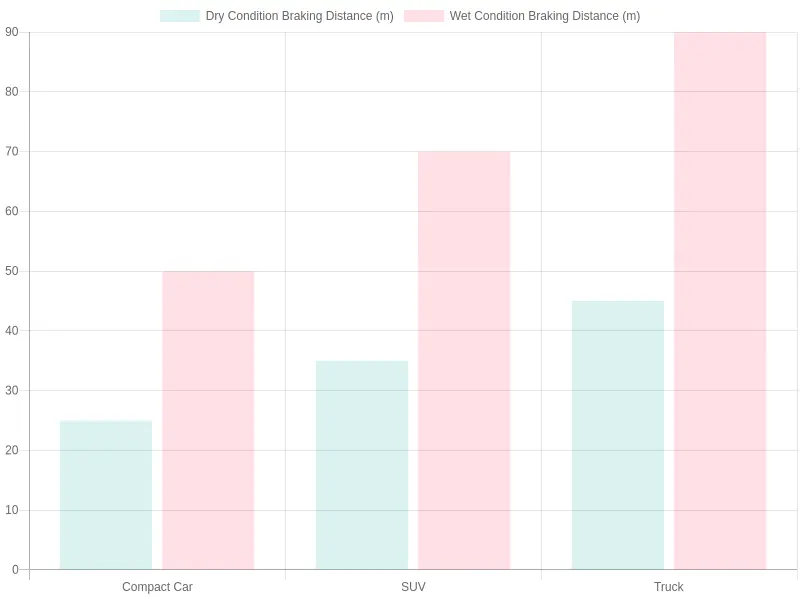
Braking Distances on Wet vs. Dry Roads
Understanding the braking distances of various vehicle types under different road conditions is crucial for safety. Wet roads can significantly increase the stopping distance required for vehicles. As shown in the chart above:
| Vehicle Type | Dry Condition Braking Distance (m) | Wet Condition Braking Distance (m) |
|---|---|---|
| Compact Car | 25 | 50 |
| SUV | 35 | 70 |
| Truck | 45 | 90 |
Drivers must be aware that braking distances can double in wet conditions, emphasizing the importance of maintaining proper braking systems. For more in-depth discussion on brake maintenance, check out our guide on diagnosing brake problems.