
Every vehicle, whether it serves daily commuters or small business fleets, relies on expert maintenance to run smoothly and safely. The vehicle service department plays a pivotal role in this process, offering a range of services from scheduled maintenance to complex repairs. This article provides a deep dive into the vehicle service department, breaking down its functions, scheduled maintenance practices, diagnostic procedures, compliance measures, and its integration with modern automotive services. By the end, you will gain a clear understanding of how this essential department keeps vehicles in prime condition and ensures they remain reliable for their owners.
Inside the Vehicle Service Department: How Maintenance, Diagnostics, and Customer Care Keep Cars Safe and Reliable
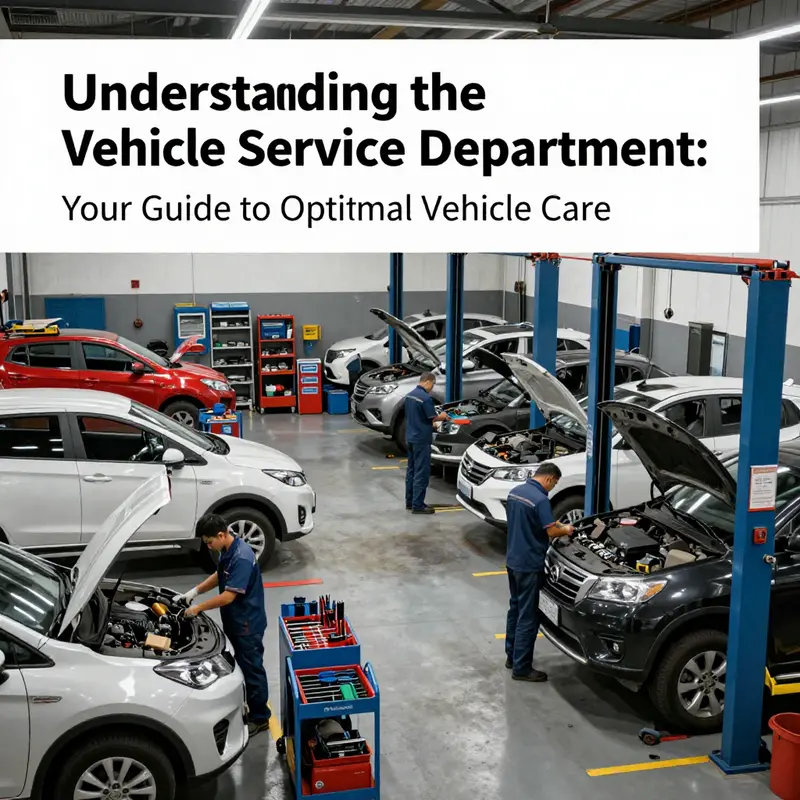
The vehicle service department is more than a room full of wrenches and diagnostic tools. It is the living, operating core of a dealership or repair facility, a place where intention meets machinery and where safety, efficiency, and trust are earned one vehicle at a time. To understand its value is to appreciate how routine maintenance, urgent repairs, and careful communication are woven into a single, continuous process. The department does not merely respond to problems; it anticipates them, plans around them, and, when necessary, coordinates a precise choreography of people, parts, and priorities. In this space, the customer’s concern becomes a clear, actionable plan, and every appointment advances the vehicle from potential failure to predictable performance. The shift from perception to performance hinges on structure—on documented procedures, on trained technicians, and on service advisors who translate complex mechanical language into practical decisions that customers can understand and support.
Routine maintenance is the backbone of the service department’s daily life. It is not a single act but a suite of checks designed to preserve the vehicle’s reliability and efficiency over time. Oil changes, tire rotations, brake inspections, fluid top-offs, and filter replacements may seem routine, yet each task serves a specific purpose. Fresh oil reduces internal wear and heat, while well-lubricated bearings and gears maintain smooth operation. Tire rotations promote even tread wear, extending tire life and maintaining predictable handling characteristics. Brakes must be examined to ensure stopping power remains consistent, and fluids—from coolant to power steering—need the correct levels and condition to protect systems from heat, corrosion, and air ingress. The meticulous adherence to manufacturer guidelines during these steps is non-negotiable, because every vehicle is designed with a unique maintenance cycle in mind. The service department thus becomes a custodian of the vehicle’s lifecycle, ensuring that the car remains safe and efficient across miles and seasons. When illustrated in practice, routine maintenance reveals a core truth: preventive care is more economical than reactive repair, and early detection often prevents cascading issues that would otherwise escalate into costly fixes.
Beyond the surface of maintenance lies the department’s more intricate work—the diagnostics and repairs that keep a vehicle roadworthy when symptoms appear. Modern vehicles are repositories of sensors and control modules, with systems ranging from the engine and transmission to the vehicle’s electrical architecture and advanced driver assistance features. Here, diagnostic testing using OBD-II scanners and other specialized tools becomes essential. Technicians interpret live data streams, map fault codes to likely causes, and then determine whether the issue can be resolved with a targeted repair or if a more thorough disassembly is required. The goal is accuracy, not speed, because a rapid but incorrect diagnosis can lead to repeated trips, wasted time, and diminished customer confidence. When repairs are necessary, the department relies on a disciplined approach: align with manufacturer guidelines, verify compatibility of replacement parts, and test the vehicle comprehensively after service. Electrical faults, for instance, demand careful tracing of circuits, power feeds, grounds, and harness integrity, while engine and transmission concerns require careful inspection of mechanical wear, fluid condition, and calibration of control modules. The result is a repaired vehicle that not only runs again but does so with the confidence that the problem was understood and solved in a rigorous, traceable way.
At the heart of the department’s efficiency is effective customer communication. Service advisors serve as the vital link between the shop floor and the owner. They greet the vehicle, gather symptoms, and translate those observations into a transparent plan. Their responsibilities extend from scheduling to estimating, from explaining service needs to informing customers about any changes in status or completion times. A well-run service department treats customers as partners in the repair process, providing clear explanations of recommended services, potential risks, and the expected outcomes. This partnership is built on trust, and trust is reinforced when customers receive accurate information, timely updates, and fair pricing. The communication process also includes setting expectations about the duration of each task, clarifying whether a service appointment involves routine maintenance, and outlining any consequences of delaying recommended work. Even the simplest requests—like the need to replace a worn brake pad or to top off fluids—are paired with an estimate and a recommended timeline, so customers understand not only what is being done but why it matters for their vehicle’s safety and performance.
Scheduling and workflow oversight are the invisible gears that keep the service department functioning smoothly. Service advisors manage the timing of each job, allocate bay space, and coordinate with technicians to optimize throughput without sacrificing quality. This requires an understanding of the shop’s capacity, the complexity of each job, and the availability of parts. A well-planned workflow reduces idle time, minimizes the risk of bottlenecks, and ensures that vehicles move consistently from intake to completion. It also plays a critical role in customer satisfaction; when customers see a well-organized process that respects their time, they gain confidence in the department’s ability to handle their vehicle’s needs. The human element remains essential here. Interpersonal skills—patience, listening, and plain-language explanations—complement technical knowledge, creating a service environment where customers feel heard and informed. Technical competence without clear communication risks leaving owners with questions; communication without solid technical grounding can erode trust when assumptions about what is necessary prove incorrect.
Within this integrated framework, quality control and standardization provide the safeguards that translate expertise into dependable outcomes. The vehicle service department operates within a system of procedures designed to assure consistency, traceability, and regulatory compliance. Standards such as those outlined in the Motor Vehicle Repair Service Specifications and, more broadly, established quality management frameworks, guide how work is planned, executed, and verified. The importance of proper procedure becomes evident in real-world scenarios: if a technician completes a service but fails to reset the service indicator using the diagnostic tools, the warning light may remain on. That light is not merely decorative; it signals the customer that a service was performed and that preventive maintenance has been addressed. When the light remains active due to an incomplete procedure, it can lead to confusion, unnecessary follow-up visits, and questions about whether the vehicle’s system detects issues the owner cannot feel yet. The service department’s responsibility is to prevent such miscommunications by ensuring every step—from diagnostic scans to light reset—is completed with accuracy and documented in the vehicle’s service history. This is where standardized checklists, traceable records, and post-service validation come into play, turning a sequence of tasks into a dependable service narrative that the customer can trust and the manufacturer’s guidelines support.
The service department does not operate in isolation; it exists within a broader ecosystem that includes a wider service network. Modern operations increasingly blend traditional repair activities with digital customer portals, insurance considerations, and financing options that customers may navigate after a service encounter. The department’s success, then, hinges on seamless integration across touchpoints: a transparent digital record of what was done, an accessible explanation of future maintenance needs, and a reliable path for addressing any questions or concerns that arise after the vehicle leaves the lot. This interconnectedness strengthens the customer relationship by turning a one-time service into ongoing care, with reminders, scheduling options, and maintenance recommendations that respect both the vehicle’s needs and the owner’s budget.
The people who staff the service department—technicians, service advisors, parts specialists, and shop supervisors—bring complementary strengths to this enterprise. Technical knowledge and hands-on skills must be matched with organizational abilities and customer-facing capabilities. Service advisors, in particular, embody the balance between empathy and accountability: they listen to concerns, extract relevant details, and present options in a way that helps owners make informed choices. Resourcefulness matters too; when a vehicle requires a part that is not immediately available, the department must manage expectations, arrange for temporary solutions if appropriate, and communicate revised timelines. The industry increasingly recognizes this role as multifaceted: it is not simply about fixing cars but about guiding customers through a process that can be unfamiliar and sometimes stressful. The value of a well-rounded service team is in the consistency of the experience—every visit feels predictable, every recommendation appears necessary and rational, and every interaction reinforces the belief that the vehicle will perform safely and reliably over time.
For those seeking a practical touchstone on maintenance planning, the conversation around oil change intervals often serves as a useful anchor. As a concept, it invites owners and technicians to think about the balance between time and mileage, and it invites the department to translate a rule-of-thumb into a personalized plan for each vehicle. The idea behind optimal oil change intervals is not merely about saving money but about preserving engine health, protecting efficiency, and avoiding avoidable wear. You can explore this topic further through resources that break down the trade-offs and provide guidelines tailored to different driving patterns, climates, and engines. The department’s guidance here needs to be precise, aligned with manufacturer specifications, and communicated in plain terms so customers understand why a service is recommended today and why postponement is risky. This kind of careful, evidence-based counseling is a hallmark of a mature service operation and a cornerstone of long-term customer trust.
An essential aspect of the vehicle service department’s credibility lies in its commitment to standards and continuous improvement. The chapter of standards culminates in the recognition that quality systems are living frameworks. They require regular audits, ongoing training, and a willingness to evolve with new technologies, diagnostic methods, and regulatory expectations. External standards, such as those detailed by major quality organizations, function as blueprints for how to structure processes, measure performance, and ensure consistency across teams and locations. For professionals who manage service departments, adherence to these standards translates into tangible benefits: fewer miscommunications, more accurate diagnoses, shorter turnaround times, higher first-visit repair rates, and, ultimately, greater customer satisfaction. The department’s daily practice—careful diagnosis, deliberate maintenance, transparent communication, and disciplined workflow—embodies this ethos of quality in a way that resonates with every vehicle owner who walks through the door.
In the end, the vehicle service department is not merely a mechanical service function; it is a customer experience engine. It translates the owner’s relationship with their vehicle into a plan of care that preserves safety, performance, and value. It integrates science with empathy, precision with transparency, and speed with thoroughness. It turns complex systems into understandable steps, guiding owners through the lifecycle of their car with confidence. Whether addressing the basics of routine maintenance or tackling the most challenging diagnostic puzzles, the department holds the line between risk and reliability. It keeps the road safe, the vehicle dependable, and the owner at ease, knowing that when a service appointment finishes, the car returns not only as a machine that works but as a partner that can be trusted to perform again tomorrow.
For readers seeking a concise map of maintenance planning tied to real-world practice, explore the linked resource on oil-change intervals to see how a dealership operational framework translates general guidance into job-specific actions, scheduling realities, and customer-centered explanations. optimal oil change intervals.
External resource: For authoritative information on automotive quality management and service standards, see ISO 16949:2009 Quality Management Standard for Automotive Production Parts at https://www.iso.org/standard/43487.html
Inside the Vehicle Service Department: How Scheduled Maintenance Steers Safety, Longevity, and the Modern Driving Experience
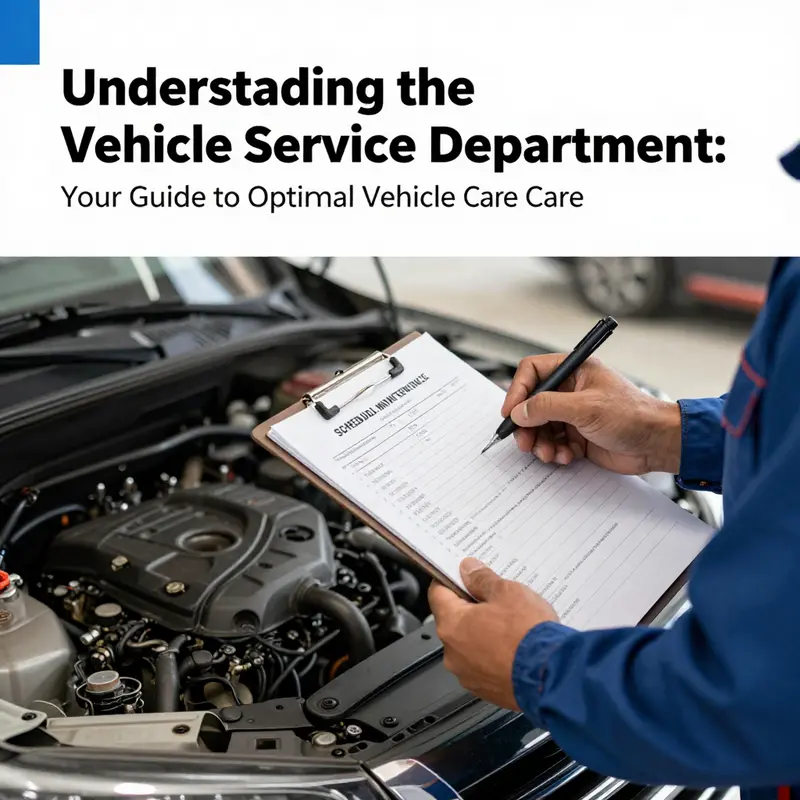
The vehicle service department is more than a workshop where cars come to rest and repairs are made. It is a disciplined ecosystem within an automotive organization that coordinates people, tools, and knowledge to preserve safety, reliability, and performance over the full life of a vehicle. In many ways, it functions as the operating system of the physical product—tracking miles, interpreting sensor data, coordinating parts and technicians, and translating complex engineering requirements into practical maintenance that a driver can trust. This chapter follows that through line, moving from the tangible acts of servicing a car to the broader systems that govern when, why, and how those acts occur in today’s mobility landscape.
At the heart of the service department is scheduled maintenance. It is not a generic drill of random repairs but a carefully designed program that follows manufacturer guidelines, component wear, and real-world usage patterns. The core idea is preventive care: address small issues before they become significant problems. For many vehicles, the list of routine tasks resembles a maintenance map. In traditional internal combustion models, that map often included oil changes, tire rotations, brake inspections, and fluid top-offs. In electric and hybrid platforms, the focus shifts toward critical systems that demand vigilance, such as the battery pack, drive unit, braking system, suspension, tires, and, increasingly, software health. The shift from fluid-based maintenance to software-driven health checks marks a turning point that the service department embraces with both caution and optimism.
Even as the specifics evolve, the principle remains constant: maintenance should be proportional to need, not just to a calendar. Real-time health monitoring, gathered through onboard sensors and, in many cases, remote telemetry, allows technicians and service advisors to tailor service plans to each vehicle. A vehicle that accrues high mileage in a congested urban setting might present a different maintenance profile than one that operates mainly on highways. The service department translates those patterns into a schedule that prioritizes safety over mere longevity. This is where the department earns its trust. If a car develops a fault that could compromise braking efficiency or steering control, the system flags it, and the service team acts with urgency. If, instead, the worry is a sensor that intermittently misreads a comfort setting, the team coordinates a targeted diagnostic to verify whether a repair is needed or a software update would suffice. The aim is to minimize downtime for the owner while maximizing long-term reliability. The balance between preventive care and reactive repair is delicate, but when executed well, it reduces the risk of unforeseen breakdowns and the anxiety that can accompany vehicle ownership.
A key aspect of this work is diagnostic capability. Service departments rely on a suite of tools that range from time-honored diagnostic methods to cutting-edge software-driven diagnostics. The diagnostic process begins with data collection: what the vehicle has been telling the technician through warning lights, error codes, and an array of sensor readings. It proceeds through analysis: correlating symptoms with likely root causes, using historical data from the fleet, and applying engineering knowledge about how a system should behave under normal conditions. Modern vehicles, especially electric ones, present a richer tapestry of data because much of the performance is controlled by software rather than purely mechanical interactions. In these cases, a diagnostic scan can be a gateway to a software update or a recalibration that resolves issues without intrusive physical work. Yet there are times when physical service remains unavoidable. Brakes wear, tires wear unevenly, cooling systems require flushing or resealing, and drive units demand inspection after certain wear patterns or fault codes. The service department must be equipped with the right tools and trained technicians to execute these tasks with precision and efficiency.
This combination of remote monitoring and on-site work has meaningful implications for customer experience. The service department serves as a conduit between the vehicle’s needs and the owner’s expectations. Clear communication is essential. A service advisor translates the diagnostic findings into a transparent plan: what needs to be done now, what might be deferred, the anticipated timelines, and the associated costs. Owners increasingly expect digital visibility. The service department may provide an app-based or online schedule that shows upcoming maintenance tasks by mileage, by time, or by real-time diagnostics. This approach helps owners plan around service visits and makes the maintenance experience less disruptive to daily life. A modern service operation also emphasizes predictability and convenience. In some cases, tasks that used to require a physical visit can be addressed remotely through software updates or remote calibrations, sometimes without the driver ever leaving home. This capacity does not render physical service obsolete, but it reshapes the workflow. The service department must decide, case by case, when a remote fix is sufficient and when a hands-on service is necessary, all while maintaining a high standard of safety and quality.
The role of standardization cannot be overstated. Across the automotive industry, there are structured processes for quality control, regulatory compliance, and continuous improvement. In the broader context, professional vehicle service departments operate within a framework of quality management and industry standards that ensure a consistent level of service regardless of location. One widely recognized benchmark, established through international standards work, outlines the expectations for automotive service and manufacturing quality systems. While the specifics can be technical, the practical takeaway is simple: service departments should operate with defined procedures, traceable records, and continual improvement cycles so that each service experience contributes to longer vehicle life and higher customer satisfaction. This is why accurate record-keeping matters as much as a meticulous inspection; it provides traceability for warranty coverage, maintenance history, and future service planning.
The service department is also part of a larger service network that extends beyond a single shop. A vehicle may move through a network of facilities, each contributing specialized capabilities—from general maintenance to complex repairs and even administrative tasks such as financing or insurance claims processing. This networked approach reflects modern automotive ecosystems, where efficiency and customer convenience rely on integrated systems that coordinate parts, scheduling, and communications across multiple touchpoints. Within this context, a well-run service department must communicate effectively with others in the network, ensuring that parts availability, technician workload, and diagnostic findings align across the organization. The result is a smoother experience for the owner, with faster turnaround times and fewer follow-up visits stemming from miscommunication or misalignment.
Technology plays a pivotal role in advancing the service department’s effectiveness. Over-the-air software updates allow vehicle manufacturers to push improvements and fixes without requiring a shop visit in many cases. This capability is a testament to how the service department increasingly leverages software as a vehicle’s medicinal tool—addressing not just mechanical wear but software-driven performance and security enhancements. When physical service is necessary, specialized tools and trained technicians are essential. The tools enable precise measurements, proper torque specifications, calibrated sensor readings, and controlled testing of components under realistic conditions. Skilled technicians bring hands-on expertise to interpret sensor data, verify repairs, and validate that a vehicle’s systems meet safety and performance standards after every service episode. And every step, from intake to inspection to release, is designed to protect the customer’s investment while ensuring optimal vehicle safety.
The owner’s experience remains central to the function of the department. The way a vehicle is explained, the level of transparency in pricing, and the clarity of the maintenance schedule all shape ownership satisfaction. In a world where customers expect proactive care, the service department’s role extends into education: explaining what preventive care means for their particular vehicle, how a given maintenance task affects performance and resale value, and why some inspections are routine rather than urgent. This educational role supports trust and helps owners make informed decisions about service timing and scope. It is not simply about fixing what is broken; it is about partnering with the driver to preserve the vehicle’s health and value over time.
Sustainability also informs the department’s operating philosophy. Maintenance strategies increasingly emphasize reducing waste and resource consumption. When possible, service centers adopt practices such as targeting only essential services, choosing recyclable or reusable parts, and prioritizing processes that minimize environmental impact. The focus on preventive care aligns with broader sustainability goals because preventing breakdowns reduces the likelihood of resource-intensive emergency repairs and extends the vehicle’s usable life. In addition, maintenance decisions are guided by a desire to minimize unnecessary visits and align with drivers’ routines, thereby reducing the collective energy and time cost of maintenance activities. The outcome is not merely a technically sound vehicle but a more sustainable ownership experience that respects both the customer’s time and the planet’s resources.
Amid all this complexity, a simple truth persists: the vehicle service department is a control point where engineering intention meets real-world usage. It is where the manufacturer’s design communicates with the road’s realities, where software meets asphalt, and where safety becomes a lived practice rather than a theoretical standard. When a service appointment occurs, the light indicators that once flashed on the dashboard become a signal of ongoing care. If a technician resets a service indicator after completing necessary checks, the vehicle’s own reminders align with the new maintenance plan. If reset procedures are omitted, a driver may see a service reminder continue to illuminate, leading to confusion or unnecessary concern. That is why precise procedural discipline matters. A well-trained team follows a documented sequence, confirms the work completed, updates the vehicle’s health status in the service system, and communicates clearly with the owner about what was done and what, if anything, remains on the horizon.
For readers seeking deeper guidance on maintenance timing, a widely cited discussion explores the balance between mileage-based and time-based service intervals. The question of when to service based on mileage versus time remains nuanced and vehicle-specific. It is worth reading that conversation to understand why some owners see benefits from adopting a hybrid approach that considers both mileage and elapsed time. Optimal oil-change intervals: time vs. mileage offers a practical lens on maintenance cadence. While oil changes are emblematic of traditional ICE maintenance, the underlying principle—tailoring service to actual wear and usage—remains valid across propulsion types. This reference helps frame the service department’s ongoing shift toward data-driven maintenance while acknowledging the enduring need for routine checks and timely interventions.
In sum, the vehicle service department operates at the intersection of engineering design, customer expectations, and operational discipline. It blends preventive care with responsive repair, remote monitoring with hands-on expertise, and standardized processes with a personalized service philosophy. It is the mechanism by which a complex machine becomes a dependable partner for daily life. The department’s work, though often unseen by the casual observer, shapes safety, longevity, and overall ownership satisfaction more than any single component or technology on the vehicle. Through a careful mix of routine maintenance, diagnostics, and clear communication, the service department fulfills its promise: to keep vehicles operating safely and efficiently, to preserve their value, and to help drivers feel secure and supported in their mobility.
External resource: For authoritative information on quality management standards in automotive service and manufacturing, see ISO 16949:2009 Quality Management Standard for Automotive Production Parts. ISO 16949:2009 Quality Management Standard for Automotive Production Parts.
Inside the Vehicle Service Department: The Diagnostic Craft That Keeps Cars Safe, Efficient, and Road-Ready
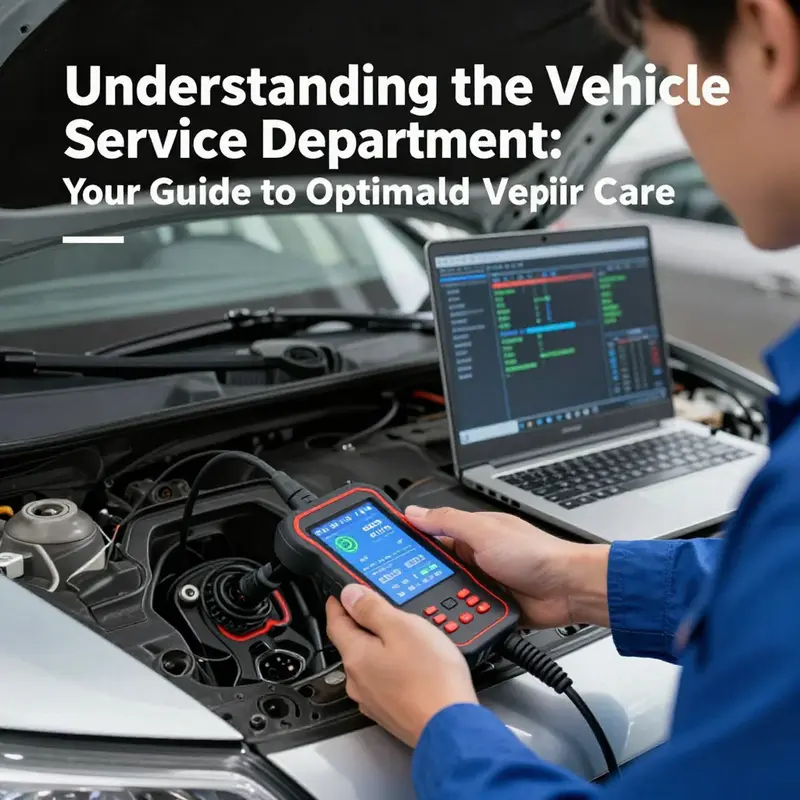
The vehicle service department sits at the core of any automotive organization, a focused enclave where science, craft, and accountability converge to keep every vehicle not just running, but performing at its best across its entire lifecycle. This department is more than a shop floor or a collection of tools; it is a carefully choreographed system designed to translate a driver’s sensory clues and caution lights into precise, reliable maintenance and repair work. In larger networks, it behaves as the wheel hub of a broader service ecosystem that includes scheduling, financing, insurance processing, and even digital customer portals. Yet at its heart, the department remains a human-driven discipline that blends diagnostic acumen with hands-on repair, always guided by standards and a keen respect for safety and regulatory compliance.
At the forefront of this discipline is diagnostic testing, the process by which a technician translates a vehicle’s symptoms into a verifiable root cause. Modern cars are an intricate tapestry of mechanical systems, electrical circuits, and software-controlled modules. When a warning light glows, an alert is not merely a signal of a single failing part; it is a data point in a larger diagnostic story. Technicians begin with on-board diagnostics (OBD) and a spectrum of scan tools that can read fault codes, monitor live sensor readings, and reveal patterns that point to underlying issues. This is where the diagnostic craft distinguishes itself from mere guesswork. Codes provide signposts, but real understanding comes from watching real-time data: the way a sensor responds as the engine warms, how the transmission shifts under load, or how a braking system behaves under varied deceleration profiles. The work requires a disciplined approach to avoid chasing symptoms rather than the root cause, a trap that can waste time, waste money, and risk safety if left unaddressed.
Within this diagnostic framework, technicians consider the broad range of what can go wrong: engine malfunctions that degrade performance or fuel efficiency, transmission quirks that reduce responsiveness or cause unexpected gear changes, brake system anomalies that threaten stopping power, and emissions-control failures that push a vehicle out of compliance and, importantly, contribute to environmental impact. The diagnostic stage is not a single test but a sequence: verify the fault, reproduce the condition if possible, isolate the subsystem that is failing, and then validate the diagnosis with corroborating data from multiple sources. In all of this, the role of meticulous record-keeping cannot be overstated. Each code, each sensor reading, and each test result must be documented within a work order so that the service history remains a reliable narrative for future maintenance, recalls, or software updates. This continuity is essential for long-term vehicle health and for customer trust.
Once a diagnosis is established, the repair phase begins. The repair work is as diverse as the causes that trigger a service visit. It may involve replacing a faulty component, recalibrating a control system, or updating software that governs engine timing, transmission shift logic, or electronic stability features. In many cases, repair sits side by side with routine maintenance, because preventive care often prevents the cascade of failures that can arise from deferred service. An oil change, a tire rotation, a brake inspection—these are not merely maintenance tasks but part of a broader strategy to manage wear, monitor performance, and extend the vehicle’s useful life. The professional standard here is to couple the immediate fix with a broader plan: is there a pattern in the data that suggests a part wearing prematurely, a subsystem that could benefit from software recalibration, or a sensor that might require calibration to return to factory specifications?
The technical work is nourished by a culture of continuous training and certification. Modern vehicles demand that technicians stay current with evolving technologies, including advanced driver-assistance systems, hybrid and electric powertrains, and increasingly integrated software ecosystems. This commitment to ongoing education is not optional; it is a prerequisite for maintaining quality and safety. Standards bodies and industry groups emphasize consistent processes, traceable quality control, and adherence to regulatory requirements that govern diagnostic accuracy and repair integrity. In practice, this means following structured service procedures, performing checks against manufacturer guidelines, and using calibrated tools that are maintained and re-certified on a regular cycle. It also means engaging with a service network that values transparency and accountability, where technicians clearly communicate the nature of the problem, the repair options, and the implications for warranty, safety, and cost. The result is a service experience that feels rigorous and trustworthy to customers who rely on the department to keep their vehicles dependable.
A core subtext of the diagnostic-and-repair mission is the imperative to manage safety. When a service light signals a potential danger, the department must respond with speed and prudence, assessing whether the warning indicates a minor issue or a condition that could threaten road safety. Emissions controls, brake systems, steering and suspension components, and airbag systems are all parts of a safety net that protects the driver and others on the road. A genuinely effective service department does not treat warnings as mere inconveniences; it treats them as data-driven opportunities to verify roadworthy status and to prevent situations that could require emergency intervention later. This approach—preventive, data-informed, and safety-forward—helpfully reframes the department’s role from reactive fix-it shop to proactive guardian of safety and performance.
Yet the diagnostic and repair work cannot exist in a vacuum. It must be grounded in recognized standards that guide quality, reliability, and ethics. References to formal standards—be they international quality frameworks or field-specific guidelines—warn against ad hoc practices and encourage a consistent language of excellence. For instance, widely recognized quality systems provide benchmarks for how service departments structure their workflows, verify outcomes, and document compliance. These standards help ensure that a repaired vehicle does not merely look fixed but is, in fact, back to factory specs or better. They also underpin the trust that customers place in the service department, turning routine maintenance into a durable investment rather than a recurring financial liability.
An important texture of this landscape is the communication bridge between the technician and the customer. A successful service encounter is not simply about diagnosing and repairing; it is about translating complex technical findings into understandable information, practical recommendations, and transparent cost estimates. The vehicle service department serves as a translator between the jargon of diagnostics and the everyday concerns of vehicle owners—safety, reliability, efficiency, and value. This requires soft skills as well as technical prowess: listening to the customer’s priorities, explaining the tradeoffs between different repair paths, and setting realistic expectations about timelines. When a technician discovers that an upcoming maintenance item—perhaps a scheduled service light reset after a diagnostic session—must be completed to restore normal operation, that recommendation should be presented clearly and with the rationale behind it. In a mature service operation, this communication is not an afterthought but an integral part of the diagnostic and repair process, reinforced by standardized checklists, transparent pricing, and readable service summaries that live in the customer portal as well as the shop manual.
Technology continues to reshape how the vehicle service department operates, pushing the discipline toward greater precision and better customer alignment. Diagnostic tools have grown more capable, capturing finer details about how a car runs under real-world conditions. The data-rich environment encourages preventive strategies that align with manufacturer guidelines and the vehicle’s own service schedule. The preventive dimension is central to the department’s philosophy: regular maintenance and timely interventions keep vehicles healthier, longer. This is why discussions about oil changes, tire rotations, fluid replacements, and scheduled inspections frequently anchor the service plan, with the added layer of diagnostic checks when the vehicle’s data indicates potential drift in performance. For drivers curious about the nuanced balance between time-based and mileage-based maintenance, a prudent reference is the guidance on oil-change intervals, which can be found in resources discussing the optimal balance between time and mileage for changing lubricants. Optimal Oil Change Intervals: Time vs Mileage.
The service department also embodies a living interface with broader industry standards and best practices. It recognizes the value of formal quality systems and aligns its workflows with them to ensure consistent outcomes. The reference framework helps calibrate expectations across the network, whether a vehicle is serviced at a small independent shop or within a large dealership ecosystem. In the balancing act of speed and thoroughness, most departments adopt a principle: fix the issue correctly the first time, document clearly, and communicate with the customer so that the value of each service is evident. This principle extends beyond the repair bay into traceability of work orders, calibration records for electronic systems, software update logs, and the eventual verification that the vehicle operates within acceptable performance parameters after the service is complete.
The broader significance of the vehicle service department rests not only on technical competence but on its capacity to harmonize complex processes with human needs. A technician may extract a fault code and run a battery of tests, but it is the synthesis of data, skilled dexterity, adherence to standards, and transparent customer communication that yields a safe and satisfying outcome for the vehicle owner. As vehicles become more connected and autonomous features proliferate, the department’s diagnostic and repair capabilities will only grow more sophisticated. The challenge—and the opportunity—lies in maintaining rigorous procedures amid rapid technological change, ensuring that every diagnostic decision is defensible, every repair is verifiable, and every customer understands the path from problem to resolution. This is the essence of how a vehicle service department functions: a disciplined, evolving craft that preserves safety, enhances performance, and sustains trust in the mechanical lifeblood of the modern automobile.
For professionals seeking a benchmark in diagnostics and repair, industry standards and professional organizations provide invaluable guidance. They help ensure that the department’s work remains transparent, repeatable, and aligned with the highest levels of quality and safety. As a practical takeaway for readers, understanding that diagnostic testing is a structured, evidence-based inquiry—followed by targeted repair work, with clear communication and ongoing training—helps frame the service department as more than a facility. It is a central pillar of vehicle stewardship, capable of extending lifespans, improving fuel efficiency, and reducing environmental impact by ensuring that emissions controls and other critical systems operate as intended. In this sense, the vehicle service department does more than fix problems; it safeguards the very reliability and safety that drivers depend on every day. External standards and professional communities reinforce that mission, guiding technicians to work with integrity and precision, and inviting customers to participate as informed, proactive partners in preserving their mobility. To explore recognized standards in diagnostic and repair practices, refer to the broader professional resources available in the industry, such as the National Institute for Automotive Service Excellence (ASE) and other quality-management frameworks that professionals rely on to maintain high performance across a vehicle’s life cycle. https://www.ase.com
Guardians of the Wheel: How the Vehicle Service Department Upholds Safety, Compliance, and Customer Confidence
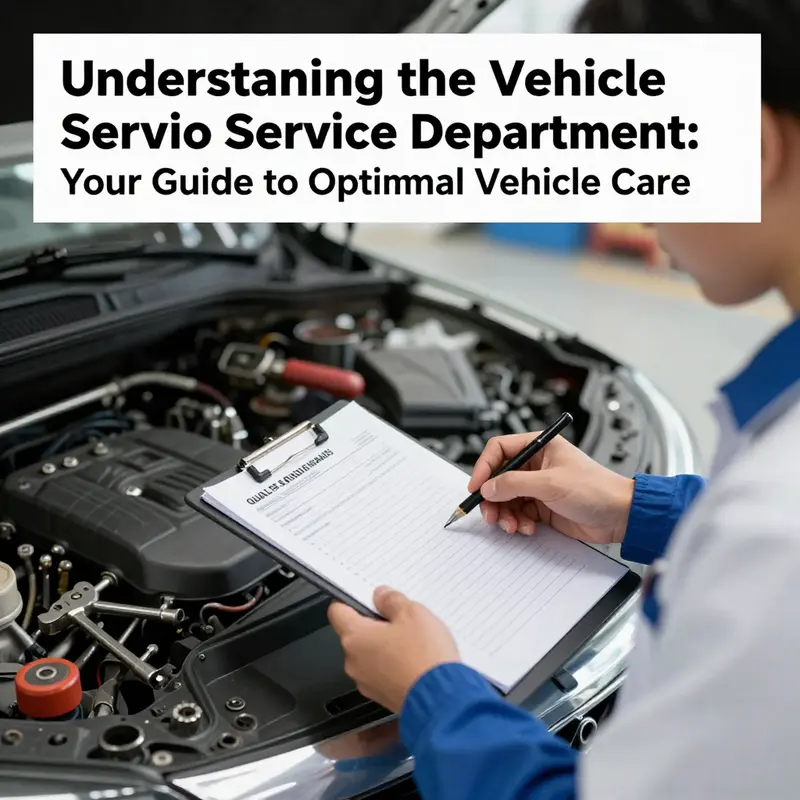
The vehicle service department is more than a workshop where cars are repaired and serviced. It is the quiet, methodical engine of a company’s promise to safety, reliability, and accountability. Within this department, technicians, service writers, and quality managers converge to translate a vehicle’s telltale signs into a plan of action that keeps fleets running and individual owners confidently on the road. The department’s purpose stretches across the vehicle’s lifecycle—from routine maintenance to urgent repairs, from diagnostics to preventive care—so that every mile traveled is governed by a standard of excellence that defenders of road safety can trust. This trust rests not on chance but on a disciplined blend of systematic processes, precise compliance, and a culture that treats maintenance as an ongoing ethical obligation, not a one-off service event. The service department thus operates at the intersection of technical competence and regulatory stewardship, where the goal is to minimize risk while maximizing performance. In practice, that means adhering to manufacturer specifications, following established repair protocols, and documenting every decision so that future work is informed by a clear history and a transparent record of actions taken. A well-run service department does not merely react to the sounds and symptoms a vehicle presents; it anticipates needs, foresees potential failures, and shapes interventions that extend a vehicle’s life and safeguard its occupants.
In this light, the department’s function is anchored in a dual commitment: to the vehicle’s immediate well-being and to the broader expectations of customers, regulators, and the industry at large. On the one hand, technicians rely on OEM (original equipment manufacturer) specifications, service bulletins, and diagnostic data to restore a vehicle to its intended performance. On the other hand, managers and auditors insist on traceable processes, quality-control checks, and compliance with legal requirements that govern emissions, safety, and environmental impact. The resulting discipline creates a predictable service experience for customers, a defensible compliance posture for the business, and a safer, more sustainable transportation system for the public. The chapter that follows is not about a single tool or a moment in time; it maps a network of responsibilities, standards, and cultural norms that collectively define what it means to maintain a vehicle responsibly and to stand behind every service decision with integrity.
Compliance forms the backbone of this enterprise. In every market, vehicles move through a regulatory landscape that rewards diligence and punishes neglect. Emissions standards that limit pollutants, safety inspections that verify critical systems, and meticulous maintenance recordkeeping are not mere formalities; they are protections for communities and ecosystems as well as a framework for predictable vehicle performance. The Environmental Protection Agency (EPA) and the National Highway Traffic Safety Administration (NHTSA) are frequently cited bodies that set the boundaries within which service departments operate. When a department aligns with these standards, it demonstrates that its practices reflect a shared public trust: that vehicles entering and leaving the service bay will perform safely on the road, meet environmental requirements, and provide verifiable evidence of care. Fines, recalls, or reputational harm can follow noncompliance, but the more insidious cost is a lost sense of reliability—customers who doubt whether a service center truly understands the vehicle’s needs, or who question whether the work performed has any lasting impact. In such an environment, the value of a disciplined compliance program becomes obvious: it is the mechanism by which a business converts regulatory necessity into a quality advantage and builds lasting credibility with customers.
Quality control, the second pillar, is the daily discipline that translates standards into tangible results. It begins with people—the technicians whose hands, eyes, and judgment are the primary means by which a vehicle is made ready for the road. It extends to tools, processes, and data—not merely the presence of modern diagnostic equipment, but the way that equipment is calibrated, how data is interpreted, and how decisions are validated before the vehicle is released. A robust quality-control framework relies on thorough inspections, the use of appropriate, high-quality parts, and a culture of continuous learning. Even minor lapses—such as a missed torque specification, a stripped bolt, or a miscalibrated sensor—can cascade into recurring problems or, worse, safety-critical failures. The service department combats such risks through standardized checklists, multi-point inspection protocols, and a clear chain of accountability that ensures every repair meets or exceeds the manufacturer’s standards. This is not about rigidity for its own sake but about ensuring that every intervention is traceable, repeatable, and justified by objective criteria. The result is a portfolio of services that not only restore function but also defend against future issues by addressing root causes rather than symptoms alone.
In practice, this fusion of compliance and quality control manifests in a daily rhythm of diagnostics, repair, and verification. Diagnostic testing—often powered by OBD-II scanners and other contemporary tools—serves as the organism’s nervous system, translating electronic signals into actionable insights. A warning light may illuminate for a variety of reasons, from a simple sensor hiccup to a genuine engine or emissions concern. The service department’s responsibility is to interpret those signals with accuracy, differentiate transient anomalies from systemic faults, and determine an intervention that resolves the underlying problem without introducing new risk. Every diagnostic code, every test drive, and every repair action is logged with precision so that the vehicle’s service history becomes a reliable resource for future work. This emphasis on documentation connects to the broader concept of maintenance as preventive care—a disciplined sequence of manufacturer-recommended actions designed to stave off failures and optimize performance over time. The idea that maintenance is a one-time checklist is replaced by a more holistic view: maintenance as a living program that adapts to mileage, time, environment, and the vehicle’s evolving condition. For readers who want practical reminders about how often to intervene, the linked piece on oil-change intervals provides a concrete, time-vs-mileage perspective that complements the diagnostic logic of the bay: optimal oil change intervals (time vs. mileage).
The service department also operates within a broader service network that shapes how care is delivered. Modern facilities increasingly integrate repair, maintenance, and ancillary services into a seamless continuum. A network viewpoint recognizes that service is not siloed to one location, but rather a system influenced by logistics, inventory management, and customer experience. The most successful networks anticipate demand across seasons, coordinate parts supply to minimize downtime, and offer transparent price and scheduling options that empower customers. In this context, the department is both a technical hub and a customer-facing touchpoint, translating complex automotive knowledge into clear, actionable guidance. The service writer who explains a recommended brake service, the technician who demonstrates the need for a sensor replacement, and the quality manager who verifies testing results—all contribute to a shared customer experience built on competence and honesty. The result is a service journey that reinforces confidence rather than fear, turning each visit into an opportunity to reinforce the vehicle’s safety, performance, and value.
This emphasis on communication is essential because the department must often bridge technical explanations with customer expectations. Vehicles—especially those under warranty or financed through a broader service network—require explanations that are accessible yet precise. When a technician identifies a problem, customers rely on clear, non-technical language that still communicates the severity, risk, and recommended course of action. Good service departments also provide education—why a certain part needs replacement, how a calibration affects performance, and what maintenance steps the owner can take between visits. The goal is not to overwhelm with jargon but to empower customers with knowledge so they can participate in decisions about care. This collaborative approach supports continuous loyalty; customers who feel informed and respected are more likely to return for routine maintenance, follow recommended service intervals, and refer others to the shop that cares for their vehicle with diligence.
The consequences of neglect—whether through incomplete diagnoses, skipped maintenance, or careless recordkeeping—extend beyond a single vehicle. Repeated oversights can accumulate, leading to recurring failures, safety hazards, or regulatory penalties. This is why the service department thrives on a culture of accountability and learning. Audits, internal reviews, and adherence to quality-management principles help ensure that best practices become standard practice rather than exceptions. A robust quality-management approach is not about chasing perfection; it is about creating reliable systems that withstand human variability and the unpredictable realities of real-world driving. The result is a resilient operation in which safety is never negotiable and where every service decision is supported by evidence, documentation, and a commitment to ethical responsibility.
In the end, the vehicle service department occupies a unique frontier in the automotive world. It is where safety is safeguarded through rigorous compliance, where reliability is engineered through disciplined quality control, and where trust with customers is earned through transparent communication and dependable performance. The department does not simply fix problems; it prevents them, manages risk, and sustains the lifecycle value of the vehicle for the owner and for the broader road-using public. The practice of maintaining and repairing vehicles becomes a professional discipline that aligns technical excellence with regulatory integrity, and it is this alignment that ultimately sustains road safety, environmental stewardship, and customer confidence over time. The more a service department embeds these principles into everyday workflows—the precise use of diagnostic data, the disciplined execution of procedures, and the diligent documentation of every action—the stronger its reputation becomes as a partner in responsible mobility. This is how a vehicle’s service history evolves from a record of repairs into a narrative of ongoing care and protection.
External reference: For global quality expectations and formal guidance on automotive service and manufacturing quality systems, see ISO 16949:2009 Quality Management in Automotive Production Parts: https://www.iso.org/standard/43487.html
The Vehicle Service Department Unveiled: Orchestrating Safe, Connected, and Efficient Vehicle Care
At first glance, a vehicle service department might seem like a collection of bays where mechanics perform routine tasks. Yet the reality is more nuanced: it is the operational heartbeat of the entire mobility ecosystem, translating driving needs into reliable, safe, and enjoyable transportation. The department operates not merely as a pile of tools and lubricants, but as a coordinated system that protects lives, sustains performance, and sustains trust. It encompasses the full lifecycle of a vehicle—from preventive care that preserves longevity to complex diagnostics that restore function after a breakdown, all while maintaining a steady dialogue with customers who rely on transparent, timely information. This is why the service department has evolved from a purely mechanical shop into a dynamic hub that integrates technology, data, and human judgment into every interaction with a vehicle.
Central to this evolution is the shift from static maintenance schedules to a living, data-informed approach to care. Vehicles today generate an ever-increasing stream of information through onboard sensors, telematics, and connected services. A well-run service department does not wait for the “check engine” light to glow before acting; it interprets patterns in data, anticipates wear and failure modes, and initiates preventive measures that keep a vehicle operating at peak efficiency. The end goal is safety and reliability, but the path to that goal is powered by a blend of skilled technicians, robust procedures, and real-time visibility into how work unfolds across multiple bays. Andon-like systems—visual alerts that signal the status of each operation—offer a clear, shared picture of progress. When a technician raises a green, yellow, or red signal, managers and peers can respond promptly, reallocate resources, or adjust schedules to minimize downtime. This visibility is not merely about speed; it is about quality, consistency, and the assurance that every customer receives the same standard of care regardless of where their vehicle is in the service cycle.
The work of a vehicle service department begins at intake, where a service advisor gathers context from the customer—symptoms, driving patterns, and any prior service history. This intake is not a formality but a diagnostic step in its own right, setting the foundation for informed decisions later in the process. The advisor translates customer concerns into a plan that balances manufacturer recommendations, real-world usage, and the specific condition of the vehicle. The plan then moves into diagnostics, where technicians employ an arsenal of tools—from traditional mechanical checks to sophisticated scanners that read data from the vehicle’s electronic control units (ECUs). Diagnostic testing, including OBD-II analysis, serves as the bridge between symptom and root cause. It helps distinguish between a minor nuisance and a potential safety risk, ensuring resources are directed where they will have the greatest impact.
Preventive care sits at the heart of service strategy. Manufacturers publish service intervals and guidelines designed to protect components and optimize performance. Yet every vehicle and driver is unique. The department must interpret generic guidelines through the lens of real-world use—highway miles, urban stop-and-go, climate influence, and load conditions. This interpretation happens within a culture of continuous learning and strict adherence to defined processes. The result is a schedule that is both thoughtful and auditable, a record of decisions that demonstrates due care and compliance with established quality standards. For example, the community of practice surrounding routine maintenance, such as oil changes and tire rotations, is informed not only by time and mileage, but by the vehicle’s operational history and the technician’s findings during inspections. An emphasis on preventive care helps prevent small issues from becoming expensive repairs, extending the vehicle’s life and ensuring it remains dependable for its owner. When the topic of preventive care comes up, a good reference point is the ongoing conversation about oil change intervals, which often provokes questions about time versus distance. See how industry perspectives balance these factors in the article on optimal oil change intervals.
The service department’s duties extend beyond maintenance into the realm of repair when wear or unexpected events disrupt normal operation. Repair work spans mechanical, electrical, and software-related domains, reflecting how modern vehicles are as much computers as machines. A dead battery, a failing sensor, or a software glitch can trigger a cascade of symptoms that require careful diagnosis and precise intervention. The technician’s toolkit has expanded to include digital diagnostics, advanced testing equipment, and software interfaces that enable precise recalibrations and updates. It is a landscape where expertise is not only about torque specs and heat tolerances but also about interpreting error codes, tracing signal paths, and understanding how a fault in one subsystem can ripple through the vehicle’s network. The connective tissue here is a rigorous process discipline: a sequence of checks, verifications, and rechecks designed to confirm a fault is correctly identified and that the chosen remedy resolves it without introducing new issues. In this sense, the service department operates like a quality-control ecosystem, where every repair decision is validated against standards, customer expectations, and the vehicle’s intended life cycle.
Quality and compliance are not abstractions but concrete practices that guide every service encounter. The technical standards that frame the department’s work—such as those referenced in formal quality management and repair specifications—create the blueprint for consistent outcomes across different teams, sites, and even geography. These standards emphasize the importance of traceable processes, comprehensive documentation, and verifiable results. They also enforce safety protocols, proper handling of hazardous materials, and ethical business practices. The alignment with broader quality systems helps service departments contribute to a larger organizational commitment to reliability and customer satisfaction. The practical implication is that service centers are not isolated shops but integral components of a broader quality ecosystem that spans production, parts supply, financing options, and customer communication. When a service light comes on or a diagnostic code appears, the response is guided not only by the immediate symptom but by a suite of procedures designed to safeguard safety, longevity, and consistent performance across the vehicle’s lifetime.
As vehicles become more connected, the relationship between service departments and factory or product development teams grows in importance. A comprehensive framework for integrating service with technology platforms ensures that the systems used in maintenance and repair stay compatible with evolving vehicle architectures. This alignment enables service providers to support new powertrains, including electrified options, and new software update paradigms like over-the-air (OTA) updates. It also clarifies how data flows between the vehicle, the service center, and the customer portal, creating channels for proactive communication about maintenance needs, safety recalls, and software improvements. The goal is a seamless experience in which a customer can view service history, receive timely recommendations, approve work, and understand how the work performed affects future performance. The result is not simply a transaction, but a sustained relationship built on transparency and competence, with the service department acting as the stabilizing interface between vehicle technology, vehicle health, and customer expectations.
The customer experience, in turn, is shaped by the department’s ability to communicate clearly and honestly. It is not enough to tell a customer what is needed; the department must translate complex technical findings into actionable, understandable information. This requires skilled service advisers, concise explanations of diagnostic results, and realistic timelines for completion. The modern service environment often leverages digital portals and real-time updates, so owners can monitor progress, ask questions, and approve additional work without unnecessary friction. In practice, this means a service center that prioritizes transparency, sets accurate expectations, and follows through with timely notifications about status changes, parts availability, and the likely impact on vehicle downtime. A well-executed service experience reinforces trust and makes maintenance a proactive rather than reactive habit, encouraging owners to partner with the dealership or repair facility for ongoing care rather than turning to piecemeal solutions.
Still, the service department would be incomplete without attention to people—the technicians, advisers, and managers who bring the system to life. Training and development are ongoing commitments, ensuring that the team remains proficient across a spectrum of mechanical, electrical, and software disciplines. Regular quality audits, infection-proof safety practices, and adherence to documented procedures are the baseline. Beyond compliance, the best practices emphasize curiosity, collaboration, and a culture of learning, where technicians share insights about diagnostics, repairs, and preventive strategies. This culture helps the department adapt to new technologies, new service models, and new expectations from customers who demand fast, accurate, and informative service experiences. It also supports risk mitigation: by standardizing how problems are diagnosed and solved, the department reduces variability, thereby lowering the likelihood of misdiagnosis or miscommunication.
All of these elements—data-driven diagnostics, Andon-style visualization, rigorous process discipline, and customer-centric communication—converge to make the vehicle service department a critical integration point in the modern automotive landscape. It is where product development and vehicle technology meet the road, where the vehicle’s life story is authored in real time, and where safety, reliability, and performance are continually renewed. In this sense, the service department is not a back-room afterthought but a strategic function that sustains a vehicle’s value, honors the owner’s investment, and reinforces the broader promise of mobility that modern society depends on. As technology continues to evolve, the service department will keep evolving in tandem—expanding its toolkit, refining its workflows, and deepening its partnerships with manufacturers, insurers, and customers—so that every journey remains as safe as it is smooth. For readers seeking a broader theoretical framing of how these integrations are organized and managed within technical systems, an external reference provides a comprehensive perspective on applied automation and service platform design: https://www.mdpi.com/2076-3417/14/5/2058.
Within the daily rhythm of the shop floor, preventive care remains a practical touchstone that grounds all these abstractions in concrete action. The decision to perform an oil change, a brake inspection, or a tire rotation is never arbitrary. It is informed by testing results, wear patterns, and a vehicle’s service history, balanced against manufacturer recommendations and the owner’s usage profile. The discipline of maintenance is reinforced by an understanding of the trade-offs between timing and mileage. Some drivers accumulate miles quickly but traverse roads that are easy on components; others drive fewer miles but in harsher conditions. In practice, the department learns to tailor intervals within safe margins, documenting the rationale to support future decisions and ensuring continuity across visits. This approach aligns with the broader philosophy of a service network that harmonizes traditional repair capabilities with newer dimensions such as digital diagnostics, OTA software management, and data-driven analytics. The end result is a smoother ride for customers and a more resilient vehicle health profile that protects safety and performance over years and miles.
In this light, the vehicle service department stands as a model of modern industrial practice adapted for mobility. It blends disciplined process controls with adaptive expertise, enabling it to handle the most routine tasks and the most complex diagnostics with equal competence. It respects regulatory and quality frameworks, yet remains relentlessly customer-focused, translating complex technology into assurances that owners can trust. It does not merely respond to symptoms; it anticipates needs, communicates clearly, and acts with the precision that modern vehicles demand. As connected car ecosystems deepen and electrification expands, the department will continue to serve as the bridge between vehicle intelligence and human experience. The goal is not merely to fix problems but to preserve confidence in the journey—one service at a time.
Final thoughts
In summary, the vehicle service department encapsulates a commitment to maintaining vehicle performance and safety through multifaceted functions. By understanding its core responsibilities—including scheduled maintenance, diagnostic testing, compliance measures, and modern integration—you can better appreciate how it serves not only to prolong the life of your vehicle but also to enhance your driving experience. For car owners, used car buyers, and fleet operators, acknowledging the significance of the vehicle service department paves the way for a safer and more reliable journey ahead.