As vehicles continue to evolve in a world of digital transformation, connected vehicle services stand at the forefront, empowering local car owners, used car buyers and sellers, and small business fleet operators. These services turn everyday automobiles into smart devices, providing enhanced functionality and real-time information that not only elevate the driving experience but also contribute significantly to road safety and operational efficiencies. From infotainment systems to advanced telematics and emergency services, each chapter will explore how these interconnected capabilities shape the future of transportation.
Infotainment as Interface and Infrastructure: The Multimedia Backbone of Connected Vehicle Services
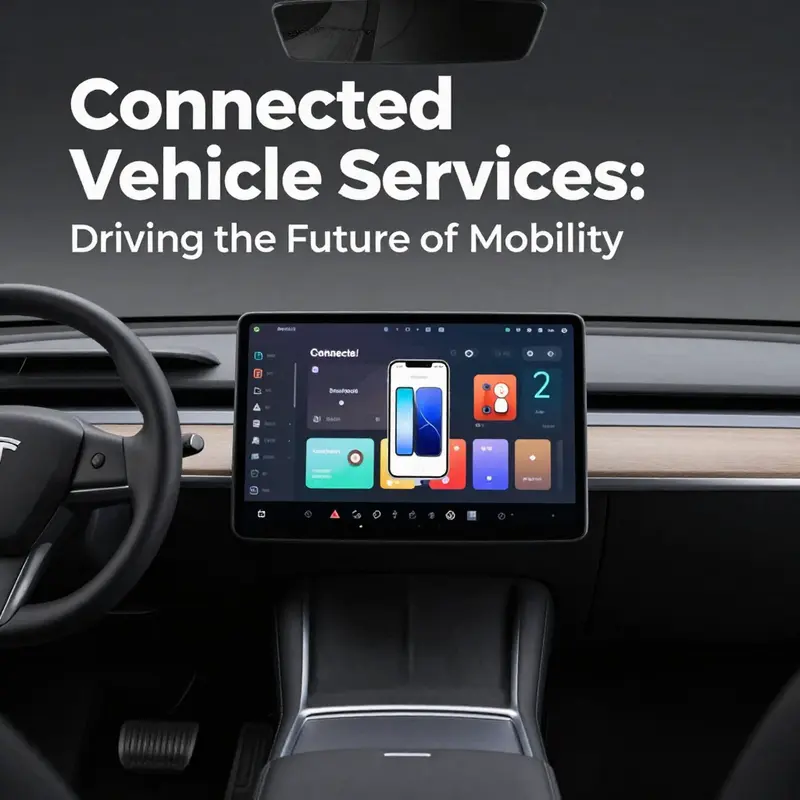
Infotainment and multimedia in connected vehicle services mark a turning point where the vehicle becomes a dynamic node in a broader digital ecosystem. Far from a simple screen for music or navigation, the infotainment fabric now threads together real time data streams, user preferences, safety systems, and external infrastructure into a seamless experience that touches daily routines, mobility choices, and even the economics of driving. In this sense, infotainment is both interface and infrastructure: the user facing surface that personalizes and guides the journey, and the connective tissue that binds the car to the cloud, to other vehicles, and to urban networks. It is this dual character that has reshaped design imperatives, safety considerations, and business models as automotive makers and their partners push toward a more responsive, more anticipatory form of mobility.
The contemporary infotainment stack sits atop a foundation of pervasive connectivity. Vehicles draw on cellular networks, whether 4G, 5G, or emerging network paradigms, as well as Wi Fi, satellite and GPS signals, and increasingly edge computing resources. This constellation enables real time data exchange with the driver s personal accounts, the manufacturer s diagnostic and update systems, and city infrastructure. Yet the promise extends well beyond streaming music or streaming video, although those components remain familiar entry points. Today s systems deliver live, context aware content that is tuned to the vehicle s position, the driver s behavior, and the car s current state. Real time navigation updates adjust routes in response to congestion, incidents, or weather, while remote vehicle control features let the owner lock doors, start or stop the engine, or check vital signs from a distance. The latter are not mere conveniences; they are safety and efficiency enablers, creating a feedback loop that helps a driver plan safer maneuvers, avoid fuel wasting detours, and maintain vehicle health between visits to a service center.
Attentive design is essential when capabilities extend into areas that previously belonged to the realm of automotive engineering alone. The integration of AR/VR based navigation is frequently cited as a frontier for the next generation of in car guidance. Instead of glancing at a map on a screen, a driver may encounter windshield overlays showing turn cues, hazard warnings, or lane level guidance projected into the real world. This requires careful calibration of visual complexity, latency, and perceptual load, so that information supports a quick, accurate interpretation without drawing attention away from the road. The aim is to create a sense of layered awareness, where digital cues complement rather than compete with the actual driving environment. The same principle applies to in car retail and localized marketing experiences that accompany a journey. If an offer appears at a certain point on a route, it should feel timely, relevant, and minimally intrusive, preserving the driver s primary task while enriching the travel experience. In practice, these experiences hinge on trustworthy identity and secure payment mechanisms embedded within the vehicle s digital ecosystem, enabling autopay for fuel, tolls, or groceries without forcing a detour to a bank or a payment app. In this way, infotainment becomes a facilitator of convenience and continued engagement, but it must always be careful not to cross the line into distraction or unsafe cognitive load.
The real power of infotainment in connected vehicle services is the capacity to synchronize content and services with the travel context. When 5G networks provide high bandwidth and ultra low latency, the vehicle can stream richer multimedia content, deliver up-to-date traffic and weather data, and support high fidelity voice and gesture interactions. Yet with this enhanced capability comes the imperative to protect the system against cyber threats that could exploit the same high speed channels for harm. The security landscape in connected environments emphasizes that as infotainment relies more on V2X communications and intervehicle data exchange, the potential attack surface expands. A malicious actor might seek to manipulate a navigation cue, tamper with a software update that governs safety features, or exploit a vehicle s hmi to deliver deceptive prompts. The challenge for developers is to achieve robust, targeted functionality while maintaining rigorous security boundaries that prevent unauthorized access or data leakage. The confluence of high speed, broad data exchange, and integrated UIs makes the design problem both exciting and demanding, requiring a security by design mindset from the earliest stages of development.
From a development perspective, the path to sophisticated infotainment systems is as much about process as it is about product. UI and UX development must prioritize clarity, intuitiveness, and minimal distraction. This means creating interfaces that are legible in daylight and night, that adapt to different driver states, and that support safe interaction modes such as voice control, steering wheel buttons, and subtle gestures. Human machine interface software for concept vehicles and show cars often explores a broad spectrum of interaction modalities, testing which gestures or voice prompts yield the fastest, most reliable response in real time. Rapid prototyping tools play a crucial role here, enabling teams to iterate on layouts, color schemes, and information architectures without lengthy hardware cycles. The ability to quickly test an AR navigation overlay, for example, and then measure its impact on driver attention, can determine whether a concept will scale into production. In this sense, infotainment design must balance feasibility with aspiration, ensuring that the most advanced features can be rolled out without compromising reliability, safety, or brand integrity.
User centric interfaces are a central theme in shaping the next generation of connected car experiences. Italdesign, known for its emphasis on human centered design in the automotive space, argues that the most successful infotainment systems are those that feel immersive without being burdensome. Detailed functional layers—navigation, communications, media, climate, and vehicle status—need to be orchestrated in a way that respects the driver s primary task while offering meaningful shortcuts to tasks that improve the journey. The goal is not to overwhelm but to empower, with interfaces that adapt to the road state, the user s preferences, and the vehicle s capabilities. This integration of immersive, user centered interfaces with real time data streams underlines a broader philosophy: the car becomes a personalized companion rather than a generic gadget. As the ecosystem expands, the value proposition grows beyond entertainment or convenience; it becomes a critical driver of safety, efficiency, and user loyalty. The practical implications for developers are substantial. They must plan for a cohesive experience across multiple touchpoints—audio, visuals, haptics, and voice—so that the transition from entertainment to safety critical messaging is seamless and intuitive. The result is a platform that supports a more confident and informed driver, reducing the likelihood of risky multitasking while enabling better decisions through concise, timely feedback.
The evolution of infotainment is inseparable from the broader context of connected vehicle services, where the vehicle is no longer an isolated transport machine but a node in a mobility ecosystem. Real time data exchange, V2X communication, and cloud based services make it possible to tailor information and actions to the user s immediate needs and preferences. In practice, this means a driver could receive a route update that takes into account a pedestrian heavy area flagged by local infrastructure, or a dynamic reminder about tire pressure based on a performance trend detected by telematics. It also means that the vehicle can participate in city scale optimization efforts, sharing anonymized data with insurers, fleet operators, and municipal planners to improve safety and efficiency. The monetization and business implications of this data fusion are nontrivial. Subscriptions for infotainment features, tiered access to premium content, and data sharing agreements with third parties create recurring revenue streams for automakers and service providers. Yet the value must be balanced with privacy protections and transparent user consent. The most successful implementations respect user autonomy and provide clear options about what data is collected, how it is used, and whom it is shared with. This approach helps build trust and long term engagement, turning infotainment from a one off feature into a sustainable capability that supports ongoing customer relationships and new service models.
The design and implementation of infotainment systems cannot ignore the social and behavioral aspects of driving. Immersive content and personalized experiences carry the risk of cognitive overload or distraction. Therefore, designers must strike a careful balance between engagement and safety. This includes aligning content with the driver s tasks, embedding contextual prompts at appropriate moments, and designing fail safe mechanisms that declutter the interface when attention is required elsewhere. Italdesign s emphasis on immersive interfaces is not merely about sophistication; it is also about safety first design choices that minimize the potential for distraction. This approach extends to a broader ecosystem where automakers collaborate with city planners, insurers, and energy providers to deliver services that are not only seamless but also responsible. For example, fuel or energy payments integrated into a vehicle s infotainment system can streamline refueling or charging, but only when the interaction is swift, reliable, and secure. The seamless fusion of AR navigation, streaming content, and telematics must always be framed by a strong commitment to driver focus and situational awareness. In this sense, the multimedia backbone becomes a shared responsibility among developers, designers, regulators, and end users, all working toward a future where the car is a reliable partner in daily life.
The technical underpinnings of infotainment—and by extension, all connected vehicle services—rely on a combination of local processing, cloud services, and edge computing. While the onboard computer handles essential tasks such as media playback, voice recognition, and local vehicle status, richer experiences often require offboard processing. Content delivery networks, edge nodes, and cloud platforms enable up to date maps, dynamic content, and cross device synchronization. This architecture supports OTA software updates that deliver new features and security patches without a dealership visit. When updates occur in the background and out of the driver s line of sight, the system remains usable and continuous, reinforcing the perception of the car as a reliable platform rather than a consumer device that requires frequent attention. However, with this level of integration comes operational complexity. The need for robust over the air OTA processes means that update channels must be tested across a wide range of vehicle configurations and operating conditions. Quality assurance becomes a dynamic, ongoing discipline, with staged rollouts, rollback capabilities, and rigorous authentication. The risk of an unreliable update compromising safety or performance is not merely theoretical; it is a design constraint that shapes the entire development lifecycle—from code management and testing to versioning and rollback strategies. In this reality, infotainment is inseparable from software governance and lifecycle management, underscoring the architecture s need to evolve alongside hardware, sensors, and user expectations.
As the ecosystem grows, the software that powers infotainment must integrate with V2X communications to contribute to a safer, more efficient driving environment. Vehicle to Everything communication enables cars to exchange critical data with other vehicles, with traffic infrastructure, with pedestrians, and with the network at large. This enables cooperative driving strategies, early hazard warnings, and synchronized traffic signal timing, all of which can reduce congestion and emissions while improving safety. Yet the promise of V2X depends on careful design choices that protect the integrity of messages, ensure authentication of participants, and preserve privacy. The same channels that deliver a highway of information must be safeguarded against manipulation, spoofing, or eavesdropping. In practice, this means that infotainment systems must be engineered with standardized, secure interfaces that can isolate infotainment tasks from safety critical communications. The goal is to deliver targeted functionality—such as a warning about a stopped vehicle ahead or a detected ice patch—without rendering the system vulnerable to external tampering. The result is a more resilient, more intelligent transportation network where infotainment does not merely entertain or inform; it contributes to the safety and efficiency of the system as a whole.
Finally, the business logic surrounding infotainment and multimedia in connected vehicle services is evolving. Subscriptions, tiered access, and value added services create ongoing revenue streams, while the data generated by infotainment activities opens opportunities for partnerships with insurers, fleet operators, and urban planners. The richer the data, the more precise the insights available to partners who manage risk, optimize routes, or plan public infrastructure investments. This data driven, ecosystem centric approach positions infotainment as a strategic asset that can align incentives across multiple stakeholders. For drivers, the payoff is a more personalized, more connected, and more efficient mobility experience. For automakers and service providers, it is a pathway to sustainable growth through recurring revenue, meaningful partnerships, and new capabilities that extend the vehicle s relevance long after its purchase. The challenge lies in executing this vision with transparency, security, and user consent at the core. As the field matures, developers and designers will continue to refine the balance between immersive multimedia experiences and the core safety mission of mobility, ensuring that infotainment remains a trusted companion rather than a distraction or a privacy risk. In this evolving landscape, a well designed infotainment system becomes a critical differentiator in a competitive market, a platform for continuous value creation, and a catalyst for smarter, safer, and more enjoyable journeys.
For readers seeking a broader perspective on the theoretical and practical dimensions of this topic, a deeper dive into the technical and security challenges of these systems can be found in the broader literature. The ScienceDirect Topics article cited in this chapter provides a rigorous look at the future of infotainment and multimedia in connected vehicle services, emphasizing the need for secure, high speed networks and robust human centered design in order to realize the envisioned capabilities. The research highlights the convergence of entertainment, navigation, telematics, and safety features within a unified digital fabric, and it cautions that the same networks enabling these advances also expose critical risk surfaces that must be managed from the outset. For practitioners and students alike, engaging with this material can illuminate the practical steps—through UI, UX strategies, HMI software development, rapid prototyping, and rigorous security practices—that bring these futuristic concepts into reliable, everyday use. The evolving narrative of connected vehicle services thus rests on the interplay between user experience excellence, engineering rigor, and safety discipline, all coordinated within an architecture that respects privacy and sustains trust as vehicles become ever more capable, interconnected partners in daily life. For ongoing exploration and practical context, consider visiting the KMZ Vehicle Center blog for related discussions and articles that contextualize these themes within real world maintenance, design, and integration challenges.
null
null
Linking Response, Roads, and Reality: Emergency and Traffic Management in the Era of Connected Vehicle Services
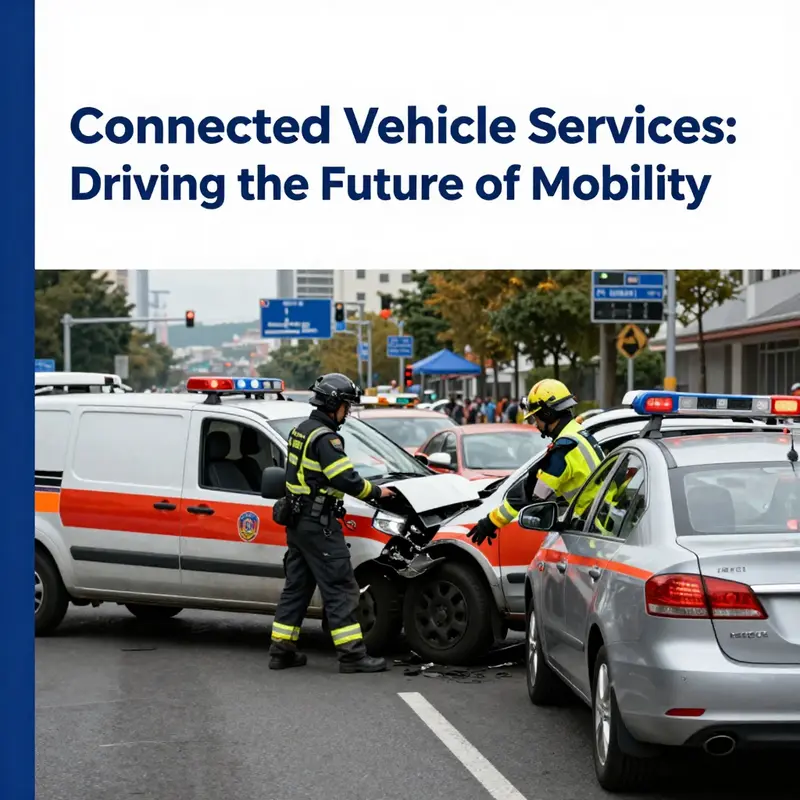
Connected vehicle services extend far beyond the dashboard screen or the streaming playlist. They create a living, breathing network that stitches together the vehicle, the street, and the people who rely on both. In this chapter, we enter a domain where seconds matter, lanes matter, and the flow of traffic is a shared responsibility between drivers, machines, and city systems. At its core, emergency and traffic management through connected vehicle services is about turning scattered data into coordinated action. It is the art and science of translating real-time information from onboard sensors, road infrastructure, and nearby vehicles into decisions that protect lives, reduce delays, and keep cities moving smoothly even under stress. As such, it sits at the intersection of safety engineering, urban planning, and digital connectivity, and it illuminates how a modern transport ecosystem operates when every component speaks a common language and shares purpose in real time. This is not a distant vision of the future; it is a set of capabilities that is already reshaping how we think about responding to incidents, how we manage bottlenecks, and how we design roads that can adapt to unpredictable events with a collective sense of awareness and purpose. The narrative here traces the threads that bind emergency response, traffic optimization, and the broader commitment to safer, cleaner roads—threads that are woven tighter as connectivity, sensor fusion, and intelligent decision-making become standard for everyday driving.\n\nThe practical realization of emergency response within connected vehicle services begins with a simple, almost architectural concept: information must travel fast and reliably from the scene of an incident to the people and systems that can leverage it. When a vehicle detects a crash or injury, or when a first-responder team is dispatched, a cascade of data can be shared through cellular vehicle-to-everything technology, or C-V2X, which enables a wide range of data exchanges among vehicles, pedestrians, roadside infrastructure, and the centralized emergency network. This enables critical capabilities such as priority signal pre-emption set in motion by the approaching emergency unit, where traffic signals respond to the urgency by turning or extending green phases along the route. The effect is more than a simple green light; it is a carefully choreographed corridor that allows the responder to reach the scene with fewer stops, less idling, and a more predictable path through congested urban cores. The vehicles themselves become proactive participants in this dance, adjusting their behavior in response to the needs of emergency services, while still maintaining safety margins for other road users. The outcome is a reduction in response times, which translates into higher chances of positive outcomes for patients and victims, and a smoother overall traffic pattern that avoids the abrupt congestion spikes that typically follow a siren’s approach.\n\nBut the advantages of connected vehicle–driven emergency management extend beyond prioritizing ambulances and fire apparatus. At intersections, the real-time exchange of speed, position, and trajectory data creates a more robust sense of situational awareness for all road users. In practice, CVs share their planned maneuvers with nearby vehicles and the intersection infrastructure, enabling early warning of potential conflicts. When a vehicle is turning left across the path of an oncoming vehicle, or when a cyclist or pedestrian is approaching the crossing, the system can alert drivers with actionable warnings and, if necessary, adjust traffic signal timing to prevent or mitigate a collision. The value of this capability grows as vehicle densities increase and urban networks become more complex. The same data that helps prevent a collision can also provide the information needed to re-route traffic around the incident scene, minimizing the ripple effects of disruption. For emergency vehicles, this means that even in a dense corridor, a combination of signal timing, vehicle announcements, and dynamic routing can preserve critical corridors and keep the path open to the point of the incident, reducing the time needed for responders to arrive and begin lifesaving work.\n\nAdaptive traffic congestion management is another cornerstone of this ecosystem. When a vehicle equipped with CV services detects a cloud of congestion near a critical area—whether due to a collision, a stalled vehicle, or a roadworks scenario—the system can share this information with nearby drivers and with traffic management centers. The result is a proactive adjustment of routing and signal timing that can shave minutes from travel times and prevent spillover effects into adjacent neighborhoods. The adaptive capability is not limited to responding to emergencies; it is a general tool for maintaining mobility in the face of routine disruptions. For example, if the system identifies a recurring bottleneck during peak hours, it can implement a staged, data-driven reconfiguration of ramp meters, lane allocations, and signal progression. The net effect is a city that learns from its own traffic patterns, becomes better at predicting congestion, and uses CV-driven coordination to keep the network flowing with fewer sharp stops and accelerations that waste fuel and produce emissions.\n\nThis integrated approach to emergency and traffic management is also a powerful enabler of safety outside the vehicle. When a collision or a breakdown occurs, real-time data streams—from the vehicle’s diagnostic sensors, to the road-side units, to the emergency responders’ dispatch systems—create a shared situational picture. This common understanding reduces the friction that often accompanies multi-agency responses. Emergency planners can visualize the scene, anticipate additional resource needs, and coordinate with adjacent jurisdictions to manage a downstream impact, such as a detour across a wide area. Pedestrians and cyclists are not left out of the loop; CV data can be used to alert them implicitly to the approach of a rescue corridor or to advise on alternative routes, improving their safety while maintaining efficient movement through the network. The result is a more resilient system that can absorb shocks—from a major incident to a sudden weather event—without collapsing into gridlock. It is a transformation that requires careful governance, clear standards for data sharing, and robust cybersecurity to prevent misuse of the very signals that keep people safe.\n\nThe broader implications for policy and city planning are not incidental. Connected vehicle services generate an enormous volume of data, which, when responsibly harnessed, can illuminate how traffic flows, where people travel, and how incidents ripple through neighborhoods. This data, when aggregated and anonymized, provides valuable insights to city planners and operators. It supports not only traffic signal optimization and incident management but also investment decisions about road design, public transit integration, and land-use planning. For the transportation professional, the capability to observe, analyze, and act in near real time creates a virtuous feedback loop: better data leads to better decisions, which in turn yield safer roads and more efficient mobility. Yet this potential hinges on a shared technical vocabulary across vehicles and infrastructure, a common set of safety rules, and consistent privacy protections that reassure the public that their data is being used to serve their safety and wellbeing rather than merely to optimize commercial outcomes. The governance challenge is as real as the technical one. It calls for national and regional standards, open architectures, and interoperable interfaces so that a vehicle from one manufacturer can operate seamlessly with roadside systems from another, regardless of where it is on the map. In the end, the promise of emergency and traffic management through CV services is inseparable from the social contract that binds technology to everyday life: the speed and reliability of a trip, the timely arrival of a rescue team, the dignity of safe streets.\n\nThe sophistication of these systems is closely tied to the underlying technologies and the pace of network evolution. C-V2X and similar frameworks are designed to lower latency, increase reliability, and expand coverage so that the moment a signal is emitted, it can be received and acted upon by the widest possible array of devices and infrastructure. This is not about a single feature, but about a dependable constellation of capabilities that work together to shape a safer and more predictable roadway environment. When a city spans a dense urban core and sprawling suburban corridors, the system must adapt to different road geometries, traffic densities, and levels of connectivity. The urban center may demand more aggressive signal coordination and tighter platooning of emergency vehicles through intersections, while residential neighborhoods may benefit from more conservative routing to preserve quiet streets and reduce exposure to noise and emissions. Across these varied contexts, CV-enabled management works by aggregating micro-decisions into macro-level improvements, ensuring that the network behaves as a single organism rather than a collection of disjointed parts. The brain-like coordination is not a distant abstraction; it is becoming a practical, scalable reality, where the same principles that govern an optimized traffic signal cycle can be extended to a corridor-level strategy that respects the needs of emergency responders and everyday commuters alike.\n\nAs these capabilities mature, the role of the driver also evolves. The driver remains central for safety and situational judgment, but the surrounding ecosystem acts as an intelligent co-pilot. The vehicle can receive predictive routing that accounts for known incidents, dynamic changes in signal timing, and the likely arrival of responders. It can offer guidance to the driver about the best course of action in the moment—whether to yield to the emergency corridor, adjust speed to maintain a safe following distance in a changing environment, or switch to a less congested route that preserves the time advantages created by pre-emption strategies. The co-pilot concept extends to the fleet level as well, where commercial operators can optimize routes for service reliability, fuel efficiency, and safety across a network of vehicles. In this sense, CV services turn urban mobility into a collaborative enterprise, where vehicles, infrastructure, and human decision-makers share responsibility for safety, efficiency, and resilience. The reward is not limited to shorter trip times; it includes reduced emissions, lower fuel consumption, and a system that better accommodates vulnerable road users by ensuring their safety is considered in the design and operation of the transport network.\n\nThis is also a story about the economics of a connected road system. From a business perspective, the continuous stream of data generated by CV services underpins new value propositions for multiple participants in the mobility ecosystem. For policy makers, the data helps justify investments in smarter infrastructure and in programs that support safer driving behaviors. For insurers, it offers the potential to refine risk models with real-time usage patterns and vehicle health data. For fleets and transportation operators, it opens avenues to optimize maintenance schedules, reduce downtime, and improve service quality. These opportunities, however, come with responsibilities. Data stewardship must be guided by clear privacy protections, robust cybersecurity, and transparent governance that explains how information is collected, stored, and used. The ethical considerations are not optional add-ons; they are foundational to building trust in the system and ensuring broad acceptance across communities. As such, the development of emergency and traffic management through CV services should be paired with ongoing public engagement, continuous evaluation, and a willingness to adjust policies as technology and practices evolve.\n\nThe practical implications of these capabilities are already visible in how cities approach everyday dynamics. For residents who watch a steady stream of vehicles and cyclists navigate synchronized signals, the improvement is a steadier rhythm of movement rather than sudden surges and stops. For drivers and riders, there is a heightened sense of safety during peak hours and in construction zones, because the shared awareness of traffic conditions reduces the likelihood of unexpected maneuvers and the risk of collisions. For emergency responders, the most tangible benefit is a clearer, faster, and more reliable path to the scene, with fewer hindrances from traffic that would otherwise delay care. For planners and engineers, the data-driven insights inform where to invest in new lanes, how to time signals with precision, and how to design streets that adapt to both the predictable and the unforeseen. The net effect is a transportation system that is not only faster and safer but also more capable of absorbing shocks, recovering quickly after incidents, and continuing to support the mobility needs of a growing urban and regional population.\n\nThe journey toward fully realizing the potential of emergency and traffic management through connected vehicle services is ongoing. It requires continuous collaboration among manufacturers, infrastructure operators, researchers, and public agencies to refine standards, improve interoperability, and advance the reliability of low-latency communications. As networks expand and 5G-like capabilities spread, the reach and responsiveness of CV-enabled systems will only grow, enabling more granular control at the micro-level and more integrated cooperation at the macro level. The path forward will undoubtedly bring new tools and new challenges, from more sophisticated predictive models to deeper layers of privacy protection. Yet the underlying promise remains clear: when vehicles, roads, and emergency services act in concert, the result is a transportation system that is safer, more efficient, and better aligned with the rhythms of modern life. The road to such a future is built not in a single leap but in a sequence of incremental, data-driven improvements that reinforce trust, reliability, and resilience across the urban–rural spectrum.\n\nFor those seeking deeper grounding beyond this narrative, there is a body of research that outlines the technical foundations and the real-world implementations of connected vehicle ecosystems. The literature emphasizes how the practical capabilities—data fusion from sensors, robust vehicle-to-infrastructure channels, and the orchestration of traffic signals and routing—translate into tangible safety and efficiency benefits. Readers who want to explore the topic further can consult authoritative overviews of connected vehicle concepts and their applications, which situate these systems within the broader context of intelligent transportation and smart city initiatives. An accessible starting point for at least one broad survey of the field is provided at ScienceDirect, which offers detailed topics on the engineering and application of connected vehicles and their role in contemporary mobility networks. This external reference complements the practical narrative presented here by situating everyday experiences of emergency response and traffic management within a framework of ongoing research and development, highlighting how different pieces—from sensors and communications to policy and governance—fit together to create cohesive, resilient transportation systems. Further exploration of the technical threads and case studies will illuminate how communities can responsibly harness these capabilities to deliver safer roads and smoother journeys for all users. https://www.sciencedirect.com/topics/engineering/connected-vehicle\n\nInternal link note: For practitioners seeking practical maintenance and reader-friendly perspectives that connect everyday vehicle care with broader mobility topics, the KMZ Vehicle Center blog offers a repository of insights and tips. Readers might explore practical guidance and context through the internal resource at kmzvehiclecenter.com/blog/. This resource provides an accessible touchpoint for those who want to connect the technical discussion of connected vehicle services with hands-on maintenance, safety practices, and routine vehicle care that complement the digital mobility landscape.\n\nExternal resource: ScienceDirect overview of connected vehicle topics. https://www.sciencedirect.com/topics/engineering/connected-vehicle
Final thoughts
Connected vehicle services are revolutionizing the automotive landscape, blending technology with everyday driving to enhance safety, efficiency, and pleasure on the road. As local car owners, used car buyers and sellers, and small business fleet operators embrace these services, they unlock a world of benefits that go beyond convenience. The integration of infotainment, telematics, and emergency services solidifies the role of connected vehicles as essential components of future mobility, fostering safer and smarter transportation ecosystems for everyone.