
Understanding vehicle maintenance can be overwhelming, especially with terms that seem unfamiliar. One such term is ‘induction service,’ which, while not standard in automotive terminology, often refers to a critical process: induction system cleaning. This service is vital for maintaining your vehicle’s performance, particularly as it relates to fuel efficiency, emissions, and overall engine function. This article will delve into what an induction service entails, emphasizing its role in your car’s maintenance routine. We will uncover the importance of regular induction system cleaning, examine how it affects your vehicle’s performance, and clarify common misconceptions surrounding the term. By the end, you’ll have a comprehensive understanding of why proper induction service can be a game-changer for car owners, used car buyers, sellers, and small business fleet operators alike.
Induction System Cleaning Demystified: What an Induction Service Really Means for Your Engine
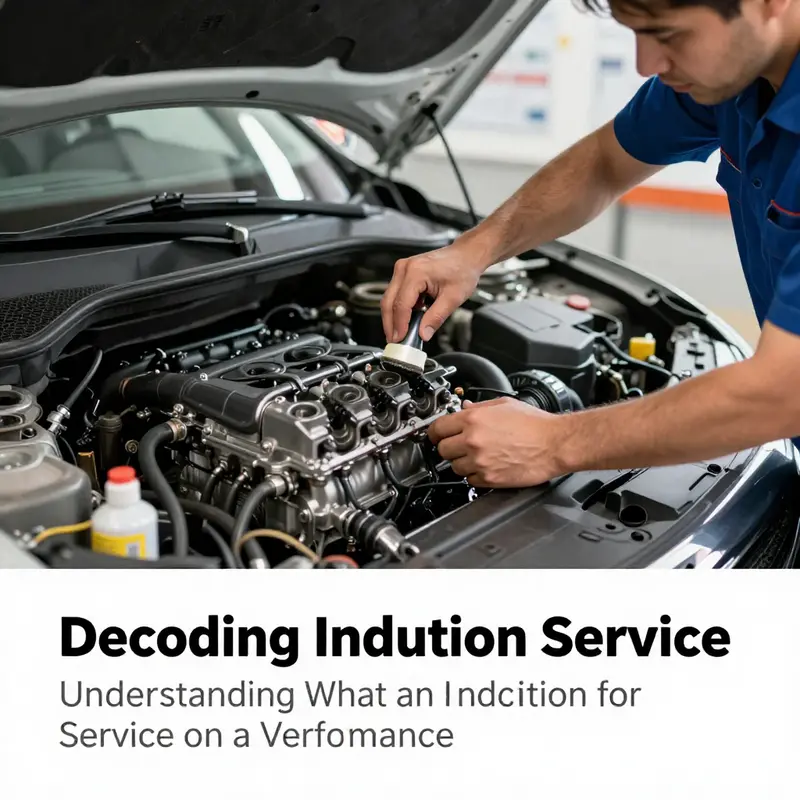
When car owners hear the phrase ‘induction service’, they often pause, wondering if this is a standard maintenance item or a shop tactic. In truth, there is no single, universally standardized service named induction service across every manufacturer. What commonly exists is a practical maintenance practice called induction system cleaning. It targets the engine’s intake path—the channel through which air and fuel mix before entering the combustion chamber—and removes carbon and varnish that accumulate over time. This cleaning is not a magical cure for every engine problem, but when performed correctly it can restore smoother airflow, help the engine breathe more easily, and support consistent performance and efficiency.
To appreciate what an induction cleaning aims to accomplish, visualize the induction system as the engine’s lungs. Air enters through the intake ducts, passes the mass air flow sensor, moves through the throttle body, and then into the intake manifold toward the cylinders. Modern engines rely on precise electronic control and fast sensor feedback to meter air and fuel. Over thousands of miles, however, combustion byproducts and oil vapor can coat intake passages, throttle bores, and intake valves. These deposits don’t usually cause immediate catastrophic failure, but they do impede breathing. Effects can range from subtle to noticeable: rough idle, hesitation or flat spots under acceleration, reduced fuel economy, or a check engine light indicating air-fuel or emissions anomalies.
A proper induction cleaning typically aims to restore a predictable pathway for air and fuel without overhauling the engine. The process begins with preparation: the vehicle is brought to stable operating temperature and technicians ensure sensors and critical electronics are protected. A solvent-based cleaner is introduced into the intake tract using a controlled, pressurized delivery system. The cleaner is circulated through intake ducts, past the MAF sensor and throttle body, and toward the intake valves. In direct-injection engines or in cases of stubborn buildup, technicians may use adapted sequences or tools to reach deposit-prone areas without inadvertently forcing solvent into the combustion chambers. The cleaner loosens and dissolves carbon deposits so they can be carried away by the intake airflow and either expelled via the exhaust or consumed during subsequent combustion cycles.
Safety and suitability depend on engine design and the technician’s approach. Modern electronic throttle control and engine management systems are generally tolerant of controlled cleaning, but technicians still monitor engine RPM and fuel trims to ensure the process doesn’t destabilize the air-fuel mixture. In some cases, technicians may temporarily disconnect the MAF sensor or remove the throttle body to reach the worst deposits; these steps are weighed against potential risks to sensors and seals and are performed by trained personnel who understand the vehicle’s architecture. The goal is to refresh the system—removing surface grime that has reduced efficiency—while preserving sensitive components.
Owners should view induction cleaning as one tool within broader engine maintenance. It is not a universal remedy and should not replace routine maintenance such as timely oil changes, air filter replacement, and spark plug service. The decision to perform an induction cleaning usually rests on observed symptoms and service history. If a vehicle shows rough idle, hesitation during acceleration, or falling fuel economy despite proper routine care, an inspection may reveal significant intake deposits. In such cases, induction cleaning can be a targeted intervention to help restore breathing, responsiveness, and efficiency. The objective is to support optimal combustion by removing barriers between the intake air and the combustion chamber, not to apply a generic fix without diagnosis.
It’s also important to distinguish induction cleaning from scheduled service reminders. When a dashboard ‘Service’ light illuminates, it signals a scheduled maintenance interval rather than a specific requirement for induction cleaning. A typical service includes tasks such as oil and filter changes, fluid checks, brake inspection, and tire rotation. An induction system inspection and cleaning may be added if symptoms or mileage warrant it. The difference between routine service and specialized cleaning depends on vehicle age, mileage, operating conditions, and observed performance; the choice to clean should be diagnostic and evidence-based rather than automatic.
For readers who want to learn more about the technical background and empirical results related to induction cleaning, professional and technical resources can be helpful. For deeper technical reading, see the SAE International technical paper: https://www.sae.org/publications/technical-papers/content/2018-01-0375. For practical, owner-focused guidance and maintenance context, consult accessible resources such as the KMZ Vehicle Center blog: https://kmzvehiclecenter.com/blog/.
In summary, induction system cleaning is a focused operation to remove carbon and varnish from the intake path and related components, with the intent of restoring free flow and predictable performance. It is not a cure-all, but when used judiciously and performed by competent technicians it can improve idle quality, throttle response, and fuel economy in engines impacted by buildup. If symptoms persist after cleaning, further diagnostics are warranted to evaluate injector condition, valve sealing, or sensor faults. Ultimately, the best maintenance decisions combine routine care, symptom-based diagnosis, and informed use of targeted procedures like induction cleaning to keep an engine breathing cleanly and running as intended.
Breathing Life Back Into Your Engine: The Case for Induction System Cleaning in Modern Vehicles
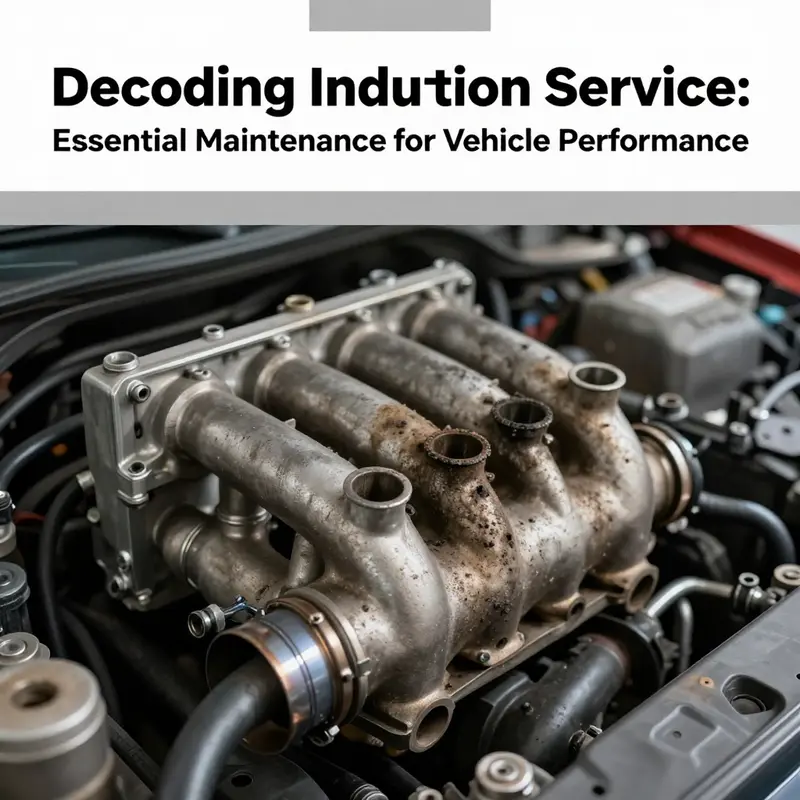
The phrase induction service often carries a fog of confusion around it. For many drivers, it sounds like a special, perhaps optional, fix. In reality, what many shops refer to as an induction service is best understood as a thorough induction system cleaning—an operation that targets the engine’s air intake pathway to restore the smooth, free flow of air required for efficient combustion. The induction system is the engine’s breathing apparatus. It draws in air, mixes it with fuel, and then allows this mixture to ignite in the cylinders. Over time, this breathing passage becomes less like a clean conduit and more like a bottleneck, clogged with carbon deposits, oil residues, and other contaminants. Those obstructions don’t just limit air; they disrupt the vital balance between air and fuel, a balance that keeps engines responsive, economical, and clean-burning. When the intake path starts to clog, the car’s behavior changes in noticeable ways, and the urge to perform a maintenance intervention grows stronger. Cleaning the induction system is less about a flashy fix and more about preserving the engine’s health, efficiency, and longevity by removing the debris that slowly turns a willing performer into a reluctant one.
What the induction system does is deceptively simple in concept but complex in practice. The intake tract pulls in outside air, which has a natural tendency to carry microscopic dust, moisture, and traces of oil through the intake system. In modern engines, there are several critical contact points along this path: the throttle body, the intake manifold, the intake valves, and, for some engines, the fuel injectors and even the ports where air meets fuel. Each component plays a distinct role in shaping how air reaches the combustion chamber. If carbon deposits accumulate on the throttle body’s inner surfaces, they can change the shutter’s behavior or cause imperfect air measurement. If deposits form on intake valves or inside the intake ports, they limit the valve’s opening or the air’s ability to flow smoothly past the valve seats. The result is a quiet but persistent drag on performance, as though the engine is breathing through a narrow straw rather than a wide-bore pipe.
Deposits don’t appear overnight. They form gradually from a combination of factors: incomplete combustion, fuel additives leaving residues, oil vapor in the intake stream, and even humidity interacting with hot engine surfaces. Gasoline components that vaporize can leave sticky residues, especially when the engine operates at partial loads or during short city trips where the engine never fully warms up. The accumulation might be modest at first, but as it thickens, the effects become measurable: rough idle, hesitation during acceleration, and a drop in peak power that you notice most when you need to respond quickly, such as merging onto a highway or climbing a hill. The air-fuel mixture, which relies on precise metering, becomes uneven. Because modern engines depend on fast, clean air to mix with fuel, any restriction or contamination in the intake path translates into less efficient combustion.
The consequences of a clogged induction system extend beyond the momentary loss of power. When air cannot flow freely, the fuel system also reacts. Injectors are tasked with delivering precisely measured amounts of fuel; when airflow is compromised, the engine’s computer recalibrates to preserve combustion stability. That recalibration often means a longer intake stroke, richer or leaner mixtures, and more frequent cycles that can wear sensors and catalysts faster than intended. Oxygen sensors and catalytic converters, the guardians of emissions, can experience increased stress from inconsistent air-fuel ratios. The result is not just reduced efficiency but elevated emissions and potential long-term damage if deposits become severe enough.
In practical terms, the benefits of cleaning the induction system are tangible. A well-cleaned intake path restores the engine’s breathing, which improves air and fuel mixing. Clean throttle bores, ports, and valves allow air to rush in with less turbulence and resistance. When combustion is lit more efficiently, the engine responds more crisply to pedal input, producing smoother transitions from idle to torque and faster throttle response at mid-range RPMs. The improvement can feel subtle at first, but it compounds over time as the engine works more efficiently with less internal friction and fewer irregularities in the air stream. In many cases, drivers report smoother idling, quicker responses to throttle, and a more confident pull when accelerating onto a highway. Some studies and field observations also point to modest gains in fuel economy after induction cleaning, often quoted in the range of a few percentage points, typically around 5% to 10%, depending on the vehicle, its condition, and driving style.
Another important outcome of induction cleaning is the protection it offers to other, more expensive components. Clean injectors are less prone to clogging and irregular spray patterns, which means fuel delivery remains accurate and predictable. A cleaner intake pathway also reduces the buildup of carbon on intake valves and in the intake manifold, which can otherwise lead to a progressive loss of efficiency and, in extreme cases, misfires or hard starting. By removing buildup before it becomes a critical issue, owners can extend the life of their sensors and the catalytic converter, both of which are sensitive to abnormal combustion byproducts.
A practical way to think about this maintenance is to view it as part of a broader strategy to keep the engine’s “breathing” clean. The induction system shares space with the fuel system and the exhaust system in the sense that all three influence emissions, efficiency, and performance. If one part starts to degrade, the others have to compensate, often at a cost to fuel economy and durability. For example, a compromised intake can lead to erratic fuel delivery or oxygen sensor readings that force the engine management system to work harder to maintain the desired air-fuel ratio. Over time, this extra work translates into more wear and tear and sometimes higher repair costs. Regular maintenance that includes attention to the induction pathway helps keep the entire breathing cycle balanced, which in turn supports smoother combustion and cleaner exhaust.
How often should induction system cleaning be performed? The guidance you encounter can vary, but a commonly cited interval is roughly every 20,000 to 30,000 miles for many vehicles. This window reflects a balance between practicality and the realities of differing driving environments. Vehicles frequently operated in dusty or polluted conditions, those exposed to high temperatures, or drivers who regularly tow or haul can accumulate deposits more quickly. In such cases, more frequent cleaning might be warranted to preserve performance and efficiency. It’s important to recognize that not every trip warrants a full induction service; a technician will typically assess the level of buildup and determine whether cleaning is needed based on symptom presentation, not mileage alone.
In some conversations about vehicle maintenance, drivers encounter an older perception that induction cleaning is an “extra” or optional luxury. The truth is closer to a pragmatic safeguarding of performance and longevity. When the intake pathway is kept clear, the engine is able to operate closer to its designed efficiency. That means better throttle response, steadier idle, improved combustion stability, and a more reliable start after long periods of operation. It also means emissions stay within expected limits, reducing the likelihood of catalytic converter stress and potential failures that can occur when deposits and misfires accumulate over time. The frequency guidance is not a one-size-fits-all rule. It should be adjusted in light of driving patterns, fuel quality, and the vehicle’s overall condition. For instance, a vehicle that remains in heavy-city traffic with frequent short trips may benefit from earlier attention than one that spends most of its life cruising on highways.
To connect this idea to everyday decision-making, consider how you schedule routine maintenance. The dashboard service light lights up not because a single part has suddenly failed, but because the vehicle’s computer tracks mileage, time, and operating conditions to determine when a service is due. Induction cleaning often fits within a broader maintenance plan that includes air filter replacement, intake system inspection, and fuel system checks. When a technician advises induction cleaning, it’s seldom about a flashy upgrade; it’s a measured step to keep the engine’s breathing mechanism clear, so that combustion can occur as designed, with predictable reliability and efficiency.
From a driver’s perspective, the decision to proceed with an induction cleaning should be guided by observable symptoms as well as the vehicle’s age and environment. Rough idling, hesitation during acceleration, reduced power when climbing, unexpected dip in fuel economy, or elevated emissions readings are signals worth heeding. While a single deposit might not justify a full service, persistent symptoms that recur over several weeks warrant professional evaluation. The goal is not to chase every minor irregularity with a cleaning, but to address a pattern that suggests the intake pathway has accumulations that are starting to hinder performance. A qualified technician will assess whether cleaning the throttle body, the intake manifold, the fuel injectors, and the intake valves will provide meaningful improvement.
The induction cleaning procedure itself is typically straightforward for trained technicians. It involves careful isolation of the intake tract, use of cleaning chemicals designed to break down carbon and oil residues, and specialized tools that access hard-to-reach areas without damaging sensitive components. The technician may run through the engine cycles with the cleaners in place, rinse or wipe away residues, and then perform a test drive to confirm that airflow and combustion feel restored. In many cases, the result is a smoother idle, more immediate response to pedal input, and a resurgence in overall drivability. Importantly, the approach emphasizes safety and equipment protection, using products that are compatible with the materials found in the intake system and designed to leave no harmful residues behind.
For readers seeking further reading on maintenance principles and where induction cleaning fits, a dependable starting point is to explore broad maintenance resources such as the KMZ Vehicle Center blog. It provides practical guidance on how to interpret service reminders, plan preventive work, and coordinate maintenance with other routine tasks like oil changes and filter replacements. This broader context helps drivers understand why an induction cleaning might be recommended as part of a comprehensive care plan rather than as a standalone, one-off intervention. You can visit the KMZ Vehicle Center blog for more information and guidance on balancing maintenance priorities with real-world driving needs.
In closing, induction system cleaning is not a cure-all, but it is a meaningful step in preserving engine health and performance. By removing carbon deposits and other contaminants from the intake path, you restore the engine’s breathing to its intended efficiency. The benefits—improved responsiveness, steadier operation, potential fuel savings, and reduced emissions—are tangible rewards for proactive maintenance. When combined with sensible maintenance habits and timely diagnostics, induction cleaning helps ensure that the engine remains robust enough to serve reliably through miles of road and routine errands. It is a practical reminder that engines, like living systems, function best when their essential functions are kept clean and unimpeded. For readers looking to build a smarter maintenance approach, pairing induction cleaning with a structured service plan and reputable technician support is a prudent path toward lasting reliability.
External resource for further reading: https://www.carinterior.com/what-is-induction-service-on-a-car/
How Cleaning the Induction System Restores Engine Power, Economy, and Longevity
Modern gasoline engines depend on clean airflow to deliver power and efficiency. Over months and years, deposits build where you least expect them: the intake tract, throttle body, and intake valves. When those parts foul, the engine breathes poorly. An induction service—properly understood as a targeted cleaning of the intake and induction components—focuses on removing that buildup. The result is often immediate. Throttle response sharpens. Idle smooths. Fuel consumption falls. Emissions drop.
The underlying cause is straightforward, especially in direct-injection engines. In older port-injection systems, fuel sprays into the intake tract. That fuel flows over the intake valves and helps wash away deposits. Direct injection sprays fuel straight into the combustion chamber. The valves miss that wash. Oil vapors and combustion byproducts then stick to metal surfaces. Over time these films harden into carbon deposits. They narrow passages. They alter airflow patterns. They change how fuel and air mix before combustion. Engines lose responsiveness as a result.
An induction cleaning targets the locations where these deposits do the most harm. Technicians treat the throttle body, intake manifold, and especially intake valves. A chemical solvent softens and dissolves carbon. In tougher cases, mechanical methods remove stubborn buildup. Walnut shell blasting is one common method for intake valves. It dislodges deposits without harming valve hardware. Other approaches use pressurized aerosol cleaners or specialized tools to reach behind throttle plates and into manifold runners. The job requires care. Incorrect techniques risk pushing debris into the combustion chamber or disturbing sensors and delicate components.
The benefits are measurable and multi-faceted. First, improved airflow translates to better engine breathing. When air flows with less resistance, the throttle becomes more responsive. Drivers feel quicker acceleration and a livelier low-end. Idle steadies because the throttle and intake surfaces respond predictably. Second, combustion becomes more efficient. A consistent air path and clean valves help the engine form a proper air-fuel mixture. That means more complete combustion, which often shows up as improved fuel economy and fewer unburned hydrocarbons in the exhaust. Third, emissions fall. Cleaner intake passages reduce incomplete combustion and lower certain pollutants. For vehicles subject to emissions testing, a cleaned induction system can help pass tests that might otherwise fail due to poor combustion.
Effects become especially pronounced in high-mileage and high-performance engines. Vehicles with many thousands of miles typically show more pronounced symptoms. Turbocharged engines and those run under heavy loads also benefit because they rely on clean intake flow to sustain boost efficiency. Neglecting induction cleaning can accelerate other problems. Carbon-laden valves can lead to misfires. Misfires cause the engine control module to compensate with extra fuel or altered timing. That causes rough running and higher fuel use. Left unchecked, the additional stress can wear spark plugs, damage catalytic converters, and raise repair bills.
Routine inspection and timely cleaning are therefore preventive steps. Signs that an induction cleaning may help include rough idling, hesitant throttle response, reduced fuel economy, and frequent small misfires. The check engine light may also illuminate with codes related to misfires or fuel trims. A mechanic will combine these symptoms with a visual inspection and sometimes a compression or leak-down check. Where deposits are severe, you may also notice black smoke or an oily residue in the intake. These clues point to a need for more than a quick spray. A thorough induction service then restores the system.
Not every vehicle needs the same approach or frequency. Driving habits, fuel quality, and engine design affect how fast deposits form. Short, low-speed trips produce less exhaust heat and more condensation in the intake. That condition encourages deposit formation. Conversely, regular highway driving keeps components hotter and tends to reduce buildup. Premium fuel and proper oil change intervals also slow deposit accumulation. In practice, many shops recommend an induction cleaning every 30,000 to 60,000 miles for direct-injected engines, but this varies by model and use. Discussing your driving profile with a technician helps set a realistic interval.
There are trade-offs and choices to make. Simple throttle-body cleaning is inexpensive and quick. It helps in many cases but cannot remove deep valve deposits on direct-injection heads. Chemical-only methods may soften carbon but leave residues, or they may require repeated treatments. Mechanical cleaning methods, such as walnut blasting, are more thorough. They clear thick deposits and often produce a dramatic improvement. However, they are more involved and costlier. A skilled technician balances effectiveness with care. They protect sensors, vacuum lines, and delicate fasteners during the procedure.
Another consideration is integration with other routine services. Induction cleaning pairs naturally with spark plug replacement and fuel-system checks. Replacing the air filter and confirming PCV and EGR system function helps prevent rapid recontamination. Performing induction work alongside an oil change or scheduled tune-up reduces overall shop visits. That saves time and often money. Proper sequencing matters. For instance, cleaning intake valves before fitting new spark plugs ensures the plugs seat into a cleaner combustion environment. A single, thoughtful maintenance visit often yields better results than staggered, partial treatments.
Deciding between a do-it-yourself approach and professional service depends on access to tools and experience. Basic throttle-body cleaners are available for consumers and can help mild cases. But deep valve deposits and intricate manifold designs often demand professional solutions. Professionals have access to specialized solvents, proper extraction equipment, and mechanical cleaning techniques. They also document the work and check related components. That inspection can reveal other issues, such as worn PCV valves or failing vacuum hoses, which contribute to deposit formation.
Cost is a practical factor. Induction services range widely in price depending on scope. A simple throttle-body clean costs little. A full intake valve cleaning using walnut media costs more. Yet, the long-term savings are often significant. Improved fuel economy and avoided damage to spark plugs and catalytic converters offset the expense. In severe cases, avoiding an induction cleaning can lead to engine repairs that cost many times more. For owners who keep their vehicles long term, timely induction maintenance is an economical choice.
In assessing whether to schedule an induction cleaning, begin with symptom review. Note idle quality, throttle feel, recent fuel consumption, and any warning lights. Ask the technician to inspect the intake and provide before-and-after evidence when possible. Many shops photograph the interior of the intake or supply a brief report. That documentation helps owners see the direct impact of the service and justify its cost.
Finally, prevention matters as much as cleaning. Following recommended oil change intervals and using high-quality fuel reduces contaminants. Ensuring the PCV system is functional keeps oil vapors from entering the intake unchecked. Avoiding frequent short trips when possible also helps. When prevention fails, a timely induction service restores harmony to the intake system and keeps the engine running efficiently.
For owners seeking a deeper primer on what constitutes an induction service, a useful external overview explains the basics and the typical methods used in modern vehicles: https://www.carinterior.com/what-is-induction-service-on-a-car/. For broader maintenance guidance and related service topics, see the KMZ Vehicle Center blog for practical maintenance reminders and tips: KMZ Vehicle Center blog.
Clearing the Air: Common Misunderstandings About Vehicle Induction Services
Clearing the Air: What People Get Wrong About Induction Service
The term “induction service” raises confusion because it sits at the intersection of technical jargon and marketing shorthand. Many drivers hear the phrase and picture a single, simple fix—the kind of one-stop treatment that will restore lost power and boost fuel economy overnight. The reality is more nuanced. An induction service, when used correctly, refers to cleaning and maintaining the engine’s induction system: the path air follows from the intake through filters, sensors, throttle components, and into the combustion chamber. Misunderstandings arise because people conflate a few distinct things: quick aerosol sprays, routine scheduled maintenance reminders, and a thorough, component-level cleaning. Sorting these threads helps you know when a true induction service is warranted, what it will do, and what it will not.
At the heart of the issue is how carbon and other deposits form. Modern engines run hotter, and fuel delivery systems vary widely. In port-fuel-injected engines, fuel washes over the intake valves and helps keep them comparatively clean. In direct-injection engines, fuel is sprayed directly into the combustion chamber. That means intake valves receive less of the detergent action of gasoline and more engine oil vapor and crankcase blow-by. Over time, the build-up of soot, varnish, and carbon can restrict airflow and upset the meter readings of sensors. When these buildups affect performance, technicians may recommend cleaning the throttle body, the mass airflow sensor, the intake manifold and, in some cases, removing the intake tract for valve cleaning. This full-process approach is what many professionals mean by a proper induction service.
A common misconception is believing that simply spraying a cleaner into the intake while the engine runs is the same as a full induction service. That quick method can free light surface deposits and sometimes smooth idle or eliminate minor hesitation. However, it rarely penetrates heavy carbon layers or reaches deposits trapped behind components. True induction maintenance usually involves careful disassembly. The throttle body and relevant sensors come off for targeted cleaning. When needed, the intake manifold is accessed so technicians can reach the intake ports and valves. Specialized tools and chemical agents are used. The labor is the costly part, not the cleaner itself. Understanding this distinction stops unrealistic expectations. A quick spray is a useful tool for light maintenance. It is not a cure-all.
Another misconception ties induction cleaning to dramatic performance gains. Promises of big horsepower jumps or massive fuel savings are often rooted in anecdote rather than consistent data. If an engine is already operating with clean intake pathways, then an induction service will produce only marginal gains. Conversely, in an engine suffering from heavy deposit accumulation, a proper cleaning can indeed restore throttle response, reduce rough idle, and improve fuel atomization—changes that feel significant to the driver. The key is baseline condition: benefits scale with the severity of the problem. Treating a healthy system yields little return. Treating a clogged system can make the vehicle feel like it regained its former liveliness.
Frequency is another area of confusion. Some drivers are told to book an induction service every 10,000 miles. Others never hear about it until a problem appears. Manufacturers do not generally publish fixed intervals for induction cleaning. Instead, they recommend inspections and service based on symptoms and engine design. Symptoms that suggest the need for induction work include unstable idle, reduced acceleration, misfires linked to airflow restrictions, unusual fuel consumption increases, or sensor error codes indicating abnormal airflow or throttle behavior. Driving conditions influence how quickly deposits form. Short trips and heavy idling promote buildup. High-performance driving and lower-quality fuels accelerate the issue. As a practical rule, watch for symptoms and follow manufacturer guidance rather than a blanket mileage schedule.
Some vehicle owners believe an induction service will prevent future carbon buildup entirely. That is wishful thinking. No cleaning process can stop carbon formation. It can only remove what has already accumulated and slow re-accumulation through proper maintenance and attention to operating conditions. Certain practices can help delay deposit growth: using high-quality fuels with effective detergents, ensuring the engine breathes clean air through a maintained air filter, and maintaining a healthy PCV (positive crankcase ventilation) system. For owners of direct-injection engines, some manufacturers recommend periodic intake valve cleaning at longer intervals or when symptoms arise because these engines are particularly prone to valve deposits. Still, the only guarantee is that deposits will return; cleaning simply restores the system to better operating condition for a time.
The phrase “service” itself is a source of ambiguity. When a dashboard displays a generic “Service” message, it typically refers to scheduled maintenance tied to mileage or time, not a specific induction procedure. That reminder prompts inspection of multiple systems: fluids, filters, brakes, and often a scan for fault codes. An induction clean might be part of that inspection if the technician finds signs pointing to intake deposits. It is not automatically performed every time that light appears. Knowing this keeps owners from assuming every scheduled visit includes intake cleaning, and it helps them ask the right questions when booking an appointment.
There is also confusion around which parts are included. Some advertisements for “induction services” promise intake manifold cleaning, throttle body service, and sensor cleaning in a single price. Others offer only a throttle-body spray. Ask for specifics. A reputable technician will explain which components they will access and which they will not. Removing the intake for valve cleaning is more invasive. It requires more time and care to avoid damaging gaskets, sensors, or delicate wiring. That step is often justified only when diagnostic evidence points to significant valve-side buildup.
Understanding the costs and benefits helps owners make informed decisions. A light throttle-body clean during routine service is low cost and often effective at addressing idle and hesitation issues. A full induction service involving manifold removal and valve cleaning is more expensive but can prevent misfires, bring back lost throttle feel, and reduce the risk of long-term damage due to lean conditions or detonation caused by poor fuel atomization. Always weigh the cost against the symptoms and the vehicle’s history. On older engines with long-neglected service, a staged approach can make sense: start with the less invasive cleaning and escalate only if symptoms persist.
Communication with your technician is essential. Ask what method they will use. Request clarification on which parts they will remove and which chemicals they will apply. A trustworthy shop will describe the safety steps they take to protect sensors and electronic components. They will also explain any follow-up actions. In some engines, a thorough induction clean can dislodge debris that then needs to be flushed from other parts of the intake tract. Good shops plan for this and test-drive the vehicle after the work to confirm improvement.
Owners who want to reduce the need for induction work should focus on predictable maintenance habits. Keep the air filter clean and replaced per recommendations. Adhere to recommended oil-change intervals to reduce crankcase vapors. Address PCV system problems early. Use fuels with recommended detergent packages if available. If you operate a truck, consider broader maintenance practices specific to that platform; curated guidance such as truck maintenance tips for first-time owners can help establish a preventive routine that minimizes unexpected issues. These steps do not eliminate the need for cleanings, but they slow the process and lower the chance of sudden performance loss.
Finally, rely on reputable diagnostic signs rather than marketing. A technician who points to measurable problems—flow restrictions noted by a mass airflow sensor, visible valve deposits during inspection, or persistent error codes—provides a defensible basis for an induction service recommendation. When in doubt, ask for before-and-after photos, or request that the technician document the problem in writing. Trust but verify. The right action aligns symptoms with appropriate intervention.
If you want a concise, authoritative explanation to bring to a shop or to read at home, a detailed resource explains what an induction service involves and when it matters. That resource can help you separate quick fixes from full maintenance procedures and make wise choices for your vehicle: https://www.carinterior.com/what-is-induction-service-on-a-car/
By understanding the real scope of induction work, what it addresses, and what it does not, you can avoid unnecessary services and get the right ones at the right time. That clarity saves money and keeps engines breathing clean air for longer.
Final thoughts
To optimize your vehicle’s performance and prolong its life, understanding induction service and its implications is essential. Regular induction system cleaning not only enhances fuel efficiency and reduces emissions but also contributes to a smoother and more responsive driving experience. By debunking myths and recognizing the true significance of this service, car owners, used vehicle buyers, and fleet operators can make informed maintenance decisions that benefit them in the long run. Addressing the health of your engine through proper induction servicing translates into tangible results on the road—better mileage, sturdier performance, and lower emissions. Make induction cleaning a part of your vehicle’s upkeep for a smoother, more efficient ride.