
Maintaining a vehicle is crucial for ownership satisfaction and longevity. Vehicle servicing is the systematic approach to ensuring that cars remain dependable and efficient through regular maintenance and repairs. For local private car owners, used car buyers and sellers, and small business fleet operators, understanding vehicle servicing procedures is pivotal. In the following chapters, we will explore the intricate procedures involved in vehicle servicing, how to schedule these essential checks, what components are included in servicing, and the modern technological advancements shaping the automotive servicing field. This comprehensive guide will provide you with valuable insights to optimize your vehicle’s performance and longevity.
Maintaining Motion: A Comprehensive Look at How Vehicle Servicing Keeps Your Ride Safe, Efficient, and Reliable
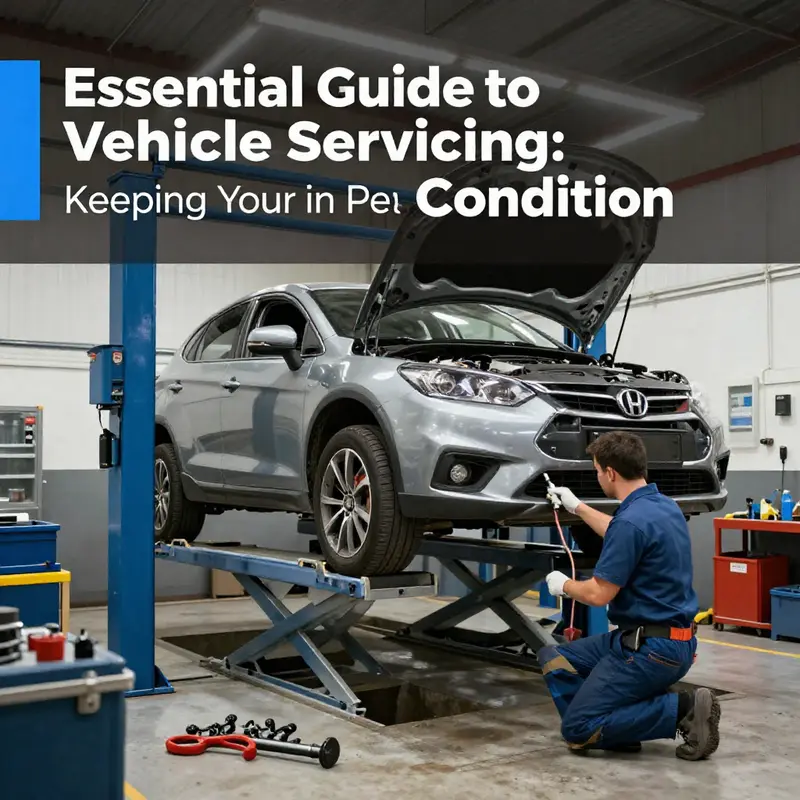
Vehicle servicing is often described as routine maintenance, but in practice it functions as the ongoing stewardship of a machine that, under the hood, is a network of interdependent systems. Servicing is not a single task but a disciplined set of checks, replacements, diagnostics, and tweaks that preserve safety margins, optimize performance, and extend the life of mechanical and electronic components alike. When approached with rigor, servicing moves beyond a calendar or a mileage mark and becomes a headquarters for informed decision-making about a vehicle’s health. It is the practical bridge between the car’s internal needs and the driver’s expectations of reliability, predictability, and value.
The core purpose of servicing is straightforward: to keep the vehicle operating as intended, across a broad spectrum of conditions, for as long as possible. Yet the path to that outcome is nuanced. Regular inspections uncover wear before it becomes failure, and preventive replacements prevent more expensive repairs later. The routine health checkbook begins with the basics—oil, coolant, brake fluid, tires—and extends through consumables, filters, and the increasingly sophisticated electronic systems that guide everything from engine timing to adaptive cruise control. In modern vehicles, nearly every subsystem communicates with a central computer, and the service procedure increasingly resembles a software update mission as much as a mechanical tune-up. The objective remains simple in principle, but the execution requires a trained eye and a methodical approach.
An essential window into the servicing process is the initial inspection. When a technician opens the hood or connects a diagnostic tool, the scene is less about replacing parts and more about validating the vehicle’s current state. Engine oil is checked not merely for level but for quality: viscosity, contamination, and clear signs of excessive wear. Coolant levels and quality are tested to ensure the system can absorb heat efficiently, a critical factor in preventing overheating that can cascade into head gaskets, radiator failures, or warped components. Brake fluid, often overlooked, is scrutinized for moisture and correct level because braking performance hinges on the system’s ability to respond consistently under load. Tires, too, receive a careful audit—air pressure, tread depth, even the wear pattern that hints at alignment or suspension issues. Lights, hoses, belts, wipers, and exhaust integrity are evaluated for visible signs of aging or damage. This stage is quiet and methodical, but it is also the most consequential: many routine service checks are designed to catch a small problem before it evolves into costlier downtime or dangerous driving conditions.
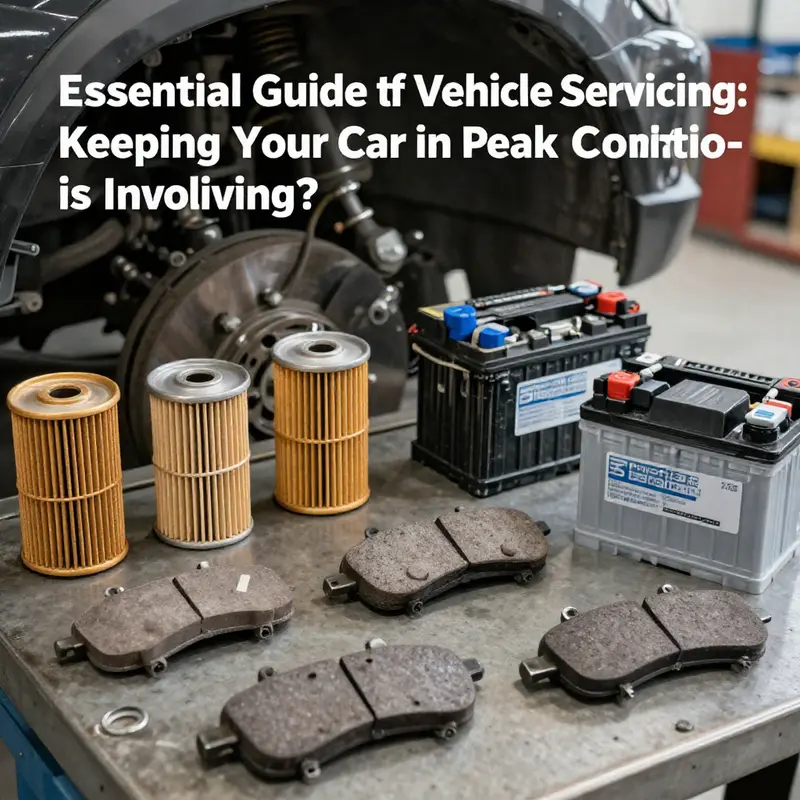
Following the initial assessment, the servicing plan typically moves to the replacement of consumables. This is where the practical economics of maintenance come into sharp relief. Engine oil and the oil filter are the most familiar items, essential for lubrication and debris removal. The recommendation to change oil at manufacturer intervals balances the chemistry of oil life, engine temperature, and driving patterns; yet those intervals are not arbitrary numbers. They reflect a careful synthesis of engineering, lubricant chemistry, and real-world wear data. Alongside oil changes, air filters are swapped to preserve clean air intake, which directly affects combustion efficiency and emissions. Fuel filters, where present, protect the fuel system from contaminants that can cause misfires or fuel starvation. Brake components—pads and rotors—are inspected and replaced as necessary to maintain stopping effectiveness and minimize rotor glazing or scoring, which can detract from braking performance and pedal feel. Spark plugs, if the engine design uses them, are replaced to sustain reliable ignition, fuel economy, and smooth operation, particularly as engines age and cylinders wear. Transmission fluid, though sometimes overlooked in routine checkups, plays a critical role in keeping gear shifts smooth and protecting the transmission’s internal components from heat-induced wear.
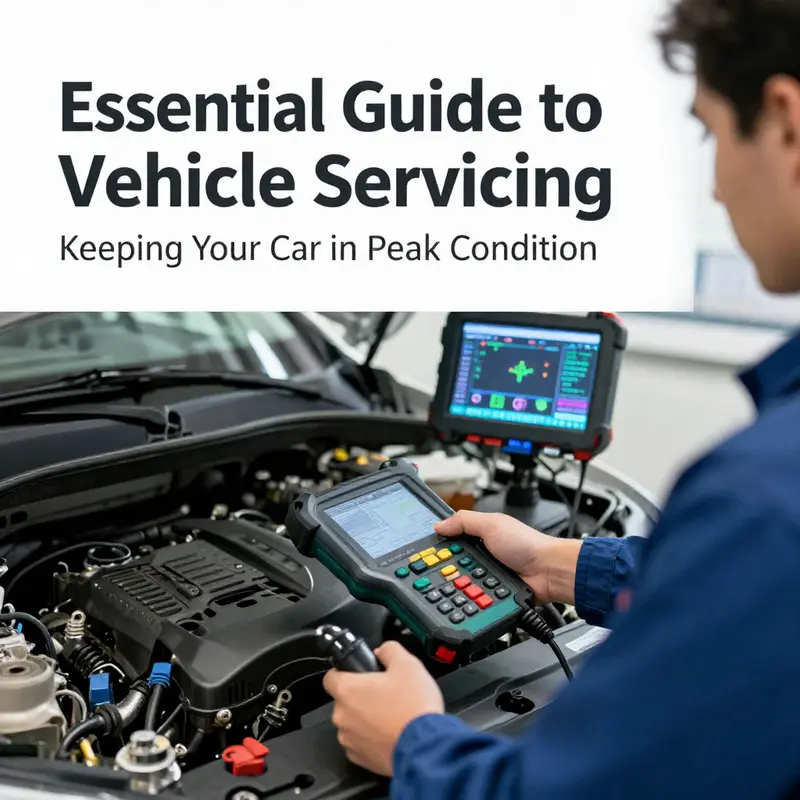
The advent of more connected vehicles has shifted a portion of servicing from pure mechanical tasks to digital stewardship. Diagnostic technology, once an aid to identify lights on the dash or rough idle, now serves as the backbone of preventive maintenance. Onboard diagnostics (OBD) scanners read fault codes from the vehicle’s computer, revealing a spectrum of issues from minor sensor drift to impending engine problems. The readings guide not only what needs attention but when and how urgently to act. In addition to fault codes, software updates are increasingly commonplace as vehicles age. These updates can recalibrate fuel maps, adjust automatic transmission behavior, or bolster safety systems and driver-assistance features. The electronics layer adds a level of complexity to servicing, but it also yields a richer, more accurate picture of the vehicle’s condition. A well-executed service visit leverages both hands-on inspection and digital insight to create a complete health profile, rather than treating maintenance as a checklist of replace-or-rotated parts.
Battery and electrical systems deserve special focus in modern servicing. The battery’s role has grown from simple starting power to a hub for electronics, sensor networks, and charging demands. Regular testing helps avoid unexpected downtime, especially in fleets or vehicles that endure extreme heat or cold. During service, technicians check battery health, remove corrosion from terminals, test voltage, and verify that the alternator is charging correctly. In high-mileage or high-use scenarios, the battery’s capacity can degrade, and the alternator’s efficiency can wane—both conditions that reduce reliability and performance. A robust servicing protocol covers these checks, because electrical issues can masquerade as engine faults or create intermittent failures that are difficult to diagnose in a busy workshop.
Yet servicing is not only about reacting to problems. It is about proactive planning that respects the vehicle’s design philosophy. Manufacturer guidelines form the backbone of this plan. They are crafted from testing, long-term wear data, and field feedback, offering schedules that align with the vehicle’s engineering tolerances. The service interval is often defined by mileage or time, or a combination of both, with a Service Indicator present on many dashboards to remind drivers when attention is due. This indicator, commonly represented by a wrench icon or a “Service” message, signals the moment when a formal service should occur to preserve the vehicle’s integrity. Adhering to these guidelines—not merely ticking boxes but appreciating the rationale behind them—helps avoid the tension between convenience and care. Skipping or delaying service invites a creeping risk of failures, decreased fuel efficiency, and compromised safety, while faithful maintenance pays dividends in reliability, resilience, and resale value.
An integrated approach to servicing also recognizes the growing importance of the vehicle’s software and control systems. Infotainment updates, driver-assistance calibrations, and engine control unit recalibrations are part of a comprehensive service ecosystem. The idea is not to chase every new feature but to ensure that the vehicle’s brain remains compatible with its hardware, sensors, and the real-world conditions in which it operates. This holistic view reinforces a simple truth: servicing is not a single event but a partnership between owner, technician, and the vehicle itself. The owner’s daily awareness of performance, feel, and sound, combined with the technician’s diagnostic tools and mechanical expertise, creates a feedback loop that preserves safety margins and performance even as the vehicle accrues miles and experiences wear.
Among the practical realities of servicing are the decisions about how much to replace at each visit. Some owners prefer to keep to the minimum required by the maintenance schedule, while others opt for preventive replacements that preempt known wear patterns. The choice is influenced by the vehicle’s use case—whether it is a daily commuter, a heavy-load work vehicle, or a high-mileage fleet truck— and by the owner’s tolerance for risk, downtime, and expense. In commercial contexts, the calculus becomes even more nuanced, balancing uptime with preventive maintenance to maximize the total cost of ownership. Fleet operators often adopt standardized service protocols that simplify scheduling, ensure consistent parts quality, and track maintenance history across multiple units. Such practices can lower unexpected downtime and extend component life, reinforcing the argument that regular servicing is a prudent investment rather than an optional luxury.
The discussion of servicing would be incomplete without acknowledging the evolving role of data in maintenance planning. Every service adds a data point to the vehicle’s history: which parts were replaced, what readings were observed, what alarms or codes appeared, and how the vehicle performed after the service. Over time, this data becomes a powerful predictor. Maintenance programs can evolve from reactive repairs to predictive schedules that anticipate component wear before it becomes symptomatic. For drivers, this translates into greater confidence in the vehicle’s reliability and a clearer expectation of when a visit to the shop is warranted. For technicians, it means a more efficient workflow, fewer surprises, and better alignment with the vehicle’s intended life cycle. In other words, servicing moves from being a ritual of part replacement to a science of timing and risk management, underpinned by a growing repository of real-world information.
In this light, the decision to consult broader resources becomes part of responsible ownership. If readers wish to explore the nuances of a particular maintenance topic, such as how the timing and conditions of oil changes interact with engine wear, they may encounter arguments and data that challenge simple heuristics. One widely discussed facet is the timing of oil changes relative to mileage and time, a topic that has spawned articles and analyses exploring the trade-offs involved in different driving patterns. A popular synthesis points readers toward practical guidance by examining time-based versus mileage-based intervals, inviting owners to balance engine cleanliness, lubricity, and fuel economy. For those who want a distilled view, it is worthwhile to consider the broader context: the maintenance plan should reflect the vehicle’s design, the local climate, and the owner’s typical driving conditions, all of which influence how aggressively wear accumulates and how quickly fluids and filters degrade. Within this broader dialogue, a resource dedicated to optimal oil change intervals offers a focused perspective on how to calibrate service timing to individual needs without sacrificing the vehicle’s long-term health.
As with any complex system, there is also value in learning from external experiences and credible sources. While the core principles of servicing are rooted in mechanical inspection and data-driven diagnostics, real-world practice benefits from accessible explanations and examples. The general recommendation is to respect the manufacturer’s servicing schedule, to listen to the vehicle’s indicators, and to engage qualified technicians who understand the vehicle’s breadth of systems. This approach acknowledges that servicing is both an art and a science: a craft that requires hands-on know-how and a mind attuned to the subtle signals that a well-serviced vehicle emits. When these elements align, servicing becomes a quiet but powerful guarantee: a safer ride, better fuel efficiency, more predictable performance, and a higher likelihood that the vehicle will remain a reliable companion across years of use.
For readers who want to explore a concrete topic within this broader framework, consider the discussion around oil-change intervals as a case study in balancing practical constraints with engineering realities. The question—how often should oil be changed in light of time versus mileage, and what does that mean for wear and cleanliness inside the engine—has practical implications. A full exploration of this topic reveals how modern engines tolerate longer oil life under certain conditions, while still benefiting from regular filter changes and system checks. The idea is not to prescribe a single universal rule but to tailor the approach to the vehicle, its environment, and its ownership pattern. The linked discussion on optimal oil change intervals offers a thoughtful examination of these trade-offs, and serves as a useful companion to the hands-on guidance described above. optimal oil change intervals: time vs mileage
In sum, vehicle servicing is a comprehensive, dynamic practice that safeguards safety, supports efficiency, and preserves value. It is a disciplined routine built on initial inspections, precise replacements of worn consumables, and the judicious use of diagnostic technology to bridge the gap between mechanical wear and electronic intelligence. It respects the vehicle’s design while responding to the conditions it faces in daily life. It recognizes that a car is not merely a collection of parts but a living system that communicates through performance, sound, and feel. When done well, servicing becomes a partnership—a shared responsibility between owner and technician to ensure the vehicle remains a trustworthy means of transportation for years to come.
For readers seeking additional perspectives on related maintenance topics, practical tips and explanations often help translate theory into everyday care. From the basics of checking tire pressures to deeper dives into battery health and charging system integrity, the journey through servicing is a path toward greater vehicle independence. It is, in essence, the quiet engineering behind dependable mobility, the discipline that makes a road trip predictable, a daily commute safer, and a fleet operation more efficient. The more attentively owners approach servicing, the more they discover how small, well-timed actions accumulate into meaningful benefits—fewer breakdowns, longer component life, and a smoother, more confident drive across the miles.
External resource for broader context: For a deeper dive into the practicalities of battery testing and maintenance in commercial vehicles, see Fleet Equipment’s article on commercial vehicle battery testing and maintenance: https://www.fleetequipment.com/article/123456/commercial-vehicle-battery-testing-and-maintenance. This reference helps illuminate how the electrical side of a vehicle’s retirement age is managed in professional settings, complementing the mechanical focus of routine servicing.
null
null
Inside Vehicle Servicing: A Comprehensive Look at What It Really Involves
Vehicle servicing is often talked about in terms of oil changes and service lights, yet its true scope reaches far deeper. It is not merely a task to perform when a car starts to misbehave. Servicing is a structured, ongoing program designed to preserve performance, safety, and reliability over time. It blends preventive care with diagnostic checks, drawing on routine procedures and attention to the specifics of a given vehicle. The aim is to anticipate wear, manage fluids and vital systems, and intervene before a small fault becomes a costly, dangerous failure. In that sense, servicing is the backbone of long-term trust between driver and machine, a disciplined routine that keeps a vehicle from becoming a compromise on the road. A well-executed service begins with a clear understanding of what a vehicle needs, shaped by the manufacturer’s guidelines, the car’s history, and the realities of how it is used. Industry guidelines may appear as a scheduled interval based on distance or time, and they can vary by model, engine type, climate, and driving style. The constant logic behind those intervals is to refresh consumables, verify critical systems, and detect emerging issues before they escalate. The service on the dashboard is not just a reminder to reset a timer; it is a prompt to perform a holistic check that safeguards the vehicle’s performance envelope. The most visible layer of servicing is the set of fluid checks and replacements. Fluids lubricate, cool, seal, and damp across the engine, transmission, and steering systems. Engine oil reduces friction and carries away heat; coolant keeps temperatures stable; brake fluid acts as the hydraulic medium for braking; power steering fluid eases steering; and transmission fluid enables smooth gear engagement. During a service, these fluids are measured for levels and inspected for quality. Their appearance and consistency can reveal wear or contamination, warranting further scrutiny. Filtration is closely tied to fluids. Air filters, oil filters, and fuel filters are common replacements during a service. A clean air intake supports efficient combustion; a clogged air filter can reduce performance and increase emissions. An oil filter protects the oil’s cleanliness, and a fuel filter helps ensure clean fuel delivery. Filters are an essential duty that pays dividends in performance and longevity. Tire inspection and maintenance form another core pillar. The tires are the vehicle’s only contact with the road and affect handling, braking, and ride. Technicians check tread depth, inspect for uneven wear, and verify tire pressure. Properly inflated tires improve fuel efficiency and response, while balanced wheels reduce vibration. In many service regimes, a tire rotation accompanies a full service. The brake system is a non-negotiable safety factor. Brakes are checked for wear on pads and rotors, and fluid levels and leaks are inspected. A thorough inspection assesses heat management and stopping performance to ensure reliability under varied loads. Battery health is another practical concern. Battery charge level and terminal connections are checked to prevent unexpected failures, especially in extreme temperatures that place additional strain on the charging system. A small decline can translate into slower starts and erratic electrical behavior, affecting sensors and onboard computers that manage climate, stability, and more. Beyond the core powertrain and safety systems, lighting and electrical features receive careful attention. All lights are tested for function and alignment. Modern cars rely on software-controlled sensors and control modules; diagnostic checks confirm proper communication and that warning lights reflect current reality. A service also surveys the suspension, steering, and exhaust. Shocks, struts, ball joints, tie rods, and related parts are evaluated for wear. The exhaust system is checked for leaks or damage, as issues here can impact performance and emissions. Taken together, these elements show why servicing is more than a routine. It is a comprehensive health screen that detects subtle changes and reduces the likelihood of breakdowns. It is also a diagnostic moment, where a service visit becomes an opportunity to review history, inspect for leaks, and plan future maintenance. The cadence of servicing should follow manufacturer guidance but adapt to real-world use. A driver who tows, drives in dusty environments, or takes short trips will have different needs than one who mainly does highway driving. In practice, many garages tailor their approach based on history, age, mileage, and owner priorities. An integral part of the servicing conversation is the relationship between workshop and customer. Modern vehicles rely on software and sensors, but a service should also provide clear explanations of what was done, what was found, and what is recommended next. A responsible service partner connects the work to the owner’s driving patterns and offers practical guidance on intervals for oil changes, filter replacements, and inspections. If we look beyond the mechanics, servicing is an investment in safety and reliability. Routine checks help prevent failures that leave a vehicle stranded. The financial logic is straightforward: timely maintenance minimizes the odds of major repairs and preserves resale value. The aim is to sustain performance and keep the vehicle dependable in everyday life. To apply this understanding, consider how a service might unfold in a typical shop visit. The process begins with history transfer and a quick exterior and under-hood inspection. The technician checks fluids, tests electrical systems, and reviews advisories. A round of inspections follows, verifying tires, brakes, lights, and suspension. The oil change, if chosen, includes evaluating the oil’s condition and noting signs of engine trouble. The team then performs replacements and tests the vehicle again to ensure everything operates correctly. The owner receives a clear account of what was done and guidance on next steps and anticipated service intervals. For actionable guidance, follow the manufacturer’s guidelines as a starting point, then adjust based on real-world experience and service history. This approach balances preserving performance with avoiding unnecessary maintenance. If you want deeper insights, a focused resource on oil-change intervals can help interpret fluid condition and timing considerations.
Diagnosing the Road Ahead: How Technology Is Redefining Vehicle Servicing
Technology has quietly rewritten the playbook of vehicle servicing. Where once a diligent technician relied on years of hands-on feel, educated guesswork, and a timetable dictated by mileage, today a vehicle speaks in a fluent stream of data. Every drive, every turn of the wheel, every change in engine sound is translated into signals that a well-equipped shop can read. The result is a servicing landscape that is more precise, more predictive, and more focused on keeping cars, trucks, and fleets on the road with fewer surprises. This shift matters because vehicle servicing is not merely about avoiding breakdowns. It is about preserving safety, reliability, and efficiency over the long arc of a vehicle’s life. It is about turning maintenance from a reactive chore into a proactive discipline that respects the reality of wear and the limits of parts, while leveraging technology to optimize every step of the way.
At the heart of modern servicing lies a network of sensors and diagnostic interfaces that connect directly to a vehicle’s onboard computer systems. The standard nexus is the OBD-II port, a gateway through which technicians retrieve real-time data on engine performance, emissions, brake wear, tire pressure, coolant temperatures, battery health, and a host of other critical parameters. This data stream allows technicians to see beyond the symptoms and understand the mechanics of how a vehicle is functioning in the moment. It also enables the early detection of issues that once would have progressed to a breakdown before anyone had recognized the warning signs. A rising coolant temperature, for example, might indicate an emerging cooling system fault; a subtle shift in fuel trim could signal an air-leak or sensor drift. Because the information is captured and analyzed as soon as it appears, service plans can become proactive rather than reactive, and the likelihood of roadside failure decreases substantially.
Beyond merely reading live numbers, modern servicing embraces the deeper intelligence that data can unlock. Artificial intelligence and machine learning models process vast oceans of information drawn from thousands or even millions of monitored miles across multiple vehicle types and environmental conditions. These systems identify patterns that human observers might miss, such as the way a specific component’s performance degrades with heat exposure, or how a battery’s health declines in cold starts coupled with frequent short trips. When a technician asks, “Is this out of the ordinary?” the AI can answer with a probability and a recommended course of action. It can suggest, for instance, a targeted inspection of a cooling radiator and a battery health check, or even forecast the point at which a belt or tensioner might fail based on usage history and environmental context. The practical upshot is a maintenance plan that anticipates needs before they become problems, with actionable, data-driven guidance rather than guesswork.
The cloud is the nervous system that ties these insights together. Service management platforms store vehicle histories, maintenance milestones, warranty information, and the full lineage of past repairs. A digital work order travels from the customer’s idea of a problem, through the service advisor’s diagnostic conclusions, to the technician’s hands, and back again with results and notes. This cloud-based ecosystem brings transparency to both the shop and the customer. The service history is accessible from anywhere, enabling not only efficient scheduling but also informed decision-making about parts replacement, service intervals, and budgeting. For fleet operations, this becomes transformative: managers can monitor how well vehicles are aging, project maintenance costs, and align service windows with routes or delivery schedules to minimize downtime.
As data and connectivity become more integral, augmented reality is moving from the realm of novelty to practical shop floor utility. AR headsets overlay digital guidance onto the real world, directing technicians through complex procedures with real-time, step-by-step instructions that align with the exact components in front of them. For novices, AR reduces the learning curve and raises the consistency of repairs. For seasoned technicians, it can shorten diagnostic cycles and ensure adherence to best practices, particularly in specialized or high-complexity jobs. The result is not only faster turnaround times but also a reduction in rework, which often stems from misinterpreting schematics or missing a subtle step in a repair sequence.
The automation and connectivity that define contemporary servicing do more than improve the speed of repairs. They deepen the relationship between vehicle owners and their machines. Real-time status updates, digital invoices, and transparent maintenance histories foster trust. When a customer can see that a battery health metric has dipped to a threshold and understand why a replacement is recommended, confidence in the advice grows. The same is true for drivers who rely on predictive maintenance to keep their personal transportation predictable and safe. In a broader sense, technology elevates the service experience from a transactional exchange—“fix it and bill it”—to an ongoing partnership centered on longevity and dependability.
Every aspect of servicing is affected, including how intervals are determined. Traditional schedules based solely on mileage or time remain a foundational reference, but they are now complemented by data-driven signals. The once-rigid cadence of an oil change every 5,000 or 10,000 miles gives way to a more nuanced approach. Oil degradation, engine load, and driving patterns may indicate that an interval needs adjustment for a particular vehicle in a particular climate. If a car endures long highway stints but experiences hot, stop-and-go urban use, the maintenance plan might emphasize different preventive checks than for the same model operating in cooler, rural conditions. This adaptive approach helps optimize parts life and reduces waste, aligning maintenance with real usage rather than an abstract timetable.
For owners and operators who rely on a fleet, the benefits ripple outward. Predictive maintenance translates into fewer unexpected breakdowns, which means less disruption and more efficient scheduling. It also contributes to cost optimization, as parts replacement can be timed to minimize both downtime and component wear. In addition, the integration of digital tools supports better inventory management. Shops can anticipate which parts will be needed and prepare them in advance, reducing the likelihood of delays caused by back-ordered components. Are you curious about practical, hands-on maintenance steps for a specific vehicle type? The KMZ Vehicle Center blog offers practical insights and tips that bridge the gap between theory and day-to-day care, and you can explore it here: KMZ Vehicle Center blog.
The human element remains central, even as technology reshapes the workflow. Technicians now work in closer collaboration with algorithms, dashboards, and remote diagnostics. Their expertise is no longer confined to recognizing worn parts or listening for odd sounds; it extends into data interpretation, decision-making under uncertainty, and communication with customers about why a particular course of action is recommended. The best shops are those that cultivate a hybrid skill set: strong mechanical aptitude paired with data literacy, cybersecurity awareness, and a comfort with digital tools. In practice, this means ongoing training in diagnostic software, familiarity with telematics interfaces, and the ability to translate technical findings into clear, actionable guidance for customers. The future technician will be as adept at reading a diagnostic console as at tightening a bolt, because the reliability of a vehicle increasingly hinges on the accuracy of both the measurement and the interpretation that follows.
Security and privacy are now essential partners to innovation in vehicle servicing. The very devices that provide diagnostic clarity also create potential exposure points. Reputable service providers design robust authentication and encryption into diagnostic interfaces, safeguard data transmissions, and ensure that remote access is controlled and auditable. Customers benefit from peace of mind knowing that their vehicle’s data is being handled with care, and that access to service platforms is protected against unauthorized intrusion. As vehicles become more connected, a shared responsibility emerges—between manufacturers, service providers, and owners—to maintain the integrity and privacy of the data that makes predictive maintenance possible. This is not a footnote; it is a foundational consideration as the service ecosystem grows more interconnected.
Technology’s impact also extends to the broader ecosystem of automotive care. Digital service histories enable a more inclusive conversation about ownership costs, warranty coverage, and potential regulatory considerations. They allow manufacturers to share diagnostic insights with repair networks in standardized, secure ways, accelerating issue resolution and ensuring that repair quality remains consistent across different locations. They also create a feedback loop that can inspire design improvements. When aggregated data points reveal a recurring failure mode, engineers can adjust component design or material selection, and service practitioners receive earlier alarms about evolving wear patterns. In this way, technology not only improves what happens inside the shop but also informs the engineering of safer, more durable vehicles.
All these capabilities do not render traditional intuition obsolete. There is no substitute for the tactile competence of a skilled technician who can interpret a vibration, measure tolerances, and validate a diagnosis with a physical inspection. The most successful servicing models blend human judgment with machine insight. A diagnostic report might flag a potential issue, but the final decision—whether to replace a part, to adjust a diagnostic threshold, or to schedule a follow-up check—still rests with trained professionals who understand how a vehicle behaves in real-world conditions. In practice, this balance is what keeps servicing both scientifically rigorous and practically reliable, ensuring that each vehicle is treated as a unique system rather than a calendar-based obligation.
The trajectory of technology in vehicle servicing suggests a future in which care is increasingly anticipatory, collaborative, and transparent. Vehicles will continue to narrate their needs through data streams, and service professionals will translate these signals into timely, precise interventions. For owners, that translates into fewer breakdowns, greater confidence on the road, and a sense that maintenance is not a mysterious ritual but a well-orchestrated, ongoing partnership. As the road ahead grows more complex and connected, the readiness of the service ecosystem to adapt—through smarter diagnostics, smarter data handling, and smarter human–machine collaboration—will determine how smoothly vehicles age and how safely they travel. A deeper technical overview of these shifts is available from SAE International, which explores diagnostic systems, predictive maintenance, and digital service ecosystems in modern mobility: https://www.sae.org/publications/technical-papers/content/2023-01-1234
Final thoughts
In summary, vehicle servicing is an essential practice that ensures the longevity and reliability of your vehicle. By adhering to recommended procedures and schedules, you not only maintain the efficiency of your vehicle but also safeguard against potential issues that could result in costly repairs. As technology continues to evolve, the landscape of vehicle servicing is becoming more sophisticated, allowing for more precise diagnostics and efficient maintenance. Each chapter in this guide has aimed to illuminate the significance of vehicle servicing, empowering car owners, buyers, and fleet operators to make informed decisions about their vehicles. Embracing and prioritizing regular servicing is the key to enjoying a safe and dependable driving experience.