
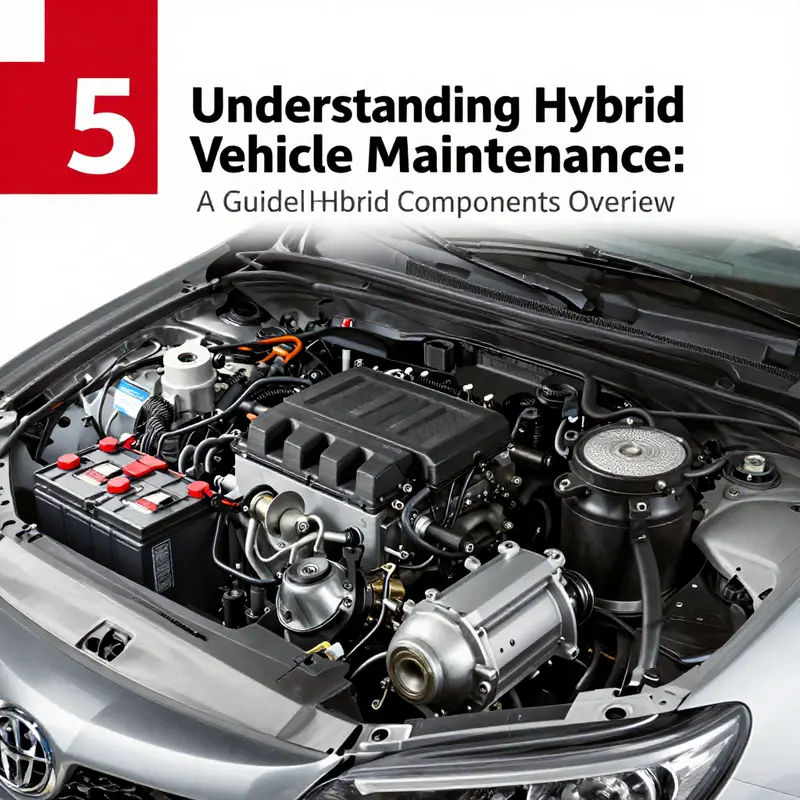
Hybrid vehicles represent a sophisticated blend of traditional and electric automotive technology, offering an eco-friendly driving alternative. For local private car owners, used car buyers, and small business fleet operators, understanding when and how technicians can service these vehicles is crucial for maintenance and performance. This guide examines the critical aspects of servicing Toyota hybrid vehicles, starting with the necessary training requirements for technicians, outlining safety protocols they must adhere to, identifying authorized service centers, discussing the essential tools and diagnostic software, and finally providing an overview of the unique hybrid components that need specialized attention. Each chapter aims to enhance the knowledge of car owners about maintaining their hybrids efficiently and safely.
Cleared to Service: The Training Gate for Toyota Hybrid Maintenance
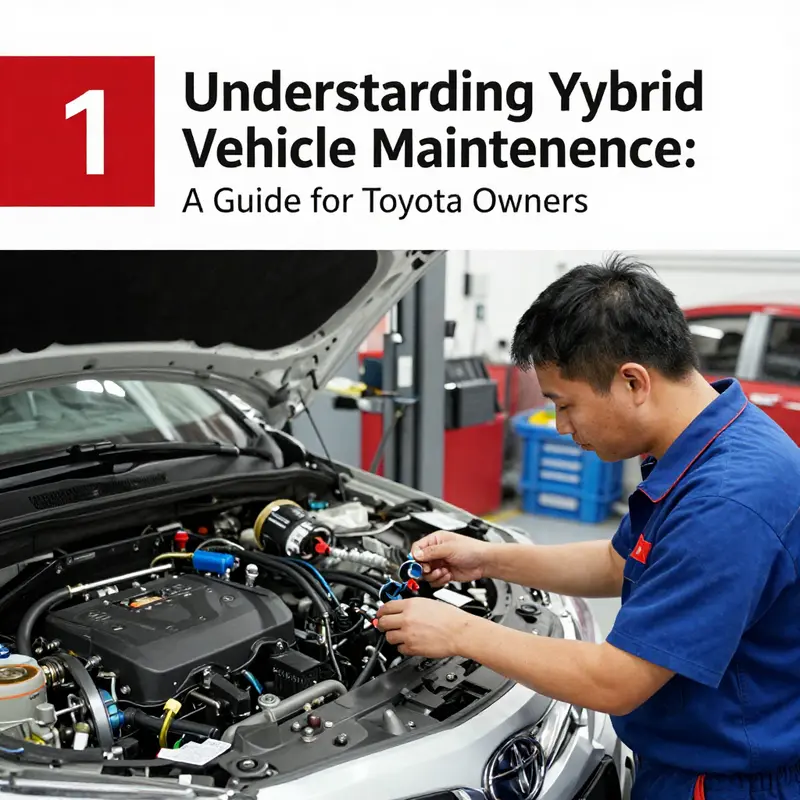
Hybrid vehicles fuse conventional internal combustion propulsion with high‑voltage electric systems, a pairing that delivers efficiency and performance but also demands a specialized safety mindset. For technicians who want to work on Toyota hybrids, the question is not merely whether the car exists or how old it is. The real gatekeeper is training. Hybrid traction in Toyota vehicles uses a high‑voltage system that powers the electric motor, coordinates with the gasoline engine, and interacts with sophisticated vehicle control software. A single misstep while handling high voltage or a stray mistake in battery management can injure a technician, cause expensive damage, or compromise safety systems designed to protect everyone in the vehicle. This means service access is not a generic permission to wrench; it is a credentialed capability earned through rigorous education and practiced discipline. The requirement spans the service spectrum—from authorized dealerships to independent shops that aspire to work on HEVs—because the integrity of the system hinges on a technician who knows how to respect energy flow, insulation boundaries, and the precise sequences that keep the vehicle safe during service. In practical terms, this translates into technicians completing a certified program and maintaining up‑to‑date familiarity with the high‑voltage architecture and safety protocols Toyota embeds in its hybrids. The result is not only safety but accurate diagnostics and respectful handling of systems that are as much software as hardware, as likely to rely on battery health metrics as on mechanical wear indicators. For owners and shops alike, the core truth remains clear: access to hybrid service is contingent on verified competence demonstrated through a formal training pathway and a genuine commitment to high‑safety practices on every job.
Toyota’s approach to training is codified in what is known as the Hybrid System Training Overview. This program is structured as a concise but rigorous three‑day course designed to equip technicians with the essential knowledge and hands‑on skills needed to diagnose, maintain, and repair hybrid systems safely. On day one, the curriculum charts the hybrid system landscape, laying out how the transaxle interacts with the engine and the electric motor, and clarifying how energy moves through the drivetrain under different operating conditions. This session clarifies the energy architecture and sets the frame for more specialized work to come. A critical component of day one is the high‑voltage safety module, which teaches the accepted procedures to de‑energize and isolate the system, to recognize high‑potential components, and to apply proper personal protective equipment and lockout procedures. The engine function segment follows, providing technicians with a realistic understanding of how the engine and electric propulsion coordinate to deliver power, manage torque, and respond to regulatory and performance demands. The brake system portion overlaps with regenerative braking concepts, explaining how braking energy is captured, stored, and then used by the electric motor, while still maintaining the conventional hydraulics and ABS role in vehicle safety. By the end of day one, technicians begin to see how these subsystems interlock, which helps in diagnosing faults that might sit at the boundary between mechanical wear and electrical control logic.
Day two expands the focus to the electric power steering system and the battery management framework. Electric power steering is a reminder that steering feel and safety inputs can be influenced by the electric drive, so technicians learn to assess steering assist in conjunction with energy flow and battery state. The battery management system is treated in depth: health indicators, thermal management considerations, charging dynamics, and safe handling practices when service touches the battery or associated sensors. The air conditioning portion completes the core curriculum, detailing how climate control relies on refrigerant circuits and electrical subsystems, and how technicians must balance comfort, safety, and energy management during service work. The final portion of the course weaves in diagnostic tools—how to interpret fault codes, how to monitor live data streams, and how to verify that the vehicle’s software is correctly coordinating the hybrid components after any intervention. The three‑day arc, then, is designed not simply to authorize tool use but to create a disciplined mindset. A certified technician can trace energy pathways, perform safe disconnections and reconnections, and validate that the system reacts correctly to test commands and fault simulations. This training, when adhered to, reduces the risk of inadvertently triggering fault codes or compromising the high‑voltage safety envelope, and it reinforces the warranty protections that rely on proper procedure and qualified personnel.
The practical implication of this training is straightforward: the right to service a Toyota hybrid is inseparable from the right training. The high‑voltage components—the battery pack, the power control unit, and the electric motor—are not ordinary car parts. They are integrated into a tightly controlled energy ecosystem that communicates with the vehicle’s software and safety logic. For this reason, only authorized Toyota service centers staffed by technicians who have completed the official hybrid training should perform maintenance or repair work on these vehicles. The certification acts as a badge of safety competence: it signals that a technician understands the correct disconnection and reconnection sequences, knows how to use insulated tools properly, and can navigate the vehicle’s diagnostic software with confidence. Moreover, this certification embodies a broader safety culture in which technicians routinely verify battery health, monitor thermal data, and ensure that any intervention does not undermine the vehicle’s protective systems. It also supports owners in choosing service options that respect the car’s reliability and performance guarantees, with the assurance that the work is performed by someone who has been trained to the precise standards that govern HEV safety.
For owners trying to locate qualified help, the path to a certified center is typically guided by official channels in the owner’s region. In the context of Toyota hybrids, this means consulting the official service and support platforms that list authorized locations and the training standards technicians must meet. The emphasis here is practical: if the goal is to protect the vehicle’s high‑voltage integrity and ensure long‑term reliability, one should seek a center whose staff can demonstrate the required hybrid certification and who has access to the appropriate diagnostic suites. The broader takeaway for owners and shop operators is that hybrid service is a specialized practice area, not a generic repair job. The service experience should emphasize safety, precision, and a measured, methods‑driven approach that respects the vehicle’s energy management architecture and software controls.
For practitioners who want continuing guidance beyond formal certification, there is value in supplementary resources that translate the classroom into day‑to‑day practice. Practical maintenance insights, troubleshooting frameworks, and real‑world demonstrations can help align routine care with the most demanding safety and diagnostic standards. To readers seeking additional practical perspectives on vehicle care and maintenance, the KMZ Vehicle Center Blog offers a repository of insights that complement formal training and help technicians apply concepts in a workshop environment. See the KMZ Vehicle Center Blog for more. KMZ Vehicle Center Blog.
In this context, the training gate is not a barrier but a defined doorway into a field that blends electrical engineering, vehicle dynamics, and safety culture. The three‑day hybrid system course is designed to compactly convey the essential knowledge and hands‑on competencies that prevent harm, protect the vehicle’s integrity, and preserve the performance and efficiency expected from modern hybrids. It is a reminder that safety and capability are inseparable when handling high‑voltage systems, battery thermal management, and software‑driven energy controls. The door will not open without a credential, and that credential is earned by engaging with a structured program that emphasizes both theory and practice. When a technician steps through that door, the work that follows—diagnosing a fault, replacing a failed module, or rebalancing energy management—unfolds within a framework designed to protect people and machines alike. The result is service that honors the complexity of the hybrid, the innovation embedded in Toyota’s approach, and the trust that owners place in trained professionals who are prepared to care for these advanced vehicles safely.
External resource: Toyota Hybrid System Training Overview (PDF): https://www.toyotahybridtraining.com/resources/overview.pdf
Timing, Training, and High Voltage: Safety Protocols for Servicing a Hybrid Vehicle
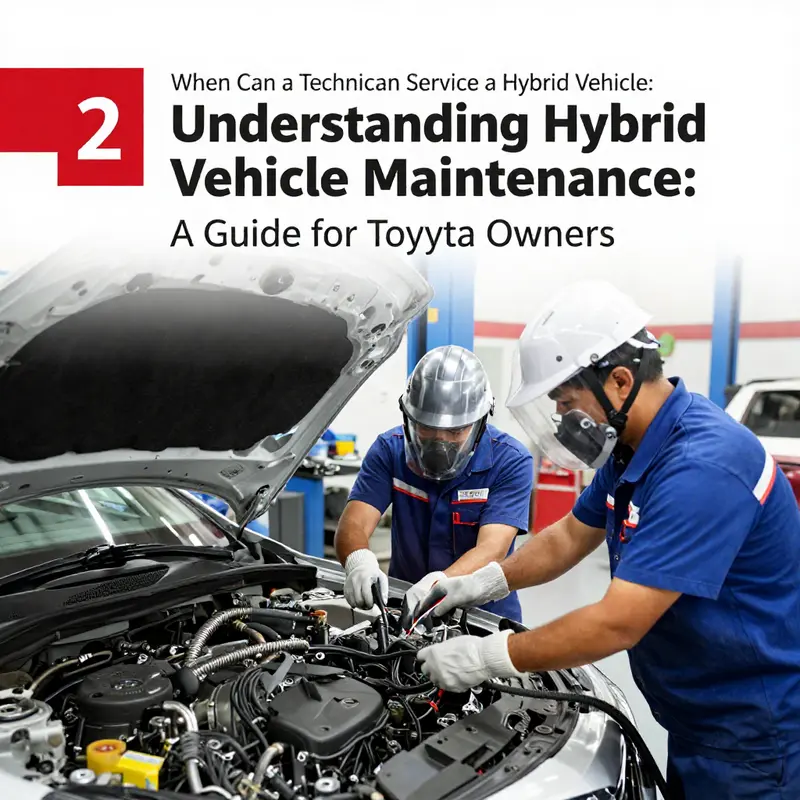
The central question of when a technician can service a hybrid vehicle—and do so safely—revolves around more than a calendar or a shop’s hours. It hinges on training, certification, and a disciplined approach to managing high-voltage systems. Hybrid vehicles with their battery packs, power control units, and electric motors demand a level of technical readiness that goes beyond conventional maintenance. In the landscape of modern automotive care, the answer is not simply “now” or “later.” It is: only when the technician is properly trained and certified to work on hybrid electric vehicles, and only within an environment that supports strictly observed safety procedures. This is a matter of life-safety, risk management, and long-term reliability for the vehicle and the technician alike. The day a fault arises, be it a routine service or a more involved repair, starts with the same guiding principle: ensure that energy stored in the high-voltage system is isolated and rendered safe before any tool touches a component that could conduct electricity at lethal levels. The work begins not with a wrench and a torque spec, but with an assessment of risk, a plan to neutralize it, and a readiness to follow manufacturer guidance to the letter. In practice, that means engaging a technician who has completed the manufacturer’s hybrid training, a credential that confirms they understand the unique hazards posed by high-voltage systems, and that they know how to implement steps that prevent electric shock, arc flash, or thermal events. It also means choosing a service center that is authorized to perform maintenance on hybrid vehicles and that maintains the equipment, procedure manuals, and diagnostic software needed for safe operation. These elements—training, authorization, and proper tools—form the backbone of when and how a technician can service a hybrid vehicle. They are not optional add-ons but prerequisites that shape every subsequent action in the workshop. The scenario is not merely about turning a key or starting a diagnostic session; it is about entering a domain where electricity can be present long after the vehicle is powered down, where the energy stored in capacitors can still pose a risk, and where a single lapse can transform a routine task into a life-threatening incident. To navigate this domain, technicians rely on a sequence of safety protocols designed to render the vehicle harmless before any service work begins. The first and most fundamental step is the deactivation of the high-voltage system. This procedure is not a guess or a convenience; it is a documented process that must be followed precisely. The conventional starting point involves locating and using the service disconnect, sometimes referred to as the HV disconnect, which isolates the hybrid system from the rest of the vehicle’s electrical architecture. The location of this disconnect varies by model, but it is typically squarely labeled and sits either in the engine compartment or beneath a rear-seat cushion. The technician must follow the manufacturer’s instructions to remove or disengage this link between the high-voltage battery pack and the drive and control systems. The purpose is to prevent current from flowing into work areas while components are being accessed. After this primary isolation, a mandatory waiting period follows. The industry standard in many shops is a waiting interval of around ten minutes. This pause allows capacitors in the high-voltage system to discharge safely, reducing the risk that residual energy could re-energize exposed conductors during maintenance. The waiting period is not a suggestion; it is a safety requirement grounded in electrical engineering and validated by countless service experiences. Once the waiting period has elapsed, the technician proceeds to verification. A calibrated, qualified multimeter is used to check for residual voltage on the system. The goal is to confirm that readings meet the vehicle maker’s defined safe thresholds before any tool touches a component. If voltage readings rise above the allowed limit, the procedure must be revisited and additional steps taken to ensure the system is safe. The verification step acts as a final gatekeeper, providing objective confirmation that the high-voltage network is isolated and non-conductive to human touch. Throughout this process, personal protective equipment plays a critical role. Insulated gloves that meet the appropriate voltage rating are worn in combination with eye protection and a full-length apron or other arc-rated apparel where required. The PPE serves as a shield not only against electric shock but also against potential arc flashes that can occur if a component is inadvertently energized during servicing. Jewelry is removed, sleeves are kept clear, and tools used on or near high-voltage systems are selected for their non-conductive or HV-rated properties. The PPE and isolation protocol reflect a broader truth: safety does not live in a single device or step; it lives in a culture of meticulous adherence to procedure, reinforced by ongoing training. This is why certification isn’t a one-off credential; it is a continuous requirement. Technicians must stay current with manufacturer updates, recalls, and service advisories that might alter the recommended steps or introduce new protective measures for specific models or configurations. The general principle remains consistent: only when the technician has the appropriate HYDROT or HEV-specific training and the shop has the required equipment and procedures, should hybrid maintenance proceed. This principle expands beyond the high-voltage disconnection. It encompasses the entire workflow of service. For example, even routine maintenance tasks—such as fluid checks, filter replacements, or brake system inspections—must be performed with awareness of the high-voltage layout and utilities. The technician must ensure they do not inadvertently disturb high-voltage components, harnesses, or connectors while performing these tasks. In practice, this awareness translates into a broader set of preventive actions. The work area is prepared to minimize the risk of spills or conductive contamination from liquids that could create pathways for electricity or cause unexpected reactions with battery cooling systems. The technician uses insulated tools when necessary, ensures power sources are de-energized during the task, and follows a controlled sequence that respects the integrity of the battery pack and related subsystems. The ethos here is not simply about avoiding injury; it is about protecting the entire vehicle’s intelligence and safety features, which can influence everything from drive performance to airbags and active safety systems. The emphasis on training and proper center accreditation also carries a practical customer-facing implication. Vehicle owners exploring service options should seek out authorized service centers that demonstrate documented hybrid training programs, access to the correct diagnostic software, and technicians who routinely follow manufacturer-recommended procedures. A reliable center will not only perform the work but will also provide transparent explanations of the steps taken to ensure safety. As part of the ongoing education thread in this field, technicians and shop managers often rely on broad resources that help them connect maintenance planning with practical safety protocols. For readers seeking general guidance and ongoing learning, the KMZ Vehicle Center blog offers a repository of articles on maintenance strategy, tool selection, and best practices for care in a hybrid-electric environment. This resource can be a helpful companion as you plan future service visits or simply deepen your understanding of how hybrid technology is managed in professional settings. KMZ Vehicle Center blog.
The combination of rigorous training, authorized service environments, and a disciplined approach to high-voltage safety defines when a technician can service a hybrid vehicle. The timing is less about the clock and more about readiness: readiness of the technician’s credentials, the shop’s safety culture, and the adherence to a proven sequence that isolates and verifies the absence of dangerous energy before any repair begins. When those elements align, servicing a hybrid vehicle is both possible and safe. When they do not, the risk remains unacceptably high regardless of the service need. This is the core logic behind safety protocols in hybrid maintenance and the reason why elevated standards exist for technicians who work in this arena. It is not merely a matter of technique; it is a matter of professional responsibility, public safety, and the long-term reliability of the vehicle systems that rely on sophisticated high-voltage technology. The field continues to evolve as manufacturers refine procedures and as diagnostic tools become more capable. Yet the fundamental sequence—isolate, wait, verify, protect—remains a reliable compass for technicians navigating the complex terrain of hybrid service. For vehicle owners, understanding this sequence helps them appreciate why some procedures require specialized centers and certified technicians. It explains why a scheduled service at an authorized facility is not a luxury but a safeguard. And it underscores the idea that the right timing for service is the moment the technician has completed the necessary safety steps, confirmed by reliable measurements, and prepared with the correct PPE and tools to conduct the work without compromising anyone’s safety or the vehicle’s integrity. External resources provide additional context and formal guidance, such as official safety guides that detail step-by-step procedures and the rationale behind them. These documents reinforce the principle that safe servicing is a structured, well-documented process that starts long before the wrench touches a component and continues long after the vehicle leaves the bay.
External resource: https://www.scribd.com/document/537468229/Corolla-Cross-Hybrid-Safety-Guide-PDF-Vehicles-Airbag
Authorized Hands, Safe Journeys: When a Technician Serves a Toyota Hybrid
The question of when a technician can service a Toyota hybrid is less about a clock and more about training, certification, and the safeguards that keep occupants and technicians safe around high‑voltage systems. In the world of hybrid technology, the timing and locus of service are as important as the service itself. The core answer is straightforward: a hybrid vehicle, including Toyota models, can be serviced at any time, but only by technicians who are specifically trained and certified to work on hybrid electric vehicles (HEVs) within an authorized service environment. This is not merely a matter of expertise; it is a safety protocol that protects people, the vehicle’s complex systems, and the warranty that covers the car’s powertrain and electronics. Toyota’s approach reflects a philosophy common to modern hybrid maintenance: safety first, precision second, and reliability as the ultimate outcome.
High-voltage systems define the unique landscape of hybrid service. The high‑voltage battery pack, the power control unit (PCU), and the electric drive motors form an integrated network that requires specialized handling. Technicians at authorized centers undergo dedicated training to recognize the hazards and to execute procedures that protect the battery and the vehicle’s intelligent systems. This training covers correct disconnection procedures for the high‑voltage system, the use of insulated tools and PPE, and the precise steps needed to perform diagnostic assessments without introducing risk. The high‑voltage battery, while robust, is a precise energy source whose management is central to performance, efficiency, and safety. Missteps can lead to injury or irreversible system damage, which is why the training and certification requirements are non‑negotiable in an authorized environment.
The value of authorization extends beyond safety. Authorized Toyota service centers are equipped with genuine parts, manufacturer‑supported diagnostic software, and the specialized equipment required to interface with electronic control units that govern everything from traction and braking to adaptive cruise controls and energy management. Routine maintenance—like brake inspections and fluid checks—remains foundational, but the scope can also include more advanced tasks such as battery diagnostics, cooling system checks, inverter inspections, and software updates. In a hybrid, many components are interconnected; a fault in the battery cooling loop, for example, can ripple into performance issues or degraded efficiency. Having a technician who can see the whole system and interpret the interdependencies is what makes authorized centers essential.
From a practical standpoint, service at an authorized center means relying on a verified workflow. Technicians use OEM‑specific diagnostic tools that can query the vehicle’s high‑voltage safety status, read fault codes, and perform proper reprogramming when needed. This is not just about changing a part; it is about validating that the hybrid’s energy management strategies align with the latest manufacturer standards. In many cases, a software update can improve battery management, optimize hybrid transients, or correct a calibration that affects fuel economy and drive quality. The purpose is to ensure that the vehicle’s intelligent systems—such as driving assist features and energy recovery strategies—operate as designed, with safeguards that a non‑authorized shop may not reliably implement.
A further point of assurance is the use of original equipment parts. When a service requires replacement components, authorized centers source genuine parts that meet Toyota’s specifications and performance criteria. Substituting components with aftermarket parts can lead to mismatches in tolerances, longevity, or electrical compatibility. For a vehicle whose efficiency hinges on precise interaction among its battery, motors, and power electronics, this precision matters. The same applies to diagnostics. OEM software and firmware updates are released to correct known issues, improve safety algorithms, or sharpen response times of control modules. Authorized centers stay current with these updates, so owners can be confident that their vehicle is not just functioning, but operating with the latest safety and efficiency refinements.
The everyday maintenance you schedule at an authorized center is designed to be straightforward and predictable, while also accommodating the unique needs of a hybrid system. Routine inspections cover the usual suspects: brake pad wear, rotor condition, tire tread, suspension components, and fluid levels. In a hybrid, special attention is paid to the battery cooling system, inverter coolant levels, and the overall health of the electric drivetrain cooling circuit. The technicians verify the integrity of high‑voltage cables and ensure that the battery’s thermal management is optimal for current climate and driving patterns. These checks help prevent heat buildup, which can degrade battery performance and shorten its life. The result is a vehicle that remains dependable under varying weather conditions and driving styles, with fewer surprises on longer trips.
Safety is not merely procedural; it is cultural at authorized centers. The high‑voltage safety culture rests on disciplined practices that begin before a wrench is picked up. Lockout/tagout procedures, vehicle immobilization, and clearly defined roles during service work reduce the risk of accidental energization. Technicians communicate with one another about the status of the high‑voltage system as part of a standardized workflow. Even seemingly minor tasks, such as replacing windshield wipers or performing a fluid flush, are conducted within the protective framework that ensures no high‑voltage components become exposed to unintended contact or damage. This attention to safety extends to the end of a service cycle as well, with thorough post‑service checks to confirm that all systems are operating within specification and that diagnostic codes are cleared or appropriately documented.
There is a practical dimension to the “when” of service as well. You can schedule service at an authorized Toyota center through the official Toyota platform or by phone. The process is designed to be accessible, and many centers offer flexible options, including mobile service visits for basic maintenance tasks or for customers who prefer convenience. The emphasis remains on performing the work in a controlled environment with certified technicians who can address both routine maintenance and more nuanced issues with the hybrid system. For owners who value continuity with their vehicle’s warranty and a consistent maintenance record, authorized centers provide a reliable path that aligns with Toyota’s standards and expectations.
The role of the technician in this context also includes safeguarding the car’s evolving software landscape. Hybrid vehicles are not just mechanical hybrids; they are software‑driven systems that learn from driving patterns, integrate with driver assistance packages, and adapt energy management strategies to the driver’s behavior and terrain. Authorized centers ensure that any software updates are performed with the vehicle in a state suitable for updates, and that calibrations are validated after installation. In some cases, technicians may perform re‑learning procedures or test drives to confirm that the vehicle’s energy recuperation and power delivery feel natural and predictable.
The experience of maintenance for a Toyota hybrid, then, becomes a conversation about certainty. The owner arrives with a service need or routine maintenance plan; a trained technician in an authorized center assesses the vehicle with OEM tools, confirms battery health, and executes the necessary steps with a meticulous eye toward safety and reliability. The process is iterative yet coherent: diagnose, confirm, service, validate, and document. The documentation is crucial, especially for those who rely on the vehicle for daily commuting or business that hinges on predictable performance. A clearly recorded service history within an authorized network also supports warranty coverage and future depreciation considerations.
As a final note, owners might find value in engaging with educational resources that help interpret maintenance schedules for hybrids. For example, while owners should rely on their technician for high‑voltage work, they can explore guidance on vehicle care that addresses routine intervals and how these intervals are affected by hybrid operation. A practical reference point is a resource about oil‑change intervals and how time versus mileage should influence scheduling for modern engines and hybrids. This kind of guidance complements the hands‑on service provided by authorized centers and helps owners form a proactive, informed approach to care.
For readers seeking nearby authorized centers, the official source provides a locator tool to identify certified service locations—ensuring that the team you entrust with your hybrid’s health has the proper credentials, equipment, and parts. It’s a straightforward way to confirm that you’re choosing an environment where safety standards are upheld, warranty terms are respected, and the repair work aligns with manufacturer expectations. And for those who want to broaden their understanding of routine maintenance, a linked resource on oil‑change intervals can offer additional context about how maintenance cadence can evolve in a hybrid context. See the practical guidance in that related article for a holistic view of how maintenance timing interacts with your vehicle’s evolving systems. For an external reference to locate a service center, visit the official service locator page provided by the manufacturer: https://www.toyota.com/service/repair-center-locator. Internal readers may also explore related maintenance insights at a trusted industry blog through a targeted guide about oil‑change intervals: Optimal oil-change intervals: time vs. mileage.
Safely Servicing a Toyota Hybrid: Timing, Tools, and Diagnostics That Protect the High-Voltage System
Technicians who service Toyota hybrids operate in a space where precision, patience, and safety converge. The question of when you can service a hybrid isn’t about a clock so much as a set of conditions that ensure both the technician and the vehicle are protected. A Toyota hybrid, whether Prius, Camry Hybrid, or Corolla Hybrid, can be serviced at any time that the vehicle is safely prepared and the technician is properly trained and equipped to handle high-voltage systems. The key is not to rush into work, but to verify readiness, use the correct tools, and apply a diagnostic approach that respects the vehicle’s architecture. Toyota designs its service procedures around the reality that the high-voltage battery pack and the associated power electronics demand specialized handling and a measured, methodical sequence that prioritizes safety without compromising quality.
First, the technician must be trained and certified to work on HEVs. This goes beyond standard mechanical knowledge. It includes understanding the high-voltage system’s potential hazards, the sequence for de-energizing circuits, and the specific manual procedures that protect both people and equipment. Authorized Toyota service centers maintain a workforce that receives ongoing training through official channels, stays current with software updates, and uses diagnostic platforms that align with the manufacturer’s engineering. This training is not optional; it is the precondition for inviting any service event on a Toyota hybrid powertrain. The result is a service environment where technicians can think in terms of energy flow, fault states, and safe disconnection, rather than simply swapping parts.
Before any wrench is turned on a high-voltage hybrid, a careful safety cadence is performed. The vehicle is powered down, the key is removed, and the system is prepared to enter a safe state. In practice, this often means turning off the vehicle, then waiting for a defined cooling and de-energization period. A common guideline is to disconnect the 12-volt auxiliary battery and allow the high-voltage system to de-energize for a period—typically ten minutes or more—so that capacitors can bleed off residual energy. This waiting period gives the technician confidence that a potential energy source is not within reach, reducing the risk of a shock through any contact with high-voltage circuits. The precise timing may vary by model and configuration, but the spirit remains the same: establish a known-safe state before starting work.
With the vehicle in a safe state, the technician proceeds with caution. Insulated gloves and safety goggles protect hands and eyes from any unexpected exposure. The environment is kept clean and dry, with the vehicle positioned on a stable surface and away from conductive liquids. Tools designed for high-voltage work are used exclusively, including a proper HV battery disconnect tool and insulated hand tools rated for high voltage. The battery disconnect procedure itself is part of the training; it is not a shortcut, but a controlled step that isolates the battery from the rest of the electrical system. Technicians follow a strict sequence when engaging or disengaging high-voltage components, ensuring no stored energy can surge as a result of movement or leverage. In this careful choreography, the goal is clear: prevent harm while preserving the integrity of the powertrain components.
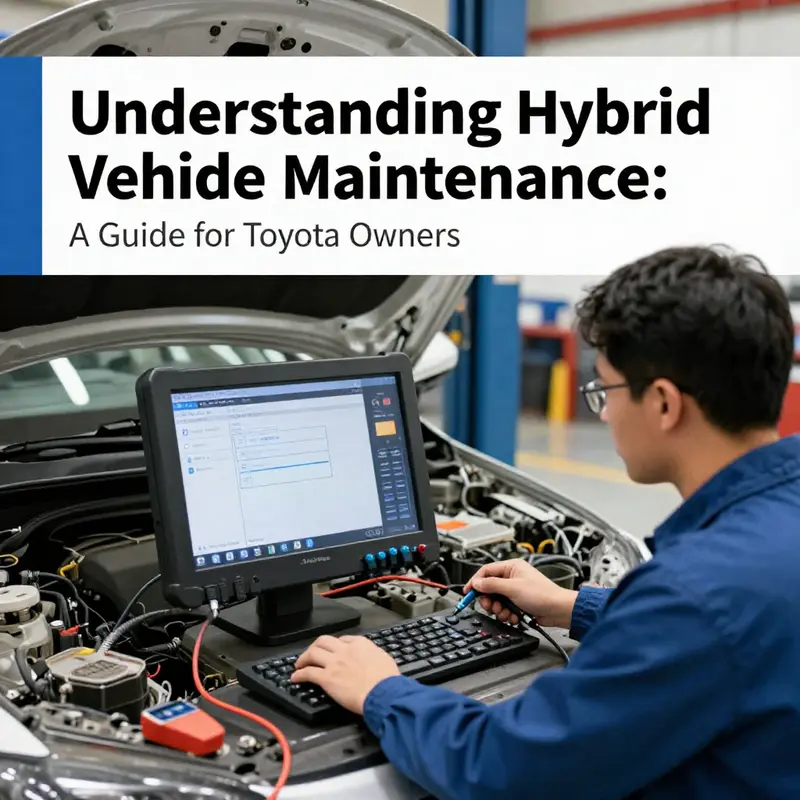
Diagnostics are where the skilled hand and the precise instrument meet. In Toyota hybrids, the official diagnostic tool—Toyota Techstream—serves as the bridge to the vehicle’s onboard computer systems. It provides access to real-time data streams, fault codes, calibration settings, and software updates that are specific to Toyota’s hybrid architecture. The information Techstream supplies is not casual data; it is the vehicle’s internal language. Without this software, a technician cannot reliably verify if an energy management strategy is performing within specifications, nor can they reprogram control units or confirm calibration alignments that ensure efficient regeneration, smooth torque delivery, and accurate battery state estimation. The downstream impact of software—how the hybrid’s energy system decides when to draw from the battery, when to recharge through braking, and how to manage thermal loads—becomes clear only when Techstream is in use and its data is interpreted by a trained technician.
For those who are curious about hands-on practice and continuous learning, our team maintains a repository of practical insights in our main resource hub. The KMZ Vehicle Center Blog offers a window into day-to-day maintenance experiences, common questions, and the kind of careful, safety-first mindset that underpins legitimate service work. You can explore it at KMZ Vehicle Center Blog. The link below will open a portal to practical discussions and case notes that complement the more formal guidelines discussed here: KMZ Vehicle Center Blog.
The careful sequence of steps does not end with the mechanical tasks or the software checks. It extends into the interpretation of data and the assessment of the vehicle’s health. A technician will review live data to confirm that the battery’s state of charge, voltage distribution across cells, inverter temperature, and motor generator status are all within design boundaries. If a fault code appears, the technician will use Techstream to pull the freeze frame data and event logs, then cross-check against service manuals to determine whether a repair requires component replacement, recalibration, or software reflash. In modern hybrids, many issues do not have a single mechanical root cause; they are the product of interactions among battery management, power electronics, cooling circuits, sensors, and the vehicle’s domain control units. The diagnostic software helps decode these interactions and guides the technician through correct corrective actions, which may range from updating software to replacing a failing module.
Beyond the diagnostic interface, the practical side of working on a Toyota hybrid demands respect for the system’s energy architecture. The high-voltage battery pack is a parallel energy source with its own cooling system, thermal sensors, and overarching safety interlocks. The technician must verify that the cooling system is not blocked or leaking and that the pack’s protective mechanisms remain engaged during any service work. Even routine maintenance tasks—like brake service, suspension checks, or air filter replacements—become hybrid-specific when performed on a vehicle with a live battery connected to the vehicle’s high-voltage network. The guidance you follow is not simply a checklist; it is a living protocol that accounts for the interplay between mechanical components and electronic control strategies. Specialized tools, a clean workspace, and a patient, methodical approach all contribute to avoiding inadvertently triggering a fault or an unsafe condition.
In practice, many service scenarios begin with a clear decision: is the task something that can be safely performed with the HV system de-energized and verified to be stable? If the answer is yes, the technician continues. If the answer is no or if there is any uncertainty about the steps—perhaps due to weather conditions, a prior unknown modification, or an intermittent fault—the vehicle is triaged. It is moved to a secure area where more extensive evaluation can be pursued or a supervisor can be consulted. The aim is to keep people safe, to protect the vehicle’s sophisticated hybrid powertrain, and to preserve the integrity of the diagnostic data that tracks the system’s behavior over time. The approach is conservative by design, not cautious for its own sake, but calibrated to the high stakes involved with high-voltage systems.
When the work concludes, the final verification involves not only confirming that the vehicle starts and performs as expected but also that the high-voltage system remains isolated until the vehicle is re-energized at the end of the service. The technician will re-connect the 12-volt battery, monitor for any fault codes that reappear after cycling, and run post-service checks through Techstream to ensure that software and calibration states remain consistent with the vehicle’s protocol. This wrap-up is not a mere formality; it provides assurance that the high-voltage energy path is stable, that the energy management algorithms are functioning as designed, and that safety interlocks have returned to their normal state.
In conclusion, the ability to service a Toyota hybrid hinges on three interlocking conditions: first, the technician must be trained and certified to work on HEVs; second, the vehicle must be prepared according to a well-defined safety sequence that includes de-energizing the high-voltage system and isolating the 12-volt battery; and third, the diagnostic software and tools, especially Toyota Techstream, must be used to access and interpret the vehicle’s electronic systems. When these conditions are met, work can proceed with confidence that the repair or maintenance will be accurate, durable, and safe for both the technician and the vehicle. For those seeking a deeper engagement with practical challenges and problem-solving stories, the KMZ Vehicle Center Blog provides ongoing coverage and reflections from real-world service work. And for authoritative, manufacturer-approved diagnostics and updates, Toyota’s official Techstream resources offer the definitive guide to the software that unlocks the hybrid system’s diagnostic capabilities. The technical manuals and official guidelines emphasize that hands-on service on a hybrid powertrain is a high-precision operation that must be conducted by trained professionals in properly equipped facilities. If you want to explore more practitioner insights, the KMZ Vehicle Center Blog is a reliable starting point. For the official diagnostic framework that makes sense of all the data your tools gather, refer to the Techstream resources provided by the manufacturer.
null
null
Final thoughts
Understanding the nuances of servicing Toyota hybrid vehicles is essential for every owner and operator. As hybrids become more prevalent, ensuring that only trained and certified technicians perform maintenance enhances safety and preserves vehicle integrity. By familiarizing yourself with training requirements, safety protocols, authorized service centers, the necessary tools, and unique components, you empower yourself to maintain your vehicle effectively. Make informed choices when seeking service for your hybrid to ensure optimal performance and longevity.